Languages
Wednesday, November 11, 2026



News and Views from the Global South
Asia-Pacific
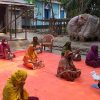
The Impact of COVID-19 on Child Marriage and Other Gender-Based Violence
I recently visited rural areas of Bangladesh amid the COVID-19 pandemic and returned to Dhaka with a new understanding of the impact that COVID-19 is having on child marriage, a harmful practice that is a global challenge. The fundamental shift that I saw was that child marriage, which has typically been encouraged by struggling parents, is now being encouraged by struggling girls. This worrisome trend underscores a new burden of the pandemic on the poor.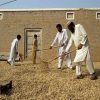
A Pakistani Farmer is Using Technology to Stop Agricultural Exploitation
Anas Shaikh is a Pakistani farmer on a mission to bring solutions to the many difficulties small and medium-scale farmer’s face in making a sustainable living.
Afghanistan’s Historic Year: Peace Talks, Security Transition but Higher Levels of Violence
While Afghanistan ends a historic year, filled with the hope for peace as the government and Taliban sat down for almost three months of consecutive peace talks for the first time in 19 years, it was also a year filled with violence with provisional statistics by the United Nations showing casualties for this year being higher than 2019.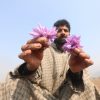
Kashmir’s New Land Laws Could Impact Biodiversity
Walking in the middle of fields of delicately-scented purple saffron crocus flowers, 36-year-old Mubeen Yasin, a saffron farmer from the southern region of Indian Kashmir, is not optimistic that in a few years time the scenery will remain as beautiful as it is today.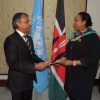
Sid Chatterjee Epitomizes the New Leadership Model of UN Resident Coordinators Worldwide
Siddharth Chatterjee, who has served with the United Nations for over 20 years, has been appointed as the new Resident Coordinator in China, the world’s second largest economy after the United States.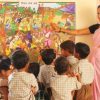
India: National Education Policy 2020 Could Transform Early Childhood Education If Implemented Effectively
It is after almost 34 years that the central government approved the new National Education Policy 2020 on July 29, 2020. This document contains comments on the entire education system and its various recommendations are being heavily debated.
Can Conservation and Development Be Balanced in Sri Lanka?
The Sri Lankan government recently cancelled three circulars that protected 700,000 hectares of forests, labelled Other State Forests (OSFs), which are not classified as protected areas but account for five percent of the island nation’s remaining 16.5 percent of forest cover.
R & D Expenditure: How to Raise It and Why
Economic growth is the time-tested method of raising living standards and, if not accompanied by large increases in inequality, lowering poverty. Since World War II, economic growth has lifted hundreds of millions of people out of poverty, including in South Asia.
Celebrating Vanuatu’s Path to Sustainable Development
The Pacific Island Developing State of Vanuatu has emerged as one of the region’s great success stories. Vanuatu has joined the ranks of Samoa and the Maldives as one of only six countries to graduate from being a least developed country, since the category was introduced by the United Nations in 1971.
Can Agricultural Apps Bring Indonesia’s Farmers Back to the Fields?
When his friends prodded him to use an agricultural app in July, rice farmer Mustafa reluctantly downloaded RiTx Bertani into his smart phone. Four months later, he feels happy to have given the technology a try.
Climate Action for Human Rights
Climate change and human rights are two key issues in international development and their interaction is increasingly in need of focus at national, regional and international levels. In the Pacific, where the 22 Pacific Island countries and territories are on the front line of both climate ambition and the ongoing effects of the climate crisis, climate change is recognised as the region’s single greatest threat. Urgent climate action is consistently called upon to protect the interests of youth and the most vulnerable populations, together with preserving the ‘shared needs and interests, potential and survival of our Blue Pacific and this great Blue Planet’.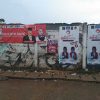
What Indonesia’s Local Elections Mean for National Politics
In just over a day, on 9 December, Indonesia holds 270 simultaneous local elections for executive office. This involves nine of the republic’s 34 governors, 224 of 416 bupati (district chiefs) and 37 of 98 mayors. The polling was initially scheduled for 23 September but the independent KPU (General Elections Commission) put the date back to 9 December due to the Covid-19 pandemic.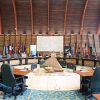
Pacific Data Hub to Make Data Accessible for All
Pacific Governments, agencies, donors and civil society now have a central source of reliable and current data to help them to make decisions that affect Pacific Islanders.
How Did Rural India Learn During Lockdown?
School closures due to the nationwide lockdown in March 2020 meant that children were disengaged with formal education for a prolonged period. The resulting talks around e-education exposed India’s digital divide, with only 24 percent of households having access to the internet.
Sustainable Measures Help Farmers Script a Positive Story Amid COVID-19 Uncertainty
 As India continues to grapple with the COVID-19 pandemic and a growing number of deaths, farmers here have been fighting a battle of their own against volatile pricing, uncertain demand and lack of access to the market. But in the midst of all this uncertainty, one farming couple in a village near Hyderabad are working towards a food-secure future for themselves using eco-friendly farming techniques.

Q&A: Mro Indigenous Community Plea for Halt of Construction of 5-Star Hotel
The construction of a five-star hotel in the Chittagong Hill Tracts, Bangladesh, could lead to the forced eviction of the Mro indigenous community from their ancestral lands and destroy “the social, economic, traditional and cultural fabric of the community”, warns Amnesty International.But local activist Reng Young Mro told IPS that the international community must rally behind the Mro indigenous community to halt the construction.

From Political Prisoner to Champion of Human Rights – The Wai Wai Nu Story
Instead of being cowed by her seven-year imprisonment, Wai Wai Nu, emerged stronger and more determined to fight for the rights of all people, including the Rohingya in her native Myanmar.
Japan Should Lead Charge for Equitable Access to COVID-19 Vaccines
Japan should step up and play a role as a global facilitator for equitable access to COVID-19 vaccines, Dr Daisaku Higashi said at a recent Japan Parliamentarians Federation for Population (JPFP) study meeting.
My Voice, Our Equal Future! Joining the Chorus of Girls Who Are Speaking up for Change
Girls are change makers and world shapers! When girls speak up, they are a powerful force to be reckoned with.
Vietnam and Cambodia: Leveraging Support to Enhance Climate Ambition
The COVID-19 pandemic has disrupted nearly every facet of our lives and delayed what was slated to be a landmark Conference of the Parties (COP26). This pivotal year marks the first due date for countries to submit revised national climate plans per the five-year cycle required by the Paris Agreement. Remarkably, countries are still moving forward with renewed urgency. And many countries are integrating green recovery into their COVID-19 responses, further contributing to climate action. While many countries have positive stories to tell, both of our nations, Vietnam and Cambodia, are sterling examples of nations taking strong, decisive action, particularly with support through the NDC Partnership. Just last month, the people of Vietnam submitted their updated national climate plan and, in short order, the people of Cambodia will do likewise.
Reversing the Rohingya Crisis: One Woman at a Time
“This is a crisis without a quick fix that could take years to resolve unless there are concerted efforts to address its root causes”, says Manuel Fontaine, UNICEF Director of Emergency Programmes.« Previous Page — Next Page »





The Week with IPS

NEXT STOP - SDGs
Tracking global progress towards a sustainable world
Tracking global progress towards a sustainable world
