Languages
Saturday, November 21, 2026



News and Views from the Global South
Global
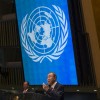
OPINION: A Climate Summit to Spark Action
On Sep. 23, I have invited world leaders from government, business, finance and civil society to a Climate Summit in New York so they can show the world how they will advance action on climate change and move towards a meaningful universal new agreement next year at the December climate negotiations in Paris.
The Good – and the Bad – News on World Hunger
The number of hungry people in the world has declined by over 100 million in the last decade and over 200 million since 1990-92, but 805 million people around the world still go hungry every day, according to the latest UN estimates.
Declining Majority Still Supports “Active” U.S. Role in World Affairs
Despite elite concerns about growing “isolationism” in the U.S. electorate, nearly six in 10 citizens believe Washington should “take an active part in world affairs,” according to the latest in a biennial series of major surveys of U.S. foreign-policy attitudes.
U.N. Climate Summit: Staged Parade or Reality Show?
The much-ballyhooed one-day Climate Summit next week is being hyped as one of the major political-environmental events at the United Nations this year.
‘Breaking Silence’ on the Slave Trade
The Oscar-winning film 12 Years a Slave recently generated international discussion about the barbarity of slavery, but it is not alone in the attempt to break the silence around the 400 years of the transatlantic slave trade and to “shed light” on the lasting historical consequences.
U.S. Bypasses Security Council on Impending Invasion of Syria
The U.N. Security Council (UNSC), the only international body empowered to declare war and peace, continues to remain a silent witness to the widespread devastation and killings worldwide, including in Palestine, Syria, Iraq, Libya, Yemen and Ukraine.
OPINION: Say ‘No’ to War and Media Propaganda
While the United States, United Kingdom and NATO are pushing for war with Russia, it behoves people and their governments around the world to take a clear stand for peace and against violence and war, no matter where it comes from.
OPINION: Bishop Appeals to U.N. to Rescue Minorities in Northwestern Iraq
For decades, the minority Christian population of Iraq has been suffering hardships. But in the summer months of 2014 - and since the beginning of the military campaign by ISIS (Islamic State in Iraq and al-Sham, also known as ISIL or Islamic State) - the situation has gone from bad to intolerably worse.
Majority of Consumer Products May Be Tainted by Illegal Deforestation
At least half of global deforestation is taking place illegally and in support of commercial agriculture, new analysis released Thursday finds – particularly to supply overseas markets.
Mideast Nuclear Weapons-Free Zone Remains in Limbo
After four long years of protracted negotiations, a proposal for a nuclear weapons-free zone (NWFZ) in the strife-torn Middle East remains in limbo - and perhaps virtually dead.
OPINION: A New European Foreign Policy in an Age of Anxiety
The appointment of Italian Foreign Minister Federica Mogherini as the new European Union foreign policy chief offers the opportunity for an overhaul of EU foreign and security policy.
Global Citizenship: “From Me to We to Peace”
If a Silicon Valley existed for the culture of peace, it would most likely look to global citizenship as the next big industry shake-up.
Global Commission Urges Decriminalisation of Drug Use
A top-level international panel called Tuesday for a major shift in global drug-control policies from prohibition to decriminalisation and regulation.
NATO Poised to Escalate Tensions over Ukraine
The NATO summit that took place at the end of last week in Wales was supposed to celebrate the end of a long, draining war in Afghanistan. But with the presidential election still up in the air in Kabul, NATO couldn’t enjoy its “mission accomplished” moment.
OPINION: Testing Time for Tourism
It is testing time for global tourism. The ongoing political conflicts across North Africa, compounded by military action in the Middle East, Ukraine and Afghanistan, and the spread of the Ebola virus disease in West Africa have put to the test the ability of international tourism to continue to grow amidst crises.
Developing Nations Set to Hit Back at New York City Banks
The Group of 77, the largest single coalition of developing countries, is hitting back at New York City banks that arbitrarily cancelled the accounts of more than 70 overseas diplomatic missions, leaving ambassadors, senior and junior diplomats and non-diplomatic staff without banking facilities.OPINION: ISIS Primarily a Threat to Arab Countries
Millions of words have been written about the rise, conquests, and savagery of the Islamic State (ISIS) in Iraq and Syria, and Boko Haram in Nigeria. Both have declared an “Islamic State” in their areas although Boko Haram has not claimed the mantle of a successor to the Prophet Muhammad as ISIS leader Abu Bakr al-Baghdadi has done in Greater Syria. The two groups are the latest in a string of terrorist organisations in the past two decades.Global Summit Urged to Focus on Trillion-Dollar Corruption
New analysis suggests that developing countries are losing a trillion dollars or more each year to tax evasion and corruption facilitated by lax laws in Western countries, raising pressure on global leaders to agree to broad new reforms at an international summit later this year.
World’s Last Remaining Forest Wilderness at Risk
The world’s last remaining forest wilderness is rapidly being lost – and much of this is taking place in Canada, not in Brazil or Indonesia where deforestation has so far made the headlines.Human Rights and Gender Equality Vague in Post-2015 Agenda
With the United Nations’ post-2015 development agenda currently under discussion, civil society actors in Europe are calling for a firmer stance on human rights and gender equality, including control of assets by women.
Indigenous Peoples Seek Presence in Post-2015 Development Agenda
The world's 370 million indigenous people, who say they were marginalised in the Millennium Development Goals (MDGs), want to play a key role in the U.N.'s post-2015 development agenda, which will be finalised next year.« Previous Page — Next Page »


The Week with IPS

NEXT STOP - SDGs
Tracking global progress towards a sustainable world
Tracking global progress towards a sustainable world
