Languages
Saturday, November 21, 2026



News and Views from the Global South
Global

Ever Wondered Why the World is a Mess?
While the Third World War has not been formally declared, conflicts throughout the world are reaching levels unseen since 1944.
Pakistan: Where Mothers Are Also Children
If 22-year-old Rashda Naureen could go back six years in time, she would never have agreed to get married at the tender age of 16.
Scepticism as “Green Goods” Trade Talks Begin
Formal negotiations began this week around the increasingly significant global trade in “environmental goods”, those technologies seen as environmentally beneficial, including in combating climate change.
Reproductive Rights to Take Centre Stage at U.N. Special Session
As the United Nations continues negotiations on a new set of Sustainable Development Goals (SDGs) for its post-2015 development agenda, population experts are hoping reproductive health will be given significant recognition in the final line-up of the goals later this year.
New Data Sends Wake-Up Call on Caribbean Reefs
Marine environmentalist Eli Fuller, who for the past two decades has been exploring the coastline of Antigua and Barbuda, warns that while there has been “dramatic changes” to coral reefs since he was a little boy, “it’s getting worse and worse.”
World’s Poorest Nations Seek Presence in Post-2015 Agenda
The 48 least developed countries (LDCs), described as the poorest of the world's poor, want to be an integral part of the U.N.'s post-2015 development agenda currently under discussion.
The Silent Power of Boycotts and Blockades
Peruse a few reports on global military expenditure and you will not be able to shake the image of the planet as one massive army camp, patrolled by heavily weaponised guards in a plethora of uniforms.
U.S. Overseas Coal Financing May Be Restarting
Landmark new policies that have sharply curtailed U.S. financing for international coal projects may be rolled back, the result of a sudden, polarised fight over a little-known government agency here.
Amid Scepticism, U.N. Trumpets Successes in Cutting Poverty
With 17 months before the Millennium Development Goals (MDGs) reach their targets by the December 2015 deadline, the United Nations is trumpeting its limited successes - but with guarded optimism.
At the Crucial Nexus of Water and Energy
Global institutions are still in the learning phase when it comes to successfully managing water and energy in an integrated manner as part of the quest for sustainable development.
OPINION: Fighting Killer Diseases Is Essential in the Post-2015 Agenda
Undeniably, the Millennium Development Goals (MDGs) helped lift specific health concerns onto the global agenda.
Illicit Drug Deals Multiply on the Dark Net
In its two years of operation, the online marketplace Silk Road raked in 1.2 billion dollars in revenue and amassed an estimated 200,000 registered users – a success story that would be any start-up's dream.
Gun Lobbyists, Minus Weapons, Gather at World Body
When the United Nations hosted its biennial review meeting on the illicit trade in small arms last month, the conference room was overflowing both with pro-gun and anti-gun lobbyists.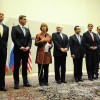
U.S. Demand for Deep Centrifuge Cut Is a Diplomatic Ploy
With only a few weeks remaining before the Jul. 20 deadline, the Barack Obama administration issued a warning to Iran that it must accept deep cuts in the number of its centrifuges in order to demonstrate that its nuclear programme is only for peaceful purposes.OPINION: U.S. Blames Victims of its own Failed Foreign Policies
The events unraveling in the Middle East have proved that the vaunted “Arab Spring” has turned into a searing summer of wildfires exploding unpredictably in diverse Islamic fronts without competent firemen to hose down the unmanageable conflagration.
After Losing Vote, U.S.-EU Threaten to Undermine Treaty
The United States and the 28-member European Union (EU) have assiduously promoted - and vigourously preached - one of the basic tenets of Western multi-party democracy: majority rules.IMF Issues “Revolutionary” Warning on Corporate Tax Avoidance
The staff at the International Monetary Fund (IMF) has issued an unusually stark warning over the lack of harmonised global tax policies, pointing out that these gaps are allowing for widespread tax gaming by corporations with particularly negative impacts for developing countries.
Higher Food Prices Can Help to End Hunger, Malnutrition and Food Waste
The choice of foods displayed on supermarket shelves can be quite bewildering. This abundance encourages us to take it for granted that we will always be able to buy the food we want at affordable prices.
EU Aims to Scuttle Treaty on Human Rights Abuses
When the United Nations began negotiating a Code of Conduct for Transnational Corporations (TNCs) back in the 1970s, the proposal never got off the ground because of vigourous opposition both from the powerful business community and its Western allies.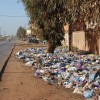
Companies Urged to Disclose “Plastic Footprint”
The environmental cost of the plastics used by corporations producing consumer goods likely mounts to more than 75 billion dollars a year, according to a first-time valuation released Monday by the United Nations and others.
Q&A: “Fukushima Accident Still Ongoing After Three Years”
It has been three years since the nuclear accident in Fukushima, Japan. But the consequences are still ongoing due to continuous leaks of radioactivity into the environment, says independent nuclear energy consultant Mycle Schneider.« Previous Page — Next Page »


The Week with IPS

NEXT STOP - SDGs
Tracking global progress towards a sustainable world
Tracking global progress towards a sustainable world
