Languages
Tuesday, October 13, 2026



News and Views from the Global South
Latin America & the Caribbean

‘We Cannot Keep Jumping from Crisis to Crisis’
“We cannot keep jumping from crisis to crisis. We have to invest in long-term development that helps people cope with shocks so that they can continue to grow enough food for their communities and not require emergency aid.”
China’s Silk Geopolitics
China is changing world geography, or at least trying to do so. Not in the sense of land and water like the Netherlands, but in the sense of weaving new infrastructures on land, on water, in the air, and on the web.
Climate Change Compounds Humanitarian Crises in Global South
As the Global South works to overcome a history of weak institutions, armed conflict and poverty-driven forced exodus, key causes of its humanitarian crises, developing countries now have to also fight to keep global warming from compounding their problems.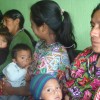
Will Canada Recognise Rights of Indigenous Peoples in Developing Countries Too?
While Canada’s long-awaited support for the UN Declaration on the Rights of Indigenous Peoples brought hope and celebration last week, it's not yet clear whether the rights of Indigenous people in developing countries harmed by Canadian mining companies will also be included.
Now 1 in 2 World’s Refugees Live in Urban Areas
It is true that millions of refugees, especially in Africa and the Middle East, reside in camps. But in all they represent only one-quarter of the total number of refugees. Meanwhile, more than 1 in 2 of all the world’s refugees live in slums or in informal settlements and on the fringes of cities, in overcrowded neighbourhoods and in areas prone to flooding, sanitation hazards and diseases.
A Latin American Humanitarian Emergency Invisible to the World
“This is a humanitarian crisis,” said Bertha Zúñiga Cáceres, referring to the generalised violence in Mexico and in Honduras and other countries of Central America, which has claimed hundreds of thousands of lives and is a product of transnational crime, but is invisible to the international community.
Rousseff Is (kind of) Gone. What Now?
As expected and widely predicted- Brazil’s Federal Senate has begun the impeachment process against President Dilma Rousseff. According to Brazilian Law, the president is likely to be suspended for up to six months while arguments are put forth in the Senate, presided over by the Chief Justice. At the end of the proceedings, the president may be acquitted of all charges and returned to power or if convicted and found guilty, be deposed and banned from political activity for eight years.
‘Human Suffering Has Reached Staggering Levels’
“Human suffering from the impacts of armed conflicts and disasters has reached staggering levels.”
Industrial-Level Aid Logistics in Colombia’s Decades-Long Humanitarian Disaster
“If you’re going to talk about Colombia and the peace process, do it somewhere else,” was heard at a regional preparatory meeting for the World Humanitarian Summit, according to Ramón Rodríguez, with the Colombian government’s Unit for Attention and Integral Reparation for Victims (UARIV).
Middle East – The Mother of All Humanitarian Crises
When, in March 2015, delegates from the Middle East met in Amman for their regional consultations round in preparation for the May 23-24 World Humanitarian Summit in Istanbul, most likely what they had in mind is the fact that their region was --and still is-- the dramatic set of “the mother of all humanitarian crises.”
Justice for Berta Caceres Incomplete Without Land Rights: UN Rapporteur
The murder of Honduran Indigenous woman Berta Caceres is only too familiar to Victoria Tauli-Corpuz, the UN’s Special Rapporteur on the Rights of Indigenous Peoples.
Economic Failings Lead to Impeachment of Another Economist in Brazil
Ironically, the only two economists who have served as president of Brazil are also the only ones impeached for economic failures.
Why Set Up a Shell Company in Panama?
A previously little-known law firm called Mossack Fonseca, based in Panama, has recently been exposed as one of the world’s major creators of ‘shell companies’, that is, corporate structures that can be used to hide the ownership of assets. This can be done legally but shell companies of this nature are widely used for illegal purposes such as tax evasion and money laundering of proceeds from criminal activity.
Deadly Algal Bloom Triggers Social Uprising in Southern Chile
A ban on harvesting shellfish in Chiloé due to a severe red tide outbreak sparked a social uprising that has partially isolated thousands of local residents of the southern Chilean archipelago and revived criticism of an export model that condemns small-scale fishing communities to poverty and marginalisation.
The Waves of the Pacific Are on Chile’s Energy Horizon
Chile, a country with 6,435 km of Pacific Ocean coast line, could find in wave and tidal power a solution to its need to diversify its energy mix.
The Family Garden Going Out of Style in Cuban Countryside
In the past, all rural homes in Cuba had gardens for putting fresh vegetables on the dinner table. The local term for these gardens is “conuco”, a word with indigenous roots that is still used in several Caribbean nations.
Black Colombian Activists Continue Our Struggle For Rights
While Colombia’s peace talks continue in Havana, Cuba, back home in the region of North Cauca, Black Colombians have found their cries for access to their ancestral lands met with tear-gas and rubber bullets.
“Together, Civil Society Has Power”
When Tamara Adrián, a Venezuelan transgender opposition legislator, spoke at a panel on inclusion during the last session of the International Civil Society Week held in Bogotá, 12 Latin American women stood up and stormed out of the room.
Times of Violence and Resistance for Latin American Journalists
Mexico is the most dangerous country in Latin America for journalists. In 2015 it accounted for one-third of all murders of reporters in the region, and four more journalists have been added to the list so far this year.
Choose Humanity: Make the Impossible Choice Possible!
We have arrived at the point of no return. At this very moment the world is witnessing the highest level of humanitarian needs since World War Two. We are experiencing a human catastrophe on a titanic scale: 125 million in dire need of assistance, over 60 million people forcibly displaced, and 218 million people affected by disasters each year for the past two decades.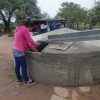
Harvesting Rainwater to Weather Drought in Northeast Argentina
In a semiarid region in the northeast Argentine province of Chaco, small farmers have adopted a simple technique to ensure a steady water supply during times of drought: they harvest the rain and store it in tanks, as part of a climate change adaptation project.« Previous Page — Next Page » *#*

The Week with IPS

NEXT STOP - SDGs
Tracking global progress towards a sustainable world
Tracking global progress towards a sustainable world

