Languages
Wednesday, October 14, 2026



News and Views from the Global South
Latin America & the Caribbean

Latin America to Redouble Its Climate Efforts in New York
The countries of Latin America will flock to sign the Paris Agreement, in what will be a simple act of protocol with huge political implications: it is the spark that will ignite actions to curb global warming.
No Easy Outcomes in Brazil’s Political Crisis
Brazilian President Dilma Rousseff would appear to be, as she herself recently said, “a card out of the deck” of those in power, after the crushing defeat she suffered Sunday Apr. 17 in the lower house of Congress, which voted to impeach her. But Brazil’s political crisis is so complex that the final outcome is not a given.
Maquilas Help Drive Industrialisation in Paraguay
“There were cases of people who stopped coming to work after receiving their first wages and then came back a few days later to ask if there was more work,” because they were used to casual work in the informal economy, said Ivonne Ginard.
Land Tenure Still a Challenge for Women in Latin America
Rural women in Latin America continue to face serious obstacles to land tenure, which leave them vulnerable, despite their growing importance in food production and food security.
Interoceanic Canal Bogged Down in Nicaragua
Nearly three years after Nicaragua granted a 50-year concession to the Chinese consortium HKND to build and operate an interoceanic canal, the megaproject has stalled, partly due to a severe drought that threatens the rivers and lake that will form part of the canal.
Global Guidelines on Land Tenure Making Headway in Latin America
Voluntary guidelines on land tenure adopted by the international community to combat the growing concentration of land ownership and improve secure access to land have begun to make headway in Latin America, a region that is a leader in the fight against hunger and that is taking firm steps towards achieving food security.
Climate Change Dries Up Nicaragua
A three-year drought, added to massive deforestation in the past few decades, has dried up most of Nicaragua’s water sources and has led to an increasingly severe water supply crisis.
Heavy Rains Once Again Scatter the Poor in Asunción
Néstor Colman, 69, remembers the river overflowing its banks nine times in Bañado Sur, the poor neighourhood in the Paraguayan capital where he was born and has lived all his life. “A record,” he jokes.
Thaw with United States Will Put Cuba’s Agroecology to the Test
The United States has indicated a clear interest in buying organic produce from Cuba as soon as that is made possible by the ongoing normalisation of ties between the two countries. But farmers and others involved in the agroecological sector warn that when the day arrives, they might not be ready.
Need for an Urgent Revision to Bond Contracts and a Debt Workout Mechanism
Argentina signed an agreement in principle on 29 February 2016 with four “super holdout” hedge funds including NML Capital Ltd, Aurelius Capital, Davidson Kempner and Bracebridge Capital. Buenos Aires would pay them a total of about 4.65 billion dollars, amounting to 75 percent of the principal and interest of all their claims of Argentina’s bonds that were defaulted on during the 2001 debt crisis. This deal would allow the return of Argentina to the international capital market after more than 15 years of exclusion.
Agroindustry Provides Jobs, Better Living Standards in Paraguay
“I worked in many companies, in construction, fertilisers, chemicals, but none of them were as good as this one,” said Dario Cardozo, who works in the Angostura Agroindustrial Complex (CAIASA) grain reception facility.
Argentina, the United States’ New South American Ally
After a decade of bilateral tension, the presidents of Argentina, Mauricio Macri, and the United States, Barack Obama, resumed the friendship between the two countries, which could lead to a free trade treaty and a “universal” alliance.
Peace in Colombia, Shielded by International Support
“It was not possible” to reach a final agreement with the Revolutionary Armed Forces of Colombia (FARC), the Colombian government’s lead negotiator, Humberto de la Calle, announced in Havana on Wednesday Mar. 23 – the deadline set for a peace deal.
Soy Fuels Industrialisation in Paraguay
A soybean processing plant, Angostura Agroindustrial Complex SA (CAIASA), that does not use fossil fuels and generates practically no waste products from soy reflects Paraguay’s growing industrialization.
Corruption Swallows a Huge Dose of Water
While the United Nations marked this year’s World Water Day on March 22 focusing on the connection between water and jobs, a new report has rung loud alarm bells about the heavy impact of corruption on the massive investments being made in the water sector.
Are Indigenous Women Key to Sustainable Development?
"We, indigenous women want to be considered as part of the solution for sustainable development, because we have capabilities and knowledge, " said Tarcila Rivera, a Quechua journalist and activist for the rights of indigenous people in Peru, at a press conference on the Empowerment of Indigenous Women.
Argentina’s ‘Shale Capital’ Suffers from Slowdown
The dizzying growth of Añelo, a town in southwest Argentina, driven by the production of shale oil and gas in the Vaca Muerta geological reserve, has slowed down due to the plunge in global oil prices, which has put a curb on local development and is threatening investment and employment.
Rural Costa Rican Families Flourish in the Shade
Before they got involved in farming, Luis Diego Murillo and Xinia Solano paid their bills and put food on their table with Luis’s salary as a foreman on construction sites, an unstable job that kept him on the move.
Tribute to a Slain Environment Activist
Berta Isabel Cáceres Flores, was in her early 20s when she co-founded the Council of Popular and Indigenous Organisations of Honduras (Cophin), a group that campaigned for the rights of indigenous communities in the Central American nation.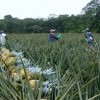
Post COP21: Costa Rica’s Innovation Must Become the Global Norm
The Paris agreement means countries and corporations will be compelled to act much more quickly on making agricultural commodity production more sustainable. Companies must look beyond their supply chains. Farmers need support to overcome barriers such as: struggle with ineffective farming practices, lack of investment and fluctuating commodity prices.
Clean Clothes – Fashion Free of Slave Labour in Argentina
In Argentina, there are now 20 brand names that guarantee that their garments are produced by workers in decent working conditions, thanks to the Clean Clothes network, aimed at eradicating slave labour in the garment industry, which illegally employs some 30,000 people in sweatshops around the country.« Previous Page — Next Page » *#*

The Week with IPS

NEXT STOP - SDGs
Tracking global progress towards a sustainable world
Tracking global progress towards a sustainable world

