Languages
Saturday, October 17, 2026



News and Views from the Global South
Latin America & the Caribbean

Clean Clothes – Fashion Free of Slave Labour in Argentina
In Argentina, there are now 20 brand names that guarantee that their garments are produced by workers in decent working conditions, thanks to the Clean Clothes network, aimed at eradicating slave labour in the garment industry, which illegally employs some 30,000 people in sweatshops around the country.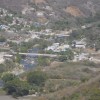
Rural Community Fights a Second Dam and a New Expropriation of Land
In 1976, the construction of a hydroelectric dam destroyed farmland in the rural municipality of Chicoasén in southern Mexico. Forty years later, part of the local population is fighting a second dam, which would deprive them of more land.
Panama’s Expanded Canal Faces a Challenging Scenario
When the new locks of the expanded Panama Canal begin operations, they will do so amidst numerous challenges, because of the storm clouds hanging over the global economy, especially China. But local authorities and experts are not worried about the possible impact on the expanded canal.
Central America Makes Uneven Progress in Clean Energy
Over the last decade, Central America has managed to reduce its dependence on fossil fuels for the production of electric power, while expanding coverage. But the progress made by each country varies widely.
Mexico’s Chinampas – Wetlands Turned into Gardens – Fight Extinction
David Jiménez grows two kinds of lettuce and other fresh produce on his “chinampa” or artificial island just under one hectare in size in San Gregorio Atlapulco, on the south side of Mexico City.
Obama in Cuba: the Reasons for His Trip
At this stage of the process that began in December 2014 with the surprise announcement of the opening of relations between the United States and Cuba, hardly anything counts as spectacular news. The detail in the decision by Washington and Havana that made news in the traditional sense (man bites dog) was that the plan to sit down and talk implied that Cuba gave up its prior demand that the embargo be lifted. The United States, for its part, accepted that Cuba did not undertake to make any special changes to its own political system.
Obama and Raúl Castro to Launch New Era with Historic Visit
U.S. President Barack Obama and his Cuban counterpart Raúl Castro will go down in history as two statesmen who managed to overcome more than half a century of hostility to bring back together two neighbouring countries with too many shared interests to remain at loggerheads.
Argentina’s Ties with China: Pragmatism over Politics
Argentina’s new government is reviewing several major projects to be carried out jointly with China. But aside from a few changes in priorities, the administration is not expected to put the brakes on an alliance that Beijing classifies as strategic.
Pilgrimage for Peace on 50th Anniversary of Camilo Torres’ Death
The police cut down trees at six different points to block the road to the spot in northeast Colombia where priest-turned-guerrilla Camilo Torres was killed 50 years ago, and local residents protested the attempt to pay homage to him.
Latin America’s Indigenous Peoples Find an Ally in the Pope
“We want Pope Francis’ message to come true…We want the rights of indigenous people to be supported, respected and strengthened,” Yuam Pravia, a representative of the Misquito native people, said in this city in southern Mexico.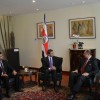
Costa Rica, UAE Cement Relations with Energy and Tourism
A visit by United Arab Emirates Foreign Minister Sheikh Abdullah bin Zayed Al Nahyan to Costa Rica paved the way for closer trade ties between the two countries, especially in the areas of tourism and sustainable energy.
Novel Joint Committee Enhances Relations between the UAE and Panama
The visit by the United Arab Emirates foreign minister, Sheikh Abdullah bin Zayed Al Nahyan, to Panama ended Thursday Feb. 11 with the creation of a novel Joint Cooperation Committee on trade and investment.
Eight Cooperation Accords Strengthen Ties between Colombia and UAE
“I am honoured to be in Colombia at a time when important steps towards peace are being taken,” the foreign minister of the United Arab Emirates, Sheikh Abdullah bin Zayed Al Nahyan, said after meeting with Colombian President Juan Manuel Santos.
Microcephaly Revives Battle for Legal Abortion in Brazil
The Zika virus epidemic and a rise in the number of cases of microcephaly in newborns have revived the debate on legalising abortion in Brazil. However, the timing is difficult as conservative and religious groups are growing in strength, especially in parliament.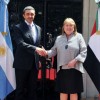
Argentina and United Arab Emirates Open New Stage in Bilateral Relations
With United Arab Emirates’ foreign minister Sheikh Abdullah bin Zayed Al Nahyan’s visit to Argentina, the two countries launched a new stage in bilateral relations, kicked off by high-level meetings and a package of accords.
Women of Haitian Descent Bear the Brunt of Dominican Migration Policy
A middle-aged woman arranges bouquets of yellow roses in a street market in Little Haiti, a slum neighbourhood in the capital of the Dominican Republic. “I don’t want to talk, don’t take photos,” she tells IPS, standing next to a little girl who appears to be her daughter.
Small-scale Fishing Is About Much More than Just Subsistence in Chile
“Fishing isn’t just for making a living, it’s also enjoyable,” said Pedro Pascual, a 70-year-old fisherman who has been taking his small boat out to sea off Chile’s Pacific coast in the early hours of the morning almost every day for the past 50 years, to support his family.
Brazil Wages War against Zika Virus on Several Fronts
Brazil is deploying 220,000 troops to wage war against the Zika virus, in response to the alarm caused by the birth of thousands of children with abnormally small heads. But eradicating the Aedes aegypti mosquito requires battles on many fronts, including science and the pharmaceutical industry.
Tackling Climate Change in the Caribbean: Natural Solutions to a Human Induced Problem
The world is still celebrating the Paris Agreement on Climate Change, the main outcome of the 21st Conference of the Parties of the United Nations Framework Convention on Climate Change. Its ambitions are unprecedented: not only has the world committed to limit the increase of temperature to “well below 2°C above pre-industrial levels,” it has also agreed to pursue efforts to “limit the temperature increase to 1.5 °C.”
United Arab Emirates Strengthens Ties with Argentina’s New Government
The new government of Argentina and the United Arab Emirates (UAE) are strengthening the relationship established by the previous administration, at a time when this South American country is seeking to bring in foreign exchange, build up its international reserves and draw investment, in what the authorities describe as a new era of openness to the world.
Energy from All Sources, a Game of Chance in Brazil
Brazil, which boasts that it has one of the cleanest energy mixes in the world, is now plagued by corruption, poor market conditions, and bad decisions – a near fatal combination.« Previous Page — Next Page » *#*

The Week with IPS

NEXT STOP - SDGs
Tracking global progress towards a sustainable world
Tracking global progress towards a sustainable world

