Languages
Saturday, September 26, 2026



News and Views from the Global South
North America

North’s Policies Affecting South’s Economies
Since the onset of the crisis, the South Centre has argued that policy responses to the crisis by the European Union and the United States has suffered from serious shortcomings that would delay recovery and entail unnecessary losses of income and jobs, and also endanger future growth and stability.U.S., Obama’s Image Remains Positive Worldwide
While Republicans and other right-wingers claim that President Barack Obama has inflicted unprecedented damage on Washington’s global reputation, a major new global survey suggests that the image of the U.S. remains generally positive.
Major Companies Push for More, Easier Renewable Energy
Some of the largest companies in the United States have banded together to call for a substantial increase in the production of renewable electricity, as well as for more simplicity in purchasing large blocs of green energy.
Europe and the United States, Allies in Crisis
A few decades ago, even before the end of the Cold War and before and after Ronald Reagan’s election to the White House, analyses regularly referred to U.S. decadence. At other times, it was Europe’s turn for pessimistic descriptions, especially when it could not overcome its ambivalence over deepening integration, and above all because of the failure of its constitutional project.
Khamenei Remarks Show Both Sides Maneuvre on Enrichment
Iran’s supreme leader Ali Khamenei’s comments on the nuclear talks Monday provided an unusual glimpse of diplomatic maneuvering by the U.S.-led coalition of five nuclear powers and Germany on the issue of enrichment capability to be allowed in a comprehensive agreement.
U.S. Groups Reject Anti-Gay Discrimination Bill over Religious Exemption
Civil rights groups across the United States have withdrawn their support from a major legislative proposal that would outlaw workplace discrimination against sexual minorities, warning that recent legal developments could exempt companies on religious grounds.
OPINION: Obama’s Quick Fix Won’t Solve the Regional Refugee Crisis
In recent months, an unprecedented surge of refugee women and children has been traveling alone to the United States to seek protection at our southern border.
U.S. Moves to Address Chronic “Teacher Equity” Problem
The U.S. government has moved to tackle longstanding patterns of inequitable teacher quality, specifically in terms of how low quality teachers tend to be assigned to poor and marginalised communities across the country.Bahrain’s Expulsion of U.S. Official Sets Back Ties, Reform Hopes
Monday’s expulsion order by Bahrain against a visiting senior U.S. official has set back tentative hopes for internal reforms that could reconcile the kingdom’s Sunni-led government with its majority Shia community and drawn a sharp protest from Washington.Is Japan’s Peace Constitution Dead?
Japan has functioned under its “peace constitution” for nearly 70 years. The distinctive Article 9, which prevents the country from conducting war as a means of resolving international conflict, is showing its age.
U.S. Overseas Coal Financing May Be Restarting
Landmark new policies that have sharply curtailed U.S. financing for international coal projects may be rolled back, the result of a sudden, polarised fight over a little-known government agency here.
Child Migrants Flee Central American Crisis
In early May, the Irapuato Migrants’ House, in the centre-west Mexican state of Guanajuato, took in a group of 152 Garifuna Afro-Caribbean people from Honduras. Sixty of them were children.
Cuba-United States – Something Is Moving
In ‘Hard Choices’, her new book about her experiences as Secretary of State during U.S. President Barack Obama’s first term (2008-2012), Hillary Clinton writes something of prime importance about Cuba – she says that late in her term in office she urged Obama to reconsider the U.S. embargo against Cuba.
FATCA Just a Band Aid for Latin American Tax Evasion
The U.S. Foreign Account Tax Compliance Act is unlikely to contribute much to combating persistent tax evasion in Latin America, which will require more national and multilateral instruments, experts say.
Obama Urged to Sanction Mozambique over Elephant, Rhino Poaching
Environmentalists are formally urging President Barack Obama to enact trade sanctions on Mozambique over the country’s alleged chronic facilitation of elephant and rhinoceros poaching through broad swathes of southern Africa.Africa Under “Unprecedented” Pressure from Rich Countries Over Trade
African countries are coming under strong pressure from the United States and the European Union to reverse the decision adopted by their trade ministers to implement the World Trade Organization’s trade facilitation agreement on a “provisional” basis.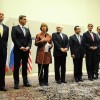
U.S. Demand for Deep Centrifuge Cut Is a Diplomatic Ploy
With only a few weeks remaining before the Jul. 20 deadline, the Barack Obama administration issued a warning to Iran that it must accept deep cuts in the number of its centrifuges in order to demonstrate that its nuclear programme is only for peaceful purposes.
Obama Proposes “Aggressive Deterrence” for Child Migrants
Facing what some have dubbed a refugee crisis, President Barack Obama is asking for new powers that would significantly speed up the deportation process for tens of thousands of unaccompanied children recently arrived at the southern U.S. border.OPINION: U.S. Blames Victims of its own Failed Foreign Policies
The events unraveling in the Middle East have proved that the vaunted “Arab Spring” has turned into a searing summer of wildfires exploding unpredictably in diverse Islamic fronts without competent firemen to hose down the unmanageable conflagration.
U.S. Reaction to New Immigrant Influx Could Violate International Law
Rights advocates and lawmakers are expressing increased concern over the United States’ handling of the sudden influx of tens of thousands of undocumented child and female migrants from Central America.U.S.: What Is the Greatest Threat of Them All?
This month’s stunning campaign by Sunni insurgents led by the radical Islamic State of Syria and the Levant (ISIL) against the mainly Shi’a government of Iraqi President Nouri Al-Maliki is stoking a growing debate here about the hierarchy of threats facing the United States in the Middle East and beyond.« Previous Page — Next Page »





The Week with IPS

NEXT STOP - SDGs
Tracking global progress towards a sustainable world
Tracking global progress towards a sustainable world
