Languages
Tuesday, September 29, 2026



News and Views from the Global South
South-South
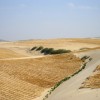
‘Deserts Can Save Forests’
It may take development of the deserts to save forests, say experts, who stress that desert ecology needs to be preserved and enhanced.
The Role of the State in Developing Countries under Attack from New FTAs
Two new trade agreements involving the two economic giants, the United States and the European Union, are leading a charge against the role of the state in the economy of developing countries.
Montevideo Consensus Urges Countries to Change Abortion Laws
Representatives of 38 countries of Latin America and the Caribbean meeting this week in the Uruguayan capital urged governments in the region to consider modifying their laws on abortion, which are among the most restrictive in the world.
Building the Future Enterprise by Enterprise in Rural Peru
Women and young people are central players in dozens of small businesses and environmental protection plans that are changing the lives of poor rural families in the Andes highlands of southern Peru.
Q&A: “We Cannot Accept Crumbs When it Comes to Rights”
Latin America and the Caribbean cannot hope to have truly advanced, progressive policies in sexual and reproductive health as long as women do not have the right to decide to interrupt their pregnancy, says Mariela Castro.Linking Fair and SQUAR in Myanmar
What’s less than two months old, has hit the headlines globally, and has more than 79,000 ‘likes’ and over 16,000 people talking about it?
Q&A: “We Are Building Sexual Citizenship”
Latin America and the Caribbean should play a central role in the construction of “sexual citizenship” - a concept that covers a series of population-related issues, rights and guarantees that this region helped build since the United Nations first emerged, says Brazilian expert Carmen Barroso.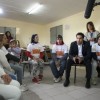
Latin America’s Youth Face Hurdles to Jobs and Safe Sex
Shortcomings in the educational system in Latin America and the Caribbean fuel inequalities that remain hurdles to access to the labour market and safe sex for a large part of the region’s youth.
Ivory Course Runs From Africa to Malaysia to China
A distance of nearly 9,000 kilometres separates Malaysia from Africa, but that hasn’t stopped the Southeast Asian nation from becoming a key staging post in the illegal trade of ivory from Africa to China.
Music as Social Inclusion Shines in Salzburg
A sea of white-gloved hands swaying gracefully to the rhythm of tropical music shows the audience in the hallowed Mozarteum concert hall in this Austrian city how Venezuela is combining musical education and social inclusion.
Tapping Rural Culture for Development Potential
“I was a hunter. I killed many animals,” said Rosalino Ortiz, a representative of Mashiramo, a campesino organisation that monitors biodiversity in Colombia’s Massif range in the southern department of Huila.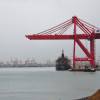
Seeking More Indian Business, With Chinese Help
As he stood on the westernmost edge of Colombo’s new harbour expansion, it was hard for Priyath Bandu Wickrema - the man tasked with reinventing the port as a regional giant - to cap his enthusiasm.
Supporting Rural Community Self-Management in Southern Peru
Some 40 multicoloured tents were set up to showcase the fruits of community-based rural development projects in the main square of this village in southern Peru during a visit by IFAD president Kanayo Nwanze.Global Value Chains from a Development Perspective
The current discourse on Global Value Chains by key proponents and also the World Trade Organisation (WTO) secretariat is that developing countries should liberalise - in goods and services - and conclude a trade facilitation agreement.
Waiting for a Word, and a Voice
A listing ship taking in water and facing up to the treacherous Indian Ocean monsoon is hardly cause for optimism.Is Chinese Investment in Kyrgyzstan Really Win-Win?
With Westerners now leery of investing in Kyrgyzstan, it is perhaps inevitable that officials in Bishkek turn to China as they try to attract capital for infrastructure development.
U.S. and EU Frustrate Peasants’ Rights Declaration
Staunch opposition by the U.S. delegation and, to one extent or another, by European countries has blocked the approval this year of a draft multilateral declaration on the rights of peasants and other people working in rural areas, which is backed by the developing world.
Ensuring Microcredit’s Primary Goal Is Changing Lives
Microfinance is essentially social, but its expansion and evolution towards diversified financial services for those who are excluded from the conventional system has compelled it to develop new codes and practices to reinforce the message that its goal is people - particularly the poor.
Civil Society Pushes for More Active Participation in Green Climate Fund
The Green Climate Fund (GCF), created under the auspices of the United Nations to finance the huge investments demanded by climate change, was opened up to participation by civil society and private sector representatives as observers in March.OECD Proposes Plan to Curb International Tax Avoidance
Finance ministers from the Group of 20 (G20) countries on Friday received a previously requested strategy under which the world’s largest economies could crack down on international tax avoidance, particularly on the part of multinational corporations.
Latin America’s Migration Policies Fall Short
Several years after the start of the economic crisis in the United States and Europe, which led to a shift in migration patterns, Latin America still lacks a more inclusive view of the phenomenon of people seeking a better life abroad.« Previous Page — Next Page »


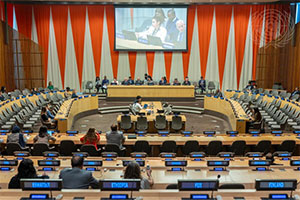 Panel Discussion on International Day for South-South Cooperation 2023. Credit: UN Photo/Cia Pak
South-South cooperation – collaboration between developing countries – is a growing and dynamic phenomenon, an important process that is vital in confronting shared challenges. Led by emerging giants, India, Brazil and South Africa (IBSA), the Global South is a tremendous source of tested solutions to development challenges, including the Millennium Development Goals (MDGs). China’s Belt and Road Initiative (BRI), launched in 2013, has further transformed South-South cooperation by enhancing infrastructure, trade, and investment linkages across Asia, Africa, and Latin America. Meanwhile, new platforms like the expansion of BRICS to include other countries such as Thailand, Nigeria, and Cuba are reshaping global economic governance and offering alternatives to traditional Western-led institutions. The Nairobi Outcome of the 2009 High-Level United Nations Conference on South-South Cooperation in Nairobi, Kenya highlights growing political and economic ties within the developing world, as countries from the Global South assume leading roles in decision-making on hot global issues ranging from economic recovery to food security, energy transitions, debt relief, and climate change. Today, the African Continental Free Trade Area and India’s “Voice of the Global South” summits have advanced frameworks for regional self-reliance, while G77 has reaffirmed commitments to resilient and inclusive economies ahead of the 16th UN Conference on Trade and Development.
Updated by Yilan Batista and Shuli Wong August 2026

The Week with IPS

NEXT STOP - SDGs
Tracking global progress towards a sustainable world
Tracking global progress towards a sustainable world
