Languages
Friday, October 9, 2026



News and Views from the Global South
Sustainability

The World had an ‘Unprecedented’ Number of People in Humanitarian Need this Year
The world had an unexpected number of people in crisis this year, which exceeded projected numbers the United Nations had expected, with climate change being one of the key crises that led to “needs to unprecedented levels” according to a new report.
Climate Refugees Refused UN Protection & Denied Rights Under International Law
The term “environmental refugee” has gained prominence in recent years as climate change and desertification have threatened the livelihoods of millions of people, causing many to re-locate.
The Economic & Humanitarian Catastrophe Threatening Pacific Island Communities
When UN Secretary-General Antonio Guterres addressed the Economic and Social Commission for Asia and the Pacific (ESCAP) last month, he pointed out the dramatic impact of climate change triggering natural disasters around the world--- from glaciers that melt, ice caps that disappear and corals that bleach.
African Politicians Asked to Develop Legal Instruments to Fight Climate Change
African legislators have been challenged to come up with legal frameworks for climate change to enable countries avoid catastrophes and reactionary emergencies that eat up their budgets.
India’s Electric Mobility Needs Enabling Infrastructure to Pick up Speed
Dogged by intractable air pollution debilitating large northern swathes from mainly urban vehicle emissions, India earlier this year announced targets for a 40 percent non-fossil component in its fuel-mix by 2030 as part of its Nationally Determined Commitments (NDC) to the Paris accord on climate change. It aims for full electrification of public transit systems and of one-third private vehicles by 2030.
Sustainable Fisheries are Key in Addressing Food Security — and Women can Play an Important Role
Experts gathered in November to discuss the importance of sustainable fisheries and its role in eradicating world hunger at a fisheries symposium in Rome.
What Do We Want from Our Oceans?
This is a question we need to ask ourselves but before answering we need to acknowledge the diversity of expectations and aspirations that we all have for oceans, which cover more than two-thirds of the planet’s surface.
The Story Behind The Gambia’s Lawsuit against Myanmar over the Rohingya Genocide
On Nov. 11, the Gambia filed a lawsuit against Myanmar in the International Court of Justice for the southeast asian country’s atrocities against the Rohingya population.
Running from the Storm – How Bangladesh’s Climate Migrants are Becoming Food Secure
It was almost a decade ago when Ruma Begum and her family left their home in Bangladesh’s coastal Tazumuddin upazila or sub-district and travelled some 50 km away to start a new life. They had been driven out of their home by an extreme and changing climate that has continued to ravage the district of Bhola.
Winning the ‘No Food Loss’ Battle: The Case of Japan
Humankind since almost the time that there is recorded history has grappled with the question of ‘how many is too many?’ The response is expectedly complex as it varies across time and space. The pace of population growth was slow till about approximately 250 years or so. It is only since the middle of the eighteenth century that there has been a palpable acceleration in population growth.
Seeing Through the Smog: Can New Delhi Find a Way to Limit Air Pollution?
Ankita Gupta, a housewife from south Delhi, is anxious about whether she should send her 4-year-old daughter to kindergarten. Outside visibility is poor as smog — a combination of emissions from factories, vehicle exhausts, coal plants and chemicals reacting with sunlight — has settled over the city, surpassing dangerous levels.
Climate Change and Loss of Species: Our Greatest Challenges
Mottled and reddish, the Lake Oku puddle frog has made its tragic debut on the Red List, a rapidly expanding roll call of threatened species. It was once abundant in the Kilum-Ijim rainforest of Cameroon but has not been seen since 2010 and is now listed as critically endangered and possibly extinct.
Net Food Importer Turkey Grapples with Challenges of Food Self-sufficiency
Despite latest research showing Turkey lagging in overall food sustainability, progress in sustainable agriculture appears to be a bright spot in the country’s troubled agriculture industry.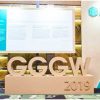
Summary Report on the event of GGGW2019
It has been a great experience for me to attend the Global Green Growth Week (GGGW) 2019 hosted by the Global Green Growth Institute (GGGI), a treaty-based international, inter-governmental organization dedicated to supporting and promoting strong, inclusive, and sustainable economic growth. Through this year’s event, I had the opportunity to learn more about green growth and listen to diverse opinions from policymakers, researchers, environmental experts, and representatives of the private sector from all over the world. Even though I had attended only two days of the one week event, I gained valuable knowledge from many interesting seminars and informative specialized sessions on topics regarding green growth and renewable energy,. I realized the importance of GGGI as a leading institute to implement a new development paradigm on a model of economic growth that is both environmentally sustainable and socially inclusive.
Call to Action as Thousands Breathe New Life to the Cairo Promise at ICPD 25 Summit in Nairobi This Week
Every day 830 women die while giving life. At least 33,000 girls are forced into child marriage with 11,000 girls undergoing female genital mutilation. These are some of the cruel realities young women face every day. However, there is renewed hope that delegates expected to attend the International Conference on Population and Development (ICPD) in Nairobi this week will re-energise and breathe new life to the Cairo Promise.
Mo Money Mo Solutions – the African Development Bank’s Ready to Double Investment Across the Continent
Buses carrying cross-border traders and goods from Cotonou in Benin to Bamako in Mali have recently been using the Lomé route — travelling through the capital of Togo and then getting onto the Ouagadougou corridor on their way to the Malian capital.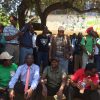
Zimbabwe’s Inflation Makes it Hard to Keep Track of Cost of Living
Stung by the country’s spiralling inflation, Zimbabwe’s government workers took to the streets this week for the first ever police-sectioned march demanding improved wages.
Burkina Faso: Climate Change Triggers Rural Exodus
Ibrahim Harouna and his neighbours sit under a tree at his uncle’s house, playing chess and chatting amid the simmering heat of Ouagadougou, the capital of Burkina Faso.
Online Trolls, Bots, Snoopers Imperil Democracy: Report
Using armies of online fans, trolls and, automated ‘bots’, the world’s authoritarians and populists are increasingly using the web to drown out opponents and swing public opinion and elections their way, a new study says.
Africa Watch: Morocco Tourism Gains Momentum
The crème de la crème of Hollywood was in Marrakech, Morocco, for the wedding of British movie star Idris Elba in April this year. Elba tied the knot with his Canadian model girlfriend, former Miss Vancouver Sabrina Dhowre, at the Ksar Char-Bagh hotel, an exquisite Alhambra-style hotel.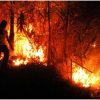
How Can We All Hear That the World is on Fire?
The annual rhythm of the United Nations year peaks with the General Assembly in September. One month on, it’s a good time to reflect on this year’s gathering which was remarkable for its focus on fighting climate change, the transforming effect of one 16 year old girl telling it like it is, and the way people heard her words in a way they haven’t heard before.« Previous Page — Next Page »





The Week with IPS

NEXT STOP - SDGs
Tracking global progress towards a sustainable world
Tracking global progress towards a sustainable world
