Languages
Sunday, October 25, 2026



News and Views from the Global South
Asia-Pacific

COP27: The Pacific Region is Under Threat: We Must Act Now to Mobilise Climate Finance
The Pacific Island Countries (PICs) – 14 small island developing nations in the Pacific Ocean - comprise one of the most exposed and vulnerable regions to climate change and natural calamities. The region did not cause this climate crisis; the crisis stemmed from heavy carbon emissions by developed countries. Yet paradoxically, the countries in the region are also the least resourced to adapt to climate change.
Food Systems Crucial for Pacific Islands at COP27
Food is everything to the culture and identity of the Pacific island countries. Climate change impacts of rising sea levels and higher temperatures threaten islanders’ food security, which is largely dependent on fisheries and subsistence agriculture. Almost 70 percent of islanders rely on agriculture for their livelihood.
COP27: Climate Change Exacerbates Vicious Loop of Human Rights Inequity
Climate change is worsening injustice globally, and the poor and vulnerable communities are the most affected. It is time the world acted on fulfilling human rights and building a liveable planet, says Yamide Dagnet, director for Climate Justice at Open Society Foundations.
Climate Change is No ‘Future Scenario’ for Pacific Island Nations; Climate Change is ‘Real’
Pacific island countries are highly vulnerable to climate change, and several have disappeared – and more could sink under the sea owing to a rise in water levels.
COP27: Cyclone Nearly Washed Away All My Dreams, says Vanuatu Youth Activist
The only thing Taren Chilia remembers about Cyclone Pam was that it flattened his school in Vanuatu, washing away books, equipment, and – well, almost his dreams too.
Younger Generation Needed in Efforts to Change the Leprosy Perceptions, Says Miss World Brazil
Deep-rooted discrimination against persons affected by leprosy or Hansen’s disease has marginalized individuals and communities. As social pariahs, opportunities to pursue their dreams are limited because, at best, they live at the periphery of society and, more often than not, are ostracized.
Pacific Islands: Climate Finance Action a Priority at COP27
Today, the window of opportunity for scaled-up global climate action to prevent disastrous global warming and build resilience in the most vulnerable nations is closing fast. And a major impediment to reducing emissions and accelerating climate adaptation is both lack of financial investment and major bureaucratic hurdles to accessing those funds that are available.
The Women Who Fight Against the Ayatollahs from the Kurdish Mountains
It usually takes hours of driving in a 4X4 before heading out on foot through a dense forest. There, protected under a sea of beech trees from the view of the drones, it is the guerrillas of the PJAK (Party for a Free Life in Kurdistan) who find us.
Myanmar and ASEAN: Time is not on the Side of Democracy
For 10 days in November, the world's diplomatic attention will largely be focused on three major diplomatic meetings in Southeast Asia. These include the Group of 20 (G-20) Summit on November 15-16 in Bali, Indonesia, and the annual Asia-Pacific Economic Cooperation (APEC) Summit, which will be held November 18-19 in Bangkok, Thailand.
A New Digitalisation Effort in Bangladesh Could Change Community Health Globally
The digital transformation of thousands of community health workers in Bangladesh has dramatically enhanced their work, while enabling the creation and tracking of a healthcare database covering 64 million people. The resulting model holds remarkable promise for the health of the world, especially in the context of evolving pandemics.
Cambodia More Than Ever Squeezed Between Russia and the West
Cambodian Prime Minister Hun Sen walks into a diplomatic minefield these days. He supports UN resolutions against Putin but does not want to jeopardize the long-standing friendship with Russia. At the same time, he tries to be less dependent on the West, both economically and politically.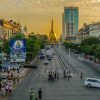
A New Political Reality in Myanmar: A People No Longer Willing to Accept Military Rule
The political, human rights and humanitarian crisis in Myanmar continues to take a catastrophic toll on the people, with serious regional implications.
How China Can Retire Coal Early in Pakistan and Elsewhere Through the BRI
With COP 27 approaching, pressure is mounting on wealthy countries to increase their support to poorer ones in the face of climate change. The recent floods in Pakistan have amplified this issue. China, as the world’s second largest economy, will similarly face increasing pressure to help other developing countries on climate.
Swat Women Won’t Be ‘Duped’ by Militants This Time
The rise in militancy in Swat still haunts many locals with flashbacks of what they went through 15 years ago.
Iranian Women Fight in the Streets, But Also from Home
It’s been over a month since Bayan, a 30-year-old Persian language teacher, last left her home in the Kurdish city of Piranshahr, 730 northwest of Tehran. Her parents believe they must protect her from what might happen to a protester in Iran.
Indian Village Unlocks Treasure of Organic, Indigenous Farming
At Jhargram, a far-flung village in India’s West Bengal state, a group of farmers sit together in one of the open fields. They debate, deliberate, and confabulate about the marketing strategy they should use when selling their harvest on the open market.
Government Indifference Deprives the Trafficked of Compensation
Fourteen-year-old Priti Pyne was returning from school in Basra village in South 24 Parganas, West Bengal, when she and a friend came across a cold-drink seller selling an attractive-looking drink. The moment the girls sipped it, however, they felt dizzy. When they woke up, it was on a Delhi-bound train at Sealdah station in Kolkata. With the help of other passengers, the girls managed to get off the train.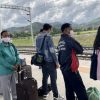
Farmers in Laos Imagine Improved Livelihoods Thanks to New Cross-border Links
Mountainous terrain in northern Laos has until now restricted chances for farmers and producers in much of the nation to export their goods, limiting them primarily to subsistence farming and also curbing development, education and poverty reduction in their communities.
With Planning Aging Population Could Result in a Silver Dividend
An aging population needn’t be a burden, experts told Parliamentarians at a conference co-hosted by UNFPA Asia Pacific Regional Office and the Asian Population and Development Association (APDA).
Bangladesh Coastal People Turn to Digital Devices to Succeed against the Odds
A barefoot young man in rolled-up jeans clutches a laptop as he slogs through a narrow muddy aisle between rice fields on a drizzling late September afternoon. He’s rushing to help a farm couple who are facing trouble with their ducks in a coastal village in southern Bangladesh.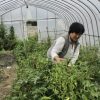
Farmers in Bhutan Turn To Asparagus and Strawberries To Boost Incomes
Zam, 57, sits at her kitchen table looking out the window at her orchard of four dozen apple trees. In the past eight years she has sold only two crates (100 kilogrammes) of the fruit because of poor harvests. She turned her attention to vegetables instead but the production was low because of a water shortage.« Previous Page — Next Page »





The Week with IPS

NEXT STOP - SDGs
Tracking global progress towards a sustainable world
Tracking global progress towards a sustainable world
