Languages
Tuesday, November 17, 2026



News and Views from the Global South
Global
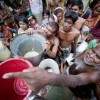
As Aid Shrinks, U.N.’s Development Goals Under Threat
If the developing world fails to meet the targets set in the eight Millennium Development Goals (MDGs) – relating mostly to poverty, hunger, education, health care, gender empowerment and the environment – the primary blame for the failure would be on Western donors who have reneged on their aid commitments, according to a new report released here.
Ice-Free Arctic Is “Uncharted Territory”
The melt of Arctic sea ice has reached its lowest point this year, shrinking 18 percent from last year's near-record low.
Q&A: A New Era of Citizen Action Is Dawning
The Global Civil Society Network CIVICUS: World Alliance for Citizen Participation has a new secretary general - Dhananjayan (Danny) Sriskandarajah, who was appointed Monday by the board of directors following the CIVICUS World Assembly in Montreal.
Post-Arab Spring Democratic Gains at Risk, Group Warns
Almost two years after popular uprisings swept across the Middle East and North Africa, rights advocates are warning that ominous backsliding is taking place in countries across the region and beyond.
New Plans to Protect Nature
At the close of the ten-day World Conservation Congress that ran from Sept. 6-15 on the South Korean island of Jeju, members of the convening International Union for Conservation of Nature (IUCN) agreed on an ambitious four-year action plan for protecting global natural resources.
Deeper CO2 Cuts Needed to Save Corals
Limiting climate change to two degrees C won't save most coral reefs, according to new, state-of-the-art research.
Companies Calculate Their Debt to Planet Earth
As ravenous consumers of natural resources, companies are beginning to recognise that they owe a monetary debt to the planet, and are sharpening their pencils to calculate it.
Amid Tension in Islamic World, U.N. Chief Pleads for Harmony
Amidst growing political tensions in the Islamic world over a video caricature of the Prophet Muhammad originating in the United States, U.N. Secretary-General Ban Ki-moon is making an “urgent “plea for political harmony worldwide.
Saving the Top 100 Threatened Species – a Question of Valuing Life
The Red River Giant softshell turtle (Rafetus swinhoei) is the stuff of legend in Vietnam. The fabled turtle in Hanoi’s Hoan Kiem Lake is popularly known by the name Kim Qui or Golden Turtle God, and it made its first historical appearance in 250 BC.
Ivory Ban Fails to Stem Surge in Elephant Poaching
With 2011 marking the deadliest year for poaching-related elephant deaths in Africa since an international ivory ban went into effect in 1989, a new investigative report released here Friday points to the ongoing impact of religious custom as well as the newfound economic might of China.
Rio Summit’s Legacy Still a Question Mark
Academics gathered in Washington on Wednesday suggested that the mixed experience at the U.N. Conference on Sustainable Development, held in Rio de Janeiro in June, has increased the importance of citizen engagement and consumer accountability in issues of environment, renewable energy and sustainability.
Q&A: Harnessing the Power of the Press to Build Peace
Conflicts of interest can be viewed as drivers of societies and human development, although recourse to violence has destroyed millions of people’s lives and leaves generations wounded for decades and even centuries.
U.N. Doubles Down on Slashing Child Mortality by 2015
While the global community made progress in reducing under-five child mortality to below seven million per year, it risks failing to reach the global targets set for 2015 if action is not scaled up, according to a new report released by the U.N. children's agency UNICEF Thursday.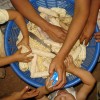
Laissez-Faire Failing World’s Dwindling Water Resources
Growing water shortages in many countries are a major threat to global security and development and should be a top priority at the U.N. Security Council, a panel of experts said in a new report.
World Needs to Build a Culture of Peace, Says Ex-Envoy
Since wars begin in the minds of men, it is in the minds of men that the defences of peace must be constructed, says the preamble to the constitution of the U.N. Educational, Scientific and Cultural Organisation (UNESCO).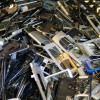
“Two Children May Have Died for You to Have Your Mobile Phone”
"It’s possible that two children died so that you could have that mobile phone,” says Jean-Bertin, a 34-year-old Congolese activist who wants to end the “absolute silence” around the crimes committed in his country to exploit strategic raw materials like coltan.
Auto Production Roars to New Records
Following a plunge in output triggered by the global economic crisis, world auto production is roaring back to new peaks.IMF Likely to Miss Key Reforms Deadline
With just a month to go before an agreed deadline, the International Monetary Fund (IMF) warned on Tuesday that a push for more equitable voting shares among the organisation’s member states was still lagging.
OP-ED: Women and Girls at Heart of the Blue Revolution
World Water Week recently concluded in Stockholm with a special emphasis on the linkages between water and food security.
Exchanging Peace, One Postcard at a Time
When Ross Holzman packs for a work trip, he brings three bags with him: One with blank postcards, one with crayons, and one with thousands of artworks created by children around the world.
Culture of Peace Should Replace Culture of Violence
When U.N. Secretary-General Ban Ki-moon addresses the High-Level Forum on Culture of Peace later this week, he will transmit a message that underlines his political philosophy: all disputes need to be resolved by peaceful means, not through military might.« Previous Page — Next Page »


The Week with IPS

NEXT STOP - SDGs
Tracking global progress towards a sustainable world
Tracking global progress towards a sustainable world
