Languages
Saturday, November 21, 2026



News and Views from the Global South
Latin America & the Caribbean

Fighting Sex Trafficking in Brazil – in Fiction and Reality
The story generally begins in Brazil’s hinterland, with a pretty, young woman from a disadvantaged background and with little formal education, who is drawn in by false promises and ends up in a sex trade network that stretches overseas.
Women Entrepreneurs Overcoming Barriers in Mexico
The culture of entrepreneurship is weak among women in Mexico, despite the positive influence that it has on women’s development, in a world where women continue to face greater obstacles than men when it comes to setting up and running a business.
Fighting Poverty Was Chávez’s Crusade
The struggle against poverty was the late Venezuelan president Hugo Chávez's top political priority, and at the same time a tool to consolidate his power and project his strategies abroad.Nobel Laureates Back “Strong, Autonomous” Inter-American Rights System
Six women recipients of the Nobel Peace Prize on Friday lauded the work of the Inter-American Commission on Human Rights (IACHR), offering additional high-level support for the institution just weeks ahead of a critical vote on a reforms process that many worry could irreparably weaken the Inter-American system.
Hugo Chávez Made History
That his life and his deeds had black dots is part of the story but should not prevent us from seeing the greatness of a maker of history. First, in his own country, Venezuela, Hugo Chávez lifted those at the bottom up from misery, into economic wellness, political participation, cultural pride (in their often African, or Indian, blood), social dignity – going far beyond Gini coefficients to measure increasing equality.Argentina to Legalise Surrogate Motherhood
Argentina is set to become the first country in Latin America to legalise surrogate motherhood as an option for heterosexual and homosexual couples or single people who cannot conceive but want to have a child who is biologically their own.
Cuba Loses an Essential Friend
Hugo Chávez of Venezuela was the president who made the most visits to Cuba, where flags are flying at half-mast in official mourning for his death Tuesday Mar. 5, and where his friend and political mentor, Fidel Castro, survives him.
Haiti Moves to Tighten Laws on Sexual Violence
Haiti is poised to enact major reforms to its penal code to make it easier for victims of rape to prosecute their attackers.
Victims Want Voice and Vote in Colombia’s Peace Talks
Victims of crimes of the state want their recommendations to be taken into consideration by the peace talks between the Colombian government and the FARC guerrillas that are seeking to end half a century of armed conflict.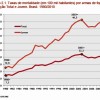
Invisible War Decimates Brazil’s Youth
The 1992 Carandirú massacre of 111 inmates shot down in what was Brazil’s largest prison was documented in thousands of print and televised news reports, as well as five books and a popular film.
U.S. Hopes for Some Rapprochement After Chávez
While the administration of U.S. President Barack Obama says it would like to improve relations with Venezuela in the aftermath of the death Tuesday of President Hugo Chávez, officials and independent analysts here believe any rapprochement will take time and faces political obstacles both here and in Caracas.Cigarette Companies Mock Tobacco Control Laws in Latin America
Despite the great strides made in Latin America with tobacco control legislation, the industry deploys a range of strategies to circumvent the restrictions imposed on cigarette advertising, social organisations and experts complain.
Chávez Invigorated the Left in Latin America
Part of the legacy left by Venezuelan President Hugo Chávez, who died Tuesday, was his determined struggle for the integration of Latin America independent of the standards and models of the industrialised North, and for the reinvigoration of left-wing radicalism in Latin America and the Caribbean.
“We Aren’t Fighting Poverty Here, We’re Improving the Quality of Life”
The residents of San Crisanto, a small communal village nestled in an idyllic setting in the southeastern Mexican state of Yucatán, have learned that valuing and protecting natural resources can generate employment and income.Wheels of Industry Slowing in Brazil
Industry is the ailing sector of the Brazilian economy, with production falling 2.7 percent in 2012 in spite of government incentives, and in contrast with the strong expansion of retail trade and the lowest unemployment rate in history.
Chávez Leaves a Deep Imprint
Venezuelan President Hugo Chávez died Tuesday in the Military Hospital of Caracas after a long battle with cancer in his abdominal region, which was diagnosed in June 2011.
Operation Condor on Trial in Argentina
The trial over a campaign of terror coordinated among the dictatorships of the Southern Cone of South America in the 1970s and 1980s began Tuesday in Buenos Aires with former dictator Jorge Rafael Videla as one of the main defendants, along with another 24 former military officers.Activists Urge Cardinals Who Concealed Sex Abuse to Skip Conclave
As the Roman Catholic Church gets ready for the conclave that will select a new pope, activists and victims worldwide are stepping up their efforts to keep cardinals directly or indirectly involved in cases of paedophilia from participating in the papal election process.
Putting Local Climate Know-How on the Map
A new weapon in the arsenal against climate change is tapping local knowledge to bridge the policy gap and let communities make their own informed decisions about how to manage livelihoods, natural resources, culture and heritage.
Indigenous Community Takes Forest Law into Own Hands
An indigenous community in Brazil has decided to single-handedly take action against illegal loggers who are moving into their territory in search of highly valued timber.
Cuba Diversifies – But Energy Focus Still on Oil
Cuba continues to focus heavily on oil for its energy needs, through agreements with partners like Venezuela, with the hope of discovering commercially exploitable wells in the Gulf of Mexico.« Previous Page — Next Page »


The Week with IPS

NEXT STOP - SDGs
Tracking global progress towards a sustainable world
Tracking global progress towards a sustainable world

