Languages
Sunday, November 22, 2026



News and Views from the Global South
Latin America & the Caribbean
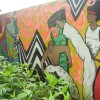
Brazil to Open Doors to Skilled Immigrants, Slam Shut to Others
In designing a new immigration policy, Brazil is caught between the need to attract skilled workers and professionals in order to meet the challenges posed by economic growth, and its tradition of taking in immigrants for humanitarian reasons.Green Credit Scarce in Latin America
In Latin America, where bank loans for environmentally sustainable activities are rare, the United Nations Environment Programme (UNEP) is seeking to foment green credit.
Mesoamerican Coral Reef on the Way to Becoming a Marine Desert
Scientific studies show that global warming is causing irreversible damage to the Mesoamerican Barrier Reef System, the world’s second largest coral reef, yet efforts to protect this biologically and economically vital ecosystem remain insufficient.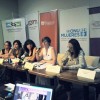
Campaign in Chile Fights “Disgraceful” Under-representation of Women in Power
The More Women in Power campaign in Chile, carried out by a group of social organisations, is seeking to increase the number of women in public decision-making positions, to move towards "parity democracy".
Mesoamerican Coral Reef on the Way to Becoming a Marine Desert
Scientific studies show that global warming is causing irreversible damage to the Mesoamerican Barrier Reef System, the world’s second largest coral reef, yet efforts to protect this biologically and economically vital ecosystem remain insufficient.
JAMAICA: New Technologies Extend Life and “Mobility” of Radio
In the last 25 years, there has been an explosion of commercial radio stations in what Jamaican broadcast professionals describe as "a revolution" that has extended the "mobility of radio".Argentine Women Refused Legal Abortions in Cases of Rape
For over 90 years, a law in Argentina has allowed women who become pregnant as a result of rape to have an abortion. However, hospitals often refuse to carry out the procedure, instead referring the women to the justice system.
Q&A: Needed: Common Caribbean Strategies Against Climate Change
Subject to the double impact of the global economic crisis and climate change, the Caribbean island nations are in need of adaptation strategies in which international cooperation and citizen participation play key roles, says Cuban expert Ramón Pichs.Argentine Women Refused Legal Abortions in Cases of Rape
For over 90 years, a law in Argentina has allowed women who become pregnant as a result of rape to have an abortion. However, hospitals often refuse to carry out the procedure, instead referring the women to the justice system.
PERU: Time to Adapt to Climate Change Impact on Women’s Lives
This year’s unusually rainy season in Peru is having a negative effect on the wellbeing and health of women in rural areas who are forced, for example, to spend three times as much time walking to collect firewood and water. But the authorities continue to turn a blind eye to the problems they face.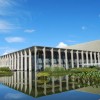
Brazil, Emerging South-South Donor
The Brazilian government is stepping up South-South aid, to strengthen the South American giant’s status as a donor country and its international clout. It now provides assistance to 65 countries, and its financial aid has grown threefold in the last seven years.
Brazil, Emerging South-South Donor
The Brazilian government is stepping up South-South aid, to strengthen the South American giant’s status as a donor country and its international clout. It now provides assistance to 65 countries, and its financial aid has grown threefold in the last seven years.
Chile’s Earthquake Reconstruction Hindered by Delays and Profiteering
Two years after the earthquake and tsunami in south-central Chile, the worst natural disaster to hit the country in half a century, thousands of families who saw their homes destroyed are still waiting for a solution.
URUGUAY: Community Radios Have Innovative Law, But Are Off the Air
Uruguay took a giant step towards more democratic media when it passed a law on community radio broadcasting in 2007. But although regulations for the law were approved in late 2010, many broadcasters are now off the air and waiting to be assigned a frequency.
Caribbean Hit Hard by Sargassum Seaweed Invasion
When scientists speak of the Sargasso Sea, which occupies part of the Atlantic Ocean, there is usually little mention of things drifting out because of the immobile currents.
Correcting the Record of Haiti’s Earthquake
The world reacted swiftly to Haiti's catastrophic 7.0 earthquake in 2010. The United States shipped in 20,000 troops, some to perform lifesaving medical procedures, others to protect aid workers from earthquake victims deemed dangerous. Movie stars, criminals and other prospective parents rushed to adopt motherless Haitian babies.Argentina Losing Regional Leadership Position in Health
In Latin America, Argentina spends the most on healthcare. It has a vast infrastructure, highly qualified health professionals and the necessary material resources. But other countries in the region are achieving better and faster health outcomes with fewer resources.Latin America, Testing Ground for Chinese Yuan
China is looking to Latin America to experiment with the yuan, or renminbi, to replace the dollar, taking advantage of the growth in Chinese trade and investment in this region. But because the volume is still insignificant, it is not yet clear what impact the currency will have on economies in the region.
URUGUAY: Community Radios Have Innovative Law, But Are Off the Air
Uruguay took a giant step towards more democratic media when it passed a law on community radio broadcasting in 2007. But although regulations for the law were approved in late 2010, many broadcasters are now off the air and waiting to be assigned a frequency.
Caribbean Hit Hard by Sargassum Seaweed Invasion
When scientists speak of the Sargasso Sea, which occupies part of the Atlantic Ocean, there is usually little mention of things drifting out because of the immobile currents.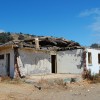
Chile’s Earthquake Reconstruction Hindered by Delays and Profiteering
Two years after the earthquake and tsunami in south-central Chile, the worst natural disaster to hit the country in half a century, thousands of families who saw their homes destroyed are still waiting for a solution.« Previous Page — Next Page »


The Week with IPS

NEXT STOP - SDGs
Tracking global progress towards a sustainable world
Tracking global progress towards a sustainable world

