Languages
Sunday, November 22, 2026



News and Views from the Global South
Latin America & the Caribbean
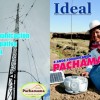
Airwaves Cut Distances in Rural Peru
The Onda Rural communication for development initiative in Peru has come up with a range of strategies to get information out to remote villages, to help them with decision-making on questions like climate change adaptation or disaster preparedness.Women Journalists in Cuba Revive Transgressive Group
More than 15 years after the "deactivation" in Cuba of the Association of Women Communicators (MAGIN), its members remain united in an informal network that transcends any specific political situation and has become a reference for the new generations.Argentina Losing Regional Leadership Position in Health
In Latin America, Argentina spends the most on healthcare. It has a vast infrastructure, highly qualified health professionals and the necessary material resources. But other countries in the region are achieving better and faster health outcomes with fewer resources.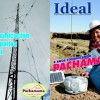
Airwaves Cut Distances in Rural Peru
The Onda Rural communication for development initiative in Peru has come up with a range of strategies to get information out to remote villages, to help them with decision-making on questions like climate change adaptation or disaster preparedness.Social Unrest on the Rise in Southern Chile
The police have cracked down hard on demonstrators in the southern Chilean region of Aysén, who have been protesting the area's isolation and high local prices of fuel and food for the past two weeks.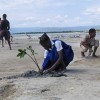
Eastern Caribbean Seeks Funds for Green Growth
As developing countries urgently seek new sources of financing to cope with problems linked to climate change, delegates from the nine-nation Organisation of Eastern Caribbean States (OECS) met here last week to evaluate potential funds and outline a more concrete vision of what is required for the subregion.PARAGUAY: Land Conflicts Threaten to Boil Over
A group of landless families occupying rural property claimed by large landowners in eastern Paraguay agreed to move to the Ñacunday National Park, defusing a tense situation.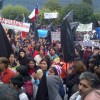
Social Unrest on the Rise in Southern Chile
The police have cracked down hard on demonstrators in the southern Chilean region of Aysén, who have been protesting the area's isolation and high local prices of fuel and food for the past two weeks.
Illegal Wiretapping Continues in Colombia, U.N. Says
Illegal spying on human rights activists and journalists is still happening in Colombia, according to a new report by the Office of the United Nations High Commissioner for Human Rights.
Correcting the Record of Haiti’s Earthquake
The world reacted swiftly to Haiti's catastrophic 7.0 earthquake in 2010. The United States shipped in 20,000 troops, some to perform lifesaving medical procedures, others to protect aid workers from earthquake victims deemed dangerous. Movie stars, criminals and other prospective parents rushed to adopt motherless Haitian babies.
Eastern Caribbean Seeks Funds for Green Growth
As developing countries urgently seek new sources of financing to cope with problems linked to climate change, delegates from the nine-nation Organisation of Eastern Caribbean States (OECS) met here last week to evaluate potential funds and outline a more concrete vision of what is required for the subregion.
Illegal Wiretapping Continues in Colombia, U.N. Says
Illegal spying on human rights activists and journalists is still happening in Colombia, according to a new report by the Office of the United Nations High Commissioner for Human Rights.
ARGENTINA: Three-Quarters of “Breadbasket” Is Drylands
How has Argentina managed to maintain its image as one of the world's breadbaskets when a full three-fourths of its territory consists of drylands? This was one of the questions raised by the scientists who decided to create the National Observatory on Land Degradation and Desertification this year.
Rural Women in Latin America Face Myriad Hurdles
"Sometimes I think of giving it all up,” Aura Canache, a small farmer in Venezuela, told IPS. “My neighbours get loans and aid, but I never have. The farm assistance plans are for men, although there are many women living off the countryside too.”Privatisation Derailed Argentina’s Rail System
Increasingly frequent and tragic railway accidents in Argentina, like this week’s crash, show that the rail system, run by private companies that receive hundreds of millions of dollars in subsidies from the state, constantly ignores warnings from inspectors and fines, observers say.
BRAZIL: A Curse on Hydropower Projects in the Amazon?
"Perhaps it's the curse of Rondônia," joked Ari Ott, referring to teething troubles with the first turbine of the Santo Antônio hydroelectric plant which was intended to kick off a new cycle of huge power projects in Brazil's Amazon jungle region.
Haiti’s University Languishes in Ruins – Part 2
When the Interim Haiti Reconstruction Commission failed to approve, or even respond to, a proposal by the University of the State of Haiti (UEH) for a unified campus to replace the nine destroyed or badly damaged faculties in the capital, Vice Rector Fritz Deshommes was not surprised at the silence.
Haiti’s University Languishes in Ruins – Part 1
Two years after the earthquake, and despite the proposals written, the consortiums organised and the foreign delegations entertained, the University of the State of Haiti (Université d'Etat d'Haïti or UEH) still has not seen any "reconstruction", and the proposal for a university campus that would unite all 11 faculties remains a 25-year-old dream.EL SALVADOR: Military Commission to Investigate Army Abuses
“It’s awful to see people who are criminals treated as heroes,” said Dorila Márquez, one of the survivors of the El Mozote massacre committed by Salvadoran army troops in December 1981.Honduran Government Seeks to Minimise Cost of Prison Fire
The government of Honduras hopes to reach friendly settlements with the families of inmates killed in the Comayagua prison fire, to avoid international lawsuits.Community Radios in Colombia Tune In for Peace
Cleaning up a stream that used to be a garbage dump and restocking it with fish, or helping demobilised far-right paramilitaries reintegrate into society by returning to school, are some of the early outcomes of a project involving community radio stations in a remote area of northwest Colombia.« Previous Page — Next Page »


The Week with IPS

NEXT STOP - SDGs
Tracking global progress towards a sustainable world
Tracking global progress towards a sustainable world

