Languages
Sunday, November 22, 2026



News and Views from the Global South
Latin America & the Caribbean
Mining Industry Puts a Freeze on Mapping of Argentina’s Glaciers
Since late 2011, scientists in Argentina have been carrying out an inventory of the country’s glaciers, with the aim of monitoring and preserving them. But they have failed to reach the most critical areas, where large-scale mining projects are encroaching on the ice fields.
To the Rescue of Children in Hands of Peru’s Shining Path
The armed forces of Peru have launched a campaign to rescue at least 50 children who are in the hands of the last surviving remnant of the Maoist Shining Path guerrillas.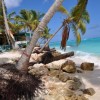
Anguilla Battles a Shrinking Coastline
When Hurricane Luis, a category four storm, lashed the tiny Caribbean island of Anguilla on Sep. 4, 1995, its forceful waves eroded all of the beaches, leaving vast areas of the shoreline carpeted with dead sea grass and debris torn from the coral reefs.
Argentina Responds to Climate Challenge with Transgenic Seeds
Researchers in Argentina have isolated a sunflower gene and implanted it into corn, wheat and soybean seeds to make them more resistant to drought and soil salinity, problems increasingly faced by this South American agricultural powerhouse as a result of global warming.
Victims of War, Victims of Oblivion
"In 1982 they killed my mama and 15 other people, and they burned down our house. Now we are trying to get support, because we have not received any aid," says Jacinto Escobar, an Ixil Indian who is seeking reparations for the damages sustained during Guatemala’s 1960-1996 civil war.
Q&A: Cuban Census “Will Show a Very Diverse Reality”
Thirteen hurricanes, three of which had a major impact on housing; increased access to goods and services; and the start of the so-called "updating" of the country’s economic and social policies are a few of the aspects that make Cuba different from what it was a decade ago.Schoolchildren and Teachers Under Fire in El Salvador
Wilber Geovany Hernández was gunned down as he left his night classes at a school in the capital of El Salvador. He was the 11th murder victim among the country's schoolchildren since the school year began on Jan. 23.Argentine Dictatorship’s Economic Crimes Coming to Light
While the trials against members of the military and police for human rights abuses committed during Argentina’s 1976-1983 dictatorship move ahead, the regime’s economic crimes have also begun to come to light.
Mesoamerica Ignores Its Water Footprint
It takes 1,600 litres of water to produce one kilo of bread. This is the type of calculation used to measure a water footprint, the total volume of freshwater used to produce the goods and services consumed by people and communities.
For Caribbean Bloc, It’s Adapt or Perish
More than a decade of efforts to promote closer socioeconomic cooperation among the 15 nations of the Caribbean Community are threatened by stagnant funding and a grim global financial situation, experts warned here.
Q&A: Group Founded by Rape Survivors Lifts Up Haitian Women
In Haitian refugee camps, women are still crammed under plastic or cloth tarps that provide no security and quickly become overheated by the sun. Sexual abuse, harassment, assault and rape run rampant, even as political responses to these dangers have stalled. But KOFAVIV, a women's organisation founded by and for rape survivors, offers a glimmer of hope.Women Have New Weapon against Domestic Violence in Argentina
Women victims of domestic violence in a city in Argentina will be given an electronic device with a panic button that will bring them immediate assistance from the police.
Central America Looks to Sustainable Development
Central America, a narrow tropical isthmus flanked by the Pacific Ocean and the Caribbean Sea, suffered 259 extreme weather-related events between 1930 and 2009, while the cumulative effects of innumerable smaller-scale events have not even been recorded.
Caribbean Looks Ahead to Stave Off Fresh Water Scarcity
Two years after a severe drought wreaked havoc with a number of Caribbean countries, some are now adopting new strategies in a bid to prevent a repeat of a situation where countries were rationing water and imposing strict restrictions on residents.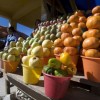
U.N. Chastises Mexico’s Support for Agribusiness
The United Nations criticised Mexico’s food policy, a month and a half after President Felipe Calderón launched to great fanfare an alliance of agribusiness for sustainable development, which was welcomed by giant food corporations.
Integration Can Help Amazon’s Post-Megaproject Blues
Trade with the rapidly expanding market in Peru will aid Porto Velho, in northwest Brazil, to cushion the blow of job and business losses in the wake of the construction of two hydroelectric plants on the Madeira river.
Brazilian Women Are the World’s Happiest
Money may not buy happiness – but it has helped make women in Brazil become the happiest, most optimistic women in the world, according to a study.
CHILE: Promoting Women’s Empowerment on Two Wheels
What does riding a bike have to do with women’s rights? According to the Chilean feminist group Macleta, which promotes cycling and a gender perspective on public transport, a bicycle is a powerful tool for social change.
Protesters Lift Roadblocks in Southern Chile
Leaders of the protests in Aysén decided to end the roadblocks that had paralysed this southern region of Chile for more than three weeks, and the government promised to "immediately" resume talks to defuse the conflict.
Temporary Toilets Threaten Permanent Damage in Haiti – Part 2
Complete with gallery and garden, the 534 wood and plasterboard houses are arranged in neat rows on a gravel plot of former sugarcane land northwest of the capital.
Money for Cleaning Toilets in Haiti Down the Drain? – Part 1
The drawdown of hundreds of non-governmental organisations which have been in Haiti since the disastrous 2010 earthquake was inevitable. But with their departure, so too goes their purse and the millions earmarked for cleaning latrines.« Previous Page — Next Page »


The Week with IPS

NEXT STOP - SDGs
Tracking global progress towards a sustainable world
Tracking global progress towards a sustainable world

