Languages
Tuesday, October 6, 2026



News and Views from the Global South
Millennium Development Goals (MDGs)

UNIDO Development Initiative Gains Momentum in ACP Nations
The inclusive and sustainable industrial development (ISID) initiative of the U.N. Industrial Development Organisation to promote industrial development for poverty reduction, inclusive globalisation and environmental sustainability is gaining momentum in the countries of the African, Caribbean and Pacific (ACP) group.
Cuba’s Reforms Fail to Reduce Growing Inequality
One of the major challenges assumed by President Raúl Castro when he launched a series of reforms in Cuba is improving living standards in a country still suffering from a recession that began over 20 years ago and has undermined the aim of achieving economic and social equality.
‘Record’ Illicit Money Lost by Developing Countries Triples in a Decade
Developing countries are losing money through illicit channels at twice the rate at which their economies are growing, according to new estimates released Tuesday. Further, the total volume of these lost funds appears to be rapidly expanding.
OPINION: Give Peace a Chance – Run with Youth
Rambang “Raymond” Tot Deng was 18 and attending his final year of school when fighting erupted in South Sudan’s capital Juba, one year ago. In the ensuing violence, as Raymond’s schoolbooks burned, thousands of South Sudanese were killed, including two of his cousins.
Nigeria Struggles to Care for its Adolescents Living With HIV
 HIV among teenagers is devastating families in Nigeria and elsewhere in Africa, where AIDS has become the No. 1 killer of adolescents.

Lima Agrees Deal – but Leaves Major Issues for Paris
After a 25-hour extension, delegates from 195 countries reached agreement on a “bare minimum” of measures to combat climate change, and postponed big decisions on a new treaty until the 21st Conference of the Parties (COP 21), to be held in a year’s time in Paris.
OPINION: How Shifting to the Cloud Can Unlock Innovation for Food and Farming
The digital revolution that is continuing to develop at lightening speed is an exciting new ally in our fight for global food security in the face of climate change.
AIDS Response Is Leaving African Men Behind
Mention gender inequality in AIDS and the fact that more women than men live with HIV pops up. But another, rarely spoken about gendered difference is proving lethal to men with HIV.
Glaciers and Fruit Dying in Peru with no Response from COP20
Snow-capped mountains may become a thing of the past in Peru, which has 70 percent of the world’s tropical glaciers. And farmers in these ecosystems are having a hard time adapting to the higher temperatures, while the governments of 195 countries are wrapping up the climate change talks in Lima without addressing this situation facing the host country.
What Future for the ACP-EU Partnership Post-2015?
“There are still prospects for a meaningful ACP-EU partnership, capable of contributing and responding concretely and effectively to the objectives of promoting and attaining peace, security, poverty eradication and sustainable development,” according to the top official of the African, Caribbean and Pacific Group of States (ACP).
OPINION: Climate Change and Inequalities: How Will They Impact Women?
Among all the impacts of climate change, from rising sea levels to landslides and flooding, there is one that does not get the attention it deserves: an exacerbation of inequalities, particularly for women.
Climate Change Creates New Geography of Food
The magnitude of the climate changes brought about by global warming and the alterations in rainfall patterns are modifying the geography of food production in the tropics, warned participants at the climate summit in the Peruvian capital.
Want Economic Growth? Lessen Inequality
For years, many policy makers, including economists, have clung to the belief that if states do nothing to boost income equality, market forces will cause wealth to trickle down to the poorest citizens and contribute to overall growth.
Afghan Concern Over Western Disengagement
The U.S./NATO International Security Assistance Force Joint Command lowered its flag for the last time in Afghanistan on Dec. 8, after 13 years. The ISAF mission officially ends on Dec. 31, and will be replaced on Jan. 1, 2015 by “Resolute Support”, a new, narrow-mandate mission to train, advise and assist the Afghan National Security Forces.
Pushing for Gender Equity at COP20
Despite international acknowledgement that women are disproportionately affected by climate change, the Lima climate negotiations have been slow to deliver progress on recognising their importance, while threats of pushback loom on the horizon.
Africa Sets Demands for Post-2015 Climate Agreement
The post-2015 global climate change agreement should be flexible and fully resourced or else condemn Africa to another cycle of poverty resulting from the adverse effects of climate change.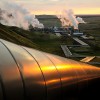
The Rapid Rise of Green Bonds
Most countries joining the growing list of nations pursuing clean geothermal power have been confronted with a huge financial challenge.
Mangrove Conservation Paves the Way to a Sustainable Future
When the Asian tsunami washed over several Indian Ocean Rim countries on Boxing Day 2004, it left a trail of destruction in its wake, including a death toll that touched 230,000.

Latin America Faces the Novelty and Challenge of Ageing
The eternally young Latin America is also ageing, due to the rise in life expectancy and the drop in birth rates - a demographic revolution that poses new challenges in a region that has begun to move slowly away from its status as the most unequal part of the world.
Starvation Strikes Zimbabwe’s Urban Dwellers
As unemployment deepens across this Southern African nation and as the country battles to achieve the United Nations Millennium Development Goals (MDGs) ahead of the December 2015 deadline, thousands of urban Zimbabweans here are facing starvation.
Marginalised Communities Warn of AIDS/TB “Tragedy” in Eastern Europe and Central Asia
Marginalised communities and civil society groups helping them are warning of a “tragedy” in Eastern Europe and Central Asia (EECA) as international funding for HIV/AIDS and tuberculosis (TB) programmes in the regions is cut back.« Previous Page — Next Page »





The Week with IPS

NEXT STOP - SDGs
Tracking global progress towards a sustainable world
Tracking global progress towards a sustainable world
