Languages
Sunday, November 8, 2026



News and Views from the Global South
Millennium Development Goals (MDGs)
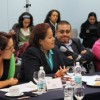
MEXICO: Women Journalists Face Double Threats
The murder of journalist Yolanda Ordaz, whose body was found Tuesday in the eastern Mexican city of Veracruz, once again threw into relief the dangers that reporters face in this country, which in the case of women are compounded by discriminatory and sexist treatment.U.S.: Laws “Not Enough” to Tackle Violence Against Native Women
Juana Majel Dixon, first vice president of the National Congress of American Indians, said earlier this year that, "Young women on reservations live their lives in anticipation of being raped...They talk about 'how I will survive my rape‚' as opposed to not thinking about it at all."
NICARAGUA: Court Downgrades Rape to “Fit of Passion”
The rape of a young woman that has become a symbolic case in Nicaragua was ruled a "crime of passion" by the Supreme Court in a verdict that is suspected to have political overtones.
KENYA: Gender Responsive Planning and Budgeting at Work
For the first time ever, the Kenyan finance minister has allocated almost four million dollars, about 3.6 percent of the primary education budget, to provide free sanitary pads to schoolgirls.
Worrying Dysfunction in DR Congo Airports
Major operational shortcomings are behind the recent spate of crashes at airports around the Democratic Republic of Congo, raising questions about safety for aircraft and passengers in the central African country.SWAZILAND: Economic Crisis Means Short Supply of ARVs
Swaziland’s economic crisis has affected its ability to provide healthcare as the country’s buffer stock of antiretrovirals (ARVs) has fallen below the prescribed three-month supply.Right to Water Still a Political Mirage
When the international community commemorates the first anniversary of a historic General Assembly resolution recognising the right to water and sanitation as a basic human right, there will be no joyous celebrations in the corridors of the United Nations, come Jul. 28.
HEALTH-AFRICA: Improving Sanitation, Still a Long Way to Go
When Callixte Munyabikari, a potato farmer from Gakenke in northern Rwanda, was rushed to a regional hospital after he fell ill with diarrhoea, he thought it was just a bad case of food poisoning.
Q&A: Challenge Men To Share Political and Economic Power
Bineta Diop, director of the non-governmental organisation Femmes Africa Solidarité, is at the forefront of the fight for better protection of women in conflict zones and their integration in peace processes.SENEGAL: Fish Farming Breathes New Life Into Rural Economy
July signals the start of three months of intense activity for residents of the seven villages around the small dam at Sébi Ponty. The dam was stocked with tilapia in 2006, and aquaculture is proving to be a vital economic activity for youth in the area.
MALAWI: Fuel Shortages Ignite Violent Nationwide Protests
In light of the recent spate of protests in Malawi, government should rethink its policy to devalue the local currency, economists say.KENYA: Providing ARVs to HIV-Negative People Will Strain Resources
When Lucy Omollo found out that her husband was HIV-positive six years ago, the couple thought the best way to prevent her from becoming infected with the virus was not to have sex.
HORN OF AFRICA: Poor Attention to Forecasts to Blame for Famine in Somalia
The world had an opportunity to save thousands of lives that are being lost in parts of Somalia due to the famine, if only the donor community had paid attention to the early warning systems that predicted it eight months ago.Growing Water Deficit Threatening Grain Harvests
Many countries are facing dangerous water shortages. As world demand for food has soared, millions of farmers have drilled too many irrigation wells in efforts to expand their harvests. As a result, water tables are falling and wells are going dry in some 20 countries containing half the world's people.
Q&A: CAPTCHA Creator Would Like to Tap Crowdsourcing to Fight Crime
If you use the internet, you will have come across CAPTCHA, a test to determine whether the computer user is human or a machine. What you may not know is that one of its inventors, mathematician Luis von Ahn, comes from one of the poorest countries in Latin America, Guatemala.
SOMALIA: “Children on the Verge of Death Left Behind to Save Those Who Had a Chance”
Tens of thousands of starving Somalis have made their way to the government- held part of Mogadishu in search of food, but many parents have made the anguished decision to leave a child too weak to make the journey behind in hope of saving the others.
War Increasingly Spills Over into Classrooms
The most pressing global challenge to children's rights may be the increasing number of military attacks on schools in war zones, according to a Human Rights Watch report released Wednesday.Sanitation Moves Up Global Development Agenda
With nearly 40 percent of the world's population lacking adequate sanitation, the Bill and Melinda Gates Foundation announced an initiative Tuesday to invest 42 million dollars in new grants to help "reinvent the toilet".
MALAWI: Women Get Dirty to Stop Water Scarcity
Ethel James cannot wait for the gravity-fed water scheme in her area to be fixed so that she and the other women in her village will no longer have to wake up before dawn everyday to queue for water./CORRECTED REPEAT*/: Burkina Faso Losing Thousands of Hectares of Forests Each Year
The Burkina Faso authorities have sounded the alarm over the increased rate of degradation of forests in this Sahelian country.
SOUTH SUDAN: Time to Start Learning
Being educated during the country’s civil war was almost impossible. But Victoria Maja wanted to become a doctor, and in order to do so she had to leave South Sudan and live and study in the north. She was one of the lucky ones.« Previous Page — Next Page »





The Week with IPS

NEXT STOP - SDGs
Tracking global progress towards a sustainable world
Tracking global progress towards a sustainable world
