Languages
Sunday, November 8, 2026



News and Views from the Global South
Millennium Development Goals (MDGs)

Ethics and Politics Get Divorced in Guatemala
"She got a divorce because of her ambition and love of money," shopkeeper Dulce Álvarez told IPS, about Guatemalan former First Lady Sandra Torres' decision to end her marriage in order to sidestep the legal bar to the president's family members running for the presidency.
Illegal Logging Spreading in Madagascar
The transitional authorities in Madagascar are struggling to overcome the problem of illegal logging of precious wood. In spite of an April 2010 decree that prohibits the logging, transporting, trading and export of precious woods, felling in the forests is still continuing.
ZAMBIA: Making the Most of Limited Capital
Proponents of microfinance often portray it as the empowering extension of credit to vulnerable but diligently self-employed poor people - often women - who support each other to improve their livelihoods as well as repay their loans. The image is true, to some extent, but in many parts of Africa, microfinance institutions have somewhat sharper teeth.
ZAMBIA: Microfinance Beyond the Reach of the Poor
According to the World Bank, less than eight percent of Zambian adults have bank accounts. For the millions who make their living in the informal economy, this prevents them from earning interest on any savings they have or securing credit needed to expand small businesses beyond mere survival.
Sub-Saharan School Enrolment Shoots Up, But Challenges Remain
Investment in education by sub-Saharan African countries is paying dividends, with more children than ever before now attending school, according to a new report by the United Nations Educational, Scientific and Cultural Organization (UNESCO).
Still Awaiting a Roadmap for Sustainable Development
The road to the crucial Rio+20 conference on greening the world economy next year has hit a setback with the breakdown of the 19th session of the U.N. Commission on Sustainable Development after 10 days of intense negotiations.Parliamentarians Ask G8 to Focus on Women
Ahead of this month's G8 summit in France, parliamentarians from 35 countries have issued a strong call for leaders of the world's major economies to focus on the role of women and girls in development.DR CONGO: Measles Claims Lives as Public, Private Resources Stretched Thin
More than 3,000 cases of measles have been recorded in the past three months in two districts of Maniema Province, in the eastern part of the Democratic Republic of Congo.U.N. to Launch International Year of Cooperatives
When the United Nations commemorates the International Year of Cooperatives (IYC) in 2012, the world body will recognise the contributions made by cooperatives to socioeconomic development, including poverty reduction, employment generation and social integration.ARGENTINA: Small Loans, Big Solutions
Avoiding the costs of traditional microcredit models, remote communities in the La Puna high plateau region in northwest Argentina have launched a successful loan programme that enables them to meet extraordinary expenses such as weaving material, school supplies or medicine.
BRAZIL: Women Break Down Barriers in Heavy Construction
They represent just seven percent of the workers building the Santo Antonio hydroelectric dam on the Madeira River, which cuts across the Amazon jungle in northwest Brazil. But the women workers total 1,200, and many of them have had to break down barriers to jobs seen as the preserve of men.Yemen Faces Older Birth Pangs As Well
An estimated 2,555 women in Yemen die annually during childbirth because they do not have access to proper health facilities or experienced medical professionals.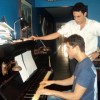
BRAZIL: Despite Historic Victory, Gay Rights Struggle Far from Over
Although gay rights organisations in Brazil are celebrating a historic triumph, legal recognition of civil unions by the Supreme Court, they say the struggle is far from over.Homophobia in the Caribbean Varies Widely
While homosexuality is punishable by law in nine Caribbean island nations, gay activism is increasingly taking root in countries like Cuba.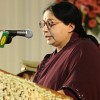
INDIA: Women Hold Their Own in Provinces
Provincial elections in four major Indian states have produced two female chief ministers, proving women capable of holding their own in the rough and tumble of politics in this deeply patriarchal country.
DEVELOPMENT: Women Leading Bangladesh Away from the LDC Tag
Women entrepreneurs and workers will soon help Bangladesh shake off the Least Developed Country (LDC) label, business leaders say.
DEVELOPMENT: Chinese Step In, Efficiently
For Jany Chen from Shanghai, concern often-raised in Europe and North America about the Chinese invasion of Africa is a lot of wasteful talk that deserves to be flushed down the toilet. Efficiently.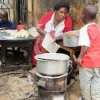
Uganda Stoves Saving Fuel and Forests
Carbon finance is putting new and efficient charcoal stoves into hundreds of thousands of kitchens in Uganda – reducing charcoal use and protecting forests as well as saving money for poor households.HEALTH: Rich and Poor Suffer Both Infectious and Noncommunicable Diseases
The world is experiencing a change in the geographic distribution of diseases. Traditionally, infectious diseases, which claim the lives of so many children, affected poor countries, and noncommunicable diseases like diabetes, cardiac ailments and cancer plagued rich countries.DEVELOPMENT: New Action Programme, and New Name for the Poorest
A new 10-year blueprint for assisting the poorest countries on the planet to join the league of the more fortunate ones was approved Friday at the closing of the Fourth U.N. Conference on the Least Developed Countries (LDC-IV) held May 9- 13 here.
DEVELOPMENT: Programme of Action Adopted for World’s Poorest Nations
"The future for least developed countries lies in trade, productive capacity and governance more than in aid," said Cheick Sidi Diarra, United Nations High representative for the Least Developed Countries, responding to criticism of the plan of action put forward as the U.N. conference on the world's poorest nations drew to a close in Istanbul.« Previous Page — Next Page »





The Week with IPS

NEXT STOP - SDGs
Tracking global progress towards a sustainable world
Tracking global progress towards a sustainable world
