Languages
Sunday, November 8, 2026



News and Views from the Global South
Millennium Development Goals (MDGs)

CHILE: HidroAysen Dam Project is Dividing Communities
The area that will be flooded to build the HidroAysén project's five dams represents barely 0.05 percent of the Chilean region of Aysén. But it is made up precisely of the valleys where the majority of the population lives, according to local residents.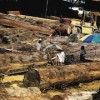
WORLD: Tropical Forest Summit Opens
Heads of state from the Amazon, Congo and Borneo-Mekong basins are meeting in the Congolese capital, Brazzaville: leaders hope to reach an accord on sound management of valuable rainforest ecoystems, but civil society actors believe the problems faced by local populations may be ignored.BRAZIL: Major Microlaboratory Against Poverty
Microcredit in Brazil still has huge potential for expansion, even though microloans have already grown much more than traditional credit in the last eight years.Putting Road Safety on the Development Agenda
The leading killer of children over the age of five is not malaria or dysentery, but cars and trucks. And 90 percent of those children are killed on roads in developing countries.
SOUTH AFRICA: Sound Policy Key to Renewable Energy
A radical rethink of current energy policy can cut South Africa's greenhouse gas emissions by 80 percent in 2050 compared to 1990 levels. More than that - after an initial spike in investment - South Africans four decades down the line would pay 23 billion dollars per year less for their electricity compared to business as usual.
INDIA: Unwed Tribal Mothers Seek Aid
For Janu, walking the streets to beg for alms is the only option for survival. After all, she has a two-year-old daughter to feed, and she herself, at 14 years old, is little more than a child.
MEXICO: Citizen’s Trial Finds State Guilty in Deaths of 49 Children
"We didn't expect support from so many people in the capital. The authorities have to answer for this, and they must understand that we will not give up until justice is done," Manuel Rodríguez Amaya told IPS, his eyes still wet from bursting into tears at the end of the citizen's trial.INDIA: Violations May Hit Vaccination Plans
After a government report confirmed major ethical violations in trials of Human Papilloma Virus (HPV) vaccines on Indian schoolgirls, senior doctors are calling for transparency in clinical trials conducted under private-public partnerships.TANZANIA-INDIA: A Rewarding Relationship
The Indian prime minister, Dr Manmohan Singh, concludes a three-day visit to Tanzania on May 28. Singh arrived in Dar es Salaam from the Ethiopian capital, Addis Ababa, where he took part in the Second India-Africa Forum Summit, which began on May 20.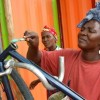
AFRICA: ‘Bicycles Are For Good’
"Politicians may tell us that bicycles are a sign that we are not advancing," says Patrick Kayemba, managing director of the First African Bicycle Information Organization in Uganda, "but we ourselves have seen that cycling is a socio-economic tool. It works now - we don’t have to wait for someone to rescue us with better public transport, better this, or better that..."
World Bank Calibrating its Measurement of Sustainability
The World Bank is working to update the mechanisms it uses to measure the effects of the financing it provides, particularly in environmental and social terms, now that it is gearing up to administer the new Green Climate Fund.
A Dark Day for Brazil’s Amazon Jungle
The same day that the lower house of the Brazilian Congress approved a reform of the forestry code that would make it easier to clear land in the Amazon jungle for agriculture, a husband and wife team of activists who spent years fighting illegal deforestation in the rainforest were murdered.Push for Girls’ Education Ahead of G8
Amid a flurry of meetings in Europe, U.S. Secretary of State Hillary Rodham Clinton will help to launch a "global partnership for girls' and women's education" here Thursday at the United Nations Education, Scientific and Cultural Organisation (UNESCO).
ENVIRONMENT-CHILE: Wilderness Dams Galvanise Protesters
Environmental approval for the construction of five hydroelectric dams in Chile's southern Patagonia region has triggered nationwide protests in Chile, giving rise to a citizen's movement whose focus has gone beyond the question of the dams.LATIN AMERICA: Digging Deep for Transparency in Oil and Mining
Oil and mineral resources are abundant in several Latin American countries but will not last forever, and should be used to fuel the transition to a more diversified economy.
Sorghum Proving Popular with Kenyan Farmers
Gadam sorghum was introduced to semi-arid regions of eastern Kenya as a way for farmers to improve their food security and earn some income from marginal land. The hardy, high-yielding sorghum variety has not only thrived in harsh conditions, it has won a place in the hearts - and plates - of local farmers.G20: Hungry for Opportunities
Food shortages may be causing hunger in the developing world, but the large Latin American agricultural countries that belong to the Group of 20 (G20) see the situation as an opportunity to exploit.
PERU: No Easy Choice for Women in Presidential Runoff
In other circumstances, many women in Peru would be celebrating the possibility of a female president for the first time in the history of their country, or the alternative: the triumph of a candidate who promises to improve things for the poor. But both candidates taking part in the Jun. 5 runoff draw heavy opposition or awaken serious doubts among women's groups.
NIGERIA: Women Giving Each Other a Hand Up
In an open space near her home in Makoko, a crowded suburb of the sprawling city of Lagos, Latifat Agboola sits in the midst of bags of charcoal, attending to her customers. Some of them call her "the charcoal woman with the dirty job, but she sees herself as a businesswoman on the rise.EUROPE: Watching Aid Fall Short
The European Union missed its target of aid to developing countries by 15 billion euros in 2010 and is on course fall well short of future goals, according to a report on the world’s largest donor.
HEALTH: Water, Sanitation Could Erase Cholera and Guinea Worm
The World Health Assembly could adopt landmark resolutions asking governments to improve water and sanitation to eradicate cholera and guinea worm, the latter of which exists in just four countries in Africa. While safe drinking water and toilets are the most cost-effective public health measures, they have not been a priority for most developing countries.« Previous Page — Next Page »





The Week with IPS

NEXT STOP - SDGs
Tracking global progress towards a sustainable world
Tracking global progress towards a sustainable world
