Languages
Sunday, November 8, 2026



News and Views from the Global South
Poverty & MDGs

Angola’s Police Silence the Media
Rights groups and activists are warning of a rapidly deteriorating political climate in Angola following a police raid on a private newspaper and a violent crackdown on anti-government protests.
The Sound of Peace in Kenya’s Kibera Slum
In a Kibera-bound mini-bus taxi, the driver changes the station just as he turns onto Ngong Road, kilometres away from the Kenyan slum. He tunes into Pamoja Radio 99.9 FM, a local community radio station that broadcasts only in Kibera.
Q&A: Prevention Is the Best Cure for Gender Violence
As many as seven in 10 women in the world report experiencing physical and/or sexual violence at some point in their lifetime, leaving a devastating aftermath for individuals, communities and nations.Women Have New Weapon against Domestic Violence in Argentina
Women victims of domestic violence in a city in Argentina will be given an electronic device with a panic button that will bring them immediate assistance from the police.
Central America Looks to Sustainable Development
Central America, a narrow tropical isthmus flanked by the Pacific Ocean and the Caribbean Sea, suffered 259 extreme weather-related events between 1930 and 2009, while the cumulative effects of innumerable smaller-scale events have not even been recorded.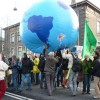
Rio+20 Summit: A Moment That Must Be Seized
The upcoming Rio+20 conference has to be the moment in human history when the nations of the world come together to find ways to ensure the very survival of humanity, many science and environmental experts believe.
Caribbean Looks Ahead to Stave Off Fresh Water Scarcity
Two years after a severe drought wreaked havoc with a number of Caribbean countries, some are now adopting new strategies in a bid to prevent a repeat of a situation where countries were rationing water and imposing strict restrictions on residents.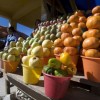
U.N. Chastises Mexico’s Support for Agribusiness
The United Nations criticised Mexico’s food policy, a month and a half after President Felipe Calderón launched to great fanfare an alliance of agribusiness for sustainable development, which was welcomed by giant food corporations.RIGHTS-DR CONGO: Disabled Left to Fend for Themselves
The outlook for people living with disabilities in the Democratic Republic of Congo remains bleak, despite a variety of efforts to improve their lot and bring them in from the margins of society.
ANGOLA: Solar Panels Turning Dirty Water Clean
The brightly painted old shipping container with solar panels on its roof and high-specification filtration devices inside looks out of place in this dusty Angolan village of Bom Jesus, 50 kilometres east of the capital Luanda.
U.N. Aims at Major Global Conference on Women in 2015
As the race towards gender equality moves at an exceedingly slow pace, the United Nations is calling for a major international conference on women in 2015 - 20 years after a landmark meeting in Beijing in 1995.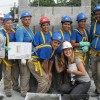
Brazilian Women Are the World’s Happiest
Money may not buy happiness – but it has helped make women in Brazil become the happiest, most optimistic women in the world, according to a study.
Protesters Lift Roadblocks in Southern Chile
Leaders of the protests in Aysén decided to end the roadblocks that had paralysed this southern region of Chile for more than three weeks, and the government promised to "immediately" resume talks to defuse the conflict.
Temporary Toilets Threaten Permanent Damage in Haiti – Part 2
Complete with gallery and garden, the 534 wood and plasterboard houses are arranged in neat rows on a gravel plot of former sugarcane land northwest of the capital.
Money for Cleaning Toilets in Haiti Down the Drain? – Part 1
The drawdown of hundreds of non-governmental organisations which have been in Haiti since the disastrous 2010 earthquake was inevitable. But with their departure, so too goes their purse and the millions earmarked for cleaning latrines.
World Has Met Development Target on Water, U.N. Claims
When the U.N. General Assembly unanimously adopted a resolution back in September 2000 laying out eight Millennium Development Goals (MDGs), it specified 2015 as the target date to achieve them.
Campaign in Chile Fights “Disgraceful” Under-representation of Women in Power
The More Women in Power campaign in Chile, carried out by a group of social organisations, is seeking to increase the number of women in public decision-making positions, to move towards "parity democracy".
World Has Met Development Target on Water, U.N. Claims
When the U.N. General Assembly unanimously adopted a resolution back in September 2000 laying out eight Millennium Development Goals (MDGs), it specified 2015 as the target date to achieve them.Poverty Encourages Early Marriages in Tajikistan
When she was 16, Kibriyo Khaitova’s parents told her that if she didn’t marry, she’d soon be a spinster. So, like many girls from Tajikistan, Khaitova married a man her family found for her. Now 20, she has two children, no husband and is fending for herself.
Q&A: “Social Unrest Can Be a Creative Force”
Social unrest and demands for change are not a negative thing during times of crisis like today, says Rubens Ricupero, a Brazilian diplomat and thinker.Pakistan’s Hospitals That Come Home
With no money to see a doctor, Gul Lakhta,50, had resigned himself to blindness when a ‘mobile hospital’ drove into his village in the Bajaur Agency of the Federally Administered Tribal Areas (FATA), on Pakistan’s rugged border with Afghanistan.« Previous Page — Next Page »





