Languages
Thursday, November 12, 2026



News and Views from the Global South
Poverty & MDGs
ZIMBABWE: Women’s Rights Activists Lobby to ‘Engender’ Constitution
Zimbabwe’s latest constitutional reform process has generated strong interest among activists in strengthening protection for women's rights. The early signs are that the drafting of a new constitution will not prioritise correcting legal, social and economic discrimination against women.NICARAGUA: Literacy Goal Met – Further Education Planned
After an intense two-year literacy campaign, Nicaragua has managed to reduce the number of people who cannot read and write to below four percent of the adult population, from nearly 21 percent.
PERU: Rural Highlands Communities Coming Online
Little by little, rural communities in southern Peru are beginning to take advantage of the internet to acquire new knowledge and increase their income. But the use of computers in rural areas faces numerous challenges, from illiteracy to fear of the unknown or questions about the sustainability of these new communications initiatives once they are left in local hands.
WOMEN-MALAYSIA: Top of the Class, Nowhere in Politics
Yet another by-election is over in Malaysia.EDUCATION-SIERRA LEONE: Schools in Crisis as Thousands of Teachers go Unpaid
Government’s refusal to pay the salaries of thousands teachers, while looking to recruit thousands more, has plunged the schooling system into crisis.
NAMIBIA: Garden Project Grants Modest Independence
Life in Omaruru? Put it this way: even the river that gives the town its name doesn’t always make it down. In this semi-desert part of Namibia, existence is a daily battle against poverty. A women’s gardening project is trying to change this.
SIERRA LEONE: Custom Slow To Yield To New Law on Inheritance
They told her after the 40-day ceremony to mark the death of her husband. M'ballu Kamara's in-laws said she would be taken care of by her husband's younger brother. It took her a moment to realise the "care" she was to receive would require that she become his third wife.ENVIRONMENT: Africa Builds United Position for Copenhagen
An African Union proposal demanding billions of dollars in compensation for the impacts of climate change is taking shape.
INDONESIA: 'Safe' Abortion Could Put a Brake on Women's Mortality Rates
Women's rights groups who are campaigning for widening the scope of abortion in Indonesia are calling for an amendment to a colonial era law that puts poor women at risk.
MALAWI: Activists Look Askance at New Mine
"We are serious about the integrity of the environment," says Neville Huxham, the country director for Paladin Energy Africa. "We're taking the uranium out of the ground, we're exporting it to be used for productive purposes, so we should be getting a medal for cleaning up the environment."
DEVELOPMENT: New Threats Aggravate Africa's Water Crisis
The widespread water scarcity in the African continent, impacting on the lives of nearly 300 million people, may be aggravated further by several new threats, including climate change, transboundary disputes and the negative fallout from military conflicts.
RIGHTS: Sweet 16 Marriages Cause Controversy in Malawi
Malawi's president, Bingu wa Mutharika, has come under severe pressure from civil society groups who are demanding he scrap a newly-passed bill allowing 16-year-olds to marry with the consent of their parents.
VIETNAM: Sex Selection Skews Sex Ratio
Vietnam is something of a regional leader when it comes to gender equality. There are laws against domestic violence and discrimination, and very high female literacy.
NIGERIA: Divorce a Tool To Relegate Women
The high rate of divorce in Kano state, northern Nigeria has become a worrisome phenomenon. Six months ago, an organisation of widows and divorcees tried to stage a massive march through the city of Kano to draw attention to their situation.NIGERIA: Kano’s Women Still Seeking a Champion
Hajiya Altine Abdullahi cut a chastened figure in February. She was planning a million-strong march of widows and orphans through the streets of the northern Nigerian city of Kano.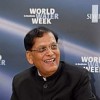
INDIA: When Toilets Were as Scarce as Hen’s Teeth
Dr. Bindeshwar Patak, the 2009 Stockholm Water Prize Laureate and founder of a grassroots sanitation movement in India, recounts the days before his country's independence in 1947 when toilets were a rare sight in remote villages and towns under British rule.
RIGHTS-UGANDA: Women Score Victory Against Gender-Based Violence
Women are celebrating a hard-won victory for gender rights after intense public protests led to today’s re-arrest of the country’s police boss – a self-confessed wife-killer.
ANGOLA: Teenage School Programme Gives Drop Outs Second Chance at Education
Free primary education for all is an Angolan government policy, but unfortunately this has not translated into a reality that sees all children receiving education.
RIGHTS-GUATEMALA: One Arrest in Gender-Killing Epidemic
"Femicide," or gender-based murder, has reached epidemic proportions in Guatemala. But at least for Rosmery González - one of the more than 700 Guatemalan victims of this crime in 2008 - justice is finally being done with the arrest of her alleged killer earlier this month.
Q&A: "Safe Drinking Water for Astronauts, Not Slum Dwellers"
"We can provide astronauts with a safe supply of drinking water when they travel to the moon, but we cannot provide the same service to slum dwellers in Kibera, Nairobi or Dharavi, Mumbai," Anders Berntell, executive director of the Stockholm International Water Institute (SIWI), told a gathering of over 2,400 participants at the annual World Water Week concluding Friday.
Q&A: Knowledge Barriers Key Factor in Sanitation Crisis
Despite longstanding promises by world leaders to halve, by 2015, the number of people without basic sanitation, 2.5 billion still lack access to basic sanitation, and 1.2 billion don't have any form of sanitation at all.« Previous Page — Next Page »





