Languages
Tuesday, October 20, 2026



News and Views from the Global South

Africa Climate Wire seeks to give voice to the groups and communities most vulnerable to the impacts of climate change through stories that investigate the governance of climate change adaptation, national response strategies and finance for adaptation in Africa.
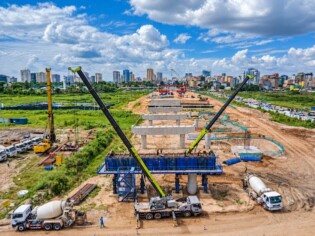
Tanzania’s Biggest City Bets on Elevated Bridge to Dodge Chronic Flooding
Each morning on her way to Kariakoo, Clementina Nyangwine looks out of her commuter bus as it crawls through Jangwani and watches giant foundation piles rising above the muddy Msimbazi valley.
New Chickpea Variety to Drive Climate Resilience in Africa
New chickpea seed research and production have become the new frontier of climate resilience in southern Africa as farmers battle failing cereal production.
Human-Caused Climate Change, Not El Niño, Drives Most Coral Bleaching Events – Research
Every morning, as the Indian Ocean retreats from the reef off Zanzibar's Jambiani village, Chiku Chande steps into the knee-deep lagoon carrying bundles of seaweed seedlings. Years of farming these waters have taught her about every channel and coral outcrop. But lately, the corals that once glowed in brown and gold have become chalky white.
Why Pastoral Production Requires Regional Coordination, Harmonised Policy
At the 64th sessions of the Subsidiary Bodies (SB64) under the UNFCCC in Bonn, Germany, the Local Communities and Indigenous Peoples Platform (LCIPP) underscored the importance of ethically and equitably incorporating indigenous values and knowledge and local knowledge systems such as pastoralism into climate policies and actions ahead of the 31st Conference of Parties on climate change (COP31).
Universities Join Hands to Enhance Agroforestry Research for Mitigating Climate Change
A team of universities, led by Addis Ababa University, has joined forces to implement a four-year Intra-Africa academic mobility project aimed at strengthening agroforestry research and education for climate change mitigation.
UNOC3: World Leaders Recognize Urgent Need for Ocean Action
The world has converged along the Mediterranean Sea to affirm their commitments to the sustainable use and protection of the ocean.
Can These Prehistoric Sea Creatures Survive Climate Change?
In November, tens of thousands of male olive ridley sea turtles (Lepidochelys olivacea) start congregating on just five kilometers of nearshore in Odisha in eastern India. They wait for the females of the species to arrive. The survival of these prehistoric sea species has largely depended on suitable pairing and mating. However, research findings from around the world indicate that, in the long term, there may be a limited number of males at these mating sites compared to an overwhelming number of females.
Pemba’s Woman Salt Farmers Forge Livelihoods Amid Climate Woes
As the cool morning breeze sweeps across the Indian Ocean beach in Tanzania’s Pemba archipelago, Salma Mahmoud Ali begins her day. With her brightly coloured Kikoi cinched tightly around her waist and a dark blue scarf framing her face, she walks barefoot toward her salt ponds. The humid air hangs, but Ali wades through ankle-deep water with courage.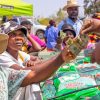
In Zimbabwe, Women Are Leading the Battle Against Climate Change
When Susan Chinyengetere started to focus on farming in her home village in south-eastern Zimbabwe, she wondered if she could earn a living and raise her children. With climate catastrophes ravaging the country, her hesitation on rain-fed agriculture worsened. But two years later, the 32-year-old mother of two from Mafaure village in Masvingo, about 295 km from the capital Harare, is now a champion in farming.
Healing Minds, Empowering Women: Ghana’s Climate Change Battle
As climate change wreaks havoc across the globe, its effects are most acutely felt by those living in vulnerable coastal and rural communities.
How Climate-Smart Strategies Revitalized Tanzania’s Livestock Sector
As the sun sets, its golden hues piece through the dusty haze, creating a dazzling display when a herd of livestock lazily roams on the arid landscape as they return home from grazing. Dressed in shiny red robes, the youthful Maasai pastoralists routinely whistle as they steer cattle, goats and sheep to maintain a unified path.
Countdown to Critical Conference for Small Island Developing States
Delegates from small island developing states (SIDS) worldwide are meeting in Antigua and Barbuda to strategize for the next decade.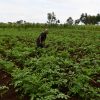
Digitisation Boosts Mechanised Farming Among Kenyan Farmers
When 33-year-old Kimani Mwaniki, an Irish potato farmer in Elburgon, Nakuru County in Kenya’s Rift Valley, heard about a farmer’s virtual school, he didn’t hesitate to enrol. He was keen to learn how the programme will enable him to get higher crop yields for his market in the capital city Nairobi and elsewhere.
Women Pastoralists Feel Heat of Climate Change
For many people, climate change is about shrinking glaciers, rising sea levels, longer and more intense heatwaves, and other extreme and unpredictable weather patterns. But for women pastoralists—livestock farmers in the semi-arid lands of Kenya—climate change has forced drastic changes to everyday life, including long and sometimes treacherous journeys to get water.
Africa Remains Resolute Heading to COP 24
In December 2015, nations of the world took a giant step to combat climate change through the landmark Paris Agreement. But African experts who met in Nairobi, Kenya at last week’s Seventh Conference on Climate Change and Development in Africa (CCDA VII) say the rise of far-right wing and nationalist movements in the West are threatening the collapse of the agreement.
Paris Delivers Historic Climate Treaty, but Leaves Gender Untouched
After 2 weeks of intense negotiations, on Saturday evening, the 21st UN climate conference (COP21) in Paris finally delivered a historic agreement that, for the first time, promises to keep the global warming under 2 degrees Celsius. The treaty, consisting 31 pages and signed by by 196 countries, include the big five steps of climate action:
Paris Delivers the Promised Climate Deal to Resounding Cheer and Applause
The impossible was made possible. Governments from 195 countries around the world emerged here with the first universal agreement to cut greenhouse gases emissions and reduce the negative impacts of climate change.Climate Change and Women Across Three Continents
The link between women in climate change is a cross-cutting issue that deserves greater recognition at climate negotiations. It is pervasive, touching everything; from health and agriculture to sanitation and education.Tackling Climate Change in Africa: Europe’s Solution to the Migrant Crisis?
As thousands of Africans arrive in Europe every month, often risking their lives aboard shaky boats to get to a better life, lack of access to energy could be one of the reasons for their exodus.
Farmers to COP 21: Don’t Bite the Hand That Feeds You!
When Dr. Evelyn Nguleka says that the world’s people shouldn’t bite the hand that feeds them, she explains that she’s not only referring to protecting farmers, but also to safeguarding the environment.
Cities Emerge as Urgent Climate Solution at COP21
As the climate conference advances into its final stages amid the colossal challenge of having 195 countries agree on a single and unified global policy on climate change, urban areas appear a a different issue but complementary solution for all.Next Page »





 This publication explores African CSO engagement in the UNFCCC Conference of Parties (COPs) process.
Africa Climate Governance Factsheets
The following resources provide an overview of the climate governance, climate finance, gender and climate change and policy coherence issues as they relate to Africa in the climate negotiation processes.
The following resources provide an overview of the climate governance, climate finance, gender and climate change and policy coherence issues as they relate to Africa in the climate negotiation processes.
 Climate Change Governance for Africa
 Policy coherence in tackling climate change in Africa
 Climate Finance
 Gender and climate
 Heinrich Boll Foundation Workshop Report: ENSURING CLIMATE FINANCE EFFECTIVENESS IN AFRICA
Project supported by

This page includes independent news coverage, which is part of a project funded in partnership by the Heinrich Böll Stiftung. The contents of this news coverage are the sole responsibility of IPS and should not be taken to reflect the views of Heinrich Böll Stiftung.
