Languages
Friday, September 25, 2026



News and Views from the Global South
SERBIA: Royalty Rehabilitated in Retrospect
Serbia saw the first rehabilitation of a member of its royal family earlier this month, in a move by the supreme court described by historians as "deeply moral" and necessary - for generations who remember the Karadjordjevics as well as those who have learned about them from the history books.RIGHTS-CUBA: Government Pardons Some 3,000 Prisoners
Only seven prisoners convicted of political crimes are among the nearly 3,000 inmates pardoned by the government of Raúl Castro. Most of the prisoners have reportedly already been released.PORTUGAL: No Jobs? Just Emigrate!
Hounded by the economic crisis that shows no signs of letting up and by political leaders of all stripes, Portugal's conservative Prime Minister Pedro Passos Coelho sent out an unprecedented message to his fellow citizens: emigrate.JAMAICA: Hazard Mitigation Funds to Rescue Tourist Mecca
In the latest efforts to mitigate the hazards associated with climate change, the Jamaican authorities are turning their attention to Negril, where decades of unplanned development is destroying the local ecosystem and eroding the famous beach.Peru Clashes with Inter-American Commission Over Human Rights Case
The Peruvian government will propose that the Organisation of American States review the powers of the Inter-American Commission on Human Rights (IACHR), and is seeking the support of Brazil, Colombia, Ecuador and Venezuela. The move is a reaction against a lawsuit brought against it by the IACHR.Argentina Investigates Human Rights Crimes of Spain’s Franco Era
A judge in Argentina has begun to investigate human rights crimes committed during Spain's civil war and the dictatorship of General Francisco Franco (1936-1975).Q&A: War Crimes Court Should Strengthen Victims’ Participation
Most of the cases brought before the Hague-based International Criminal Court (ICC) include gender-based crimes, but advocates say the court is still falling short in ensuring that women play an active role in decision-making and outreach at the highest levels.U.N. Chief Will Pick New Team to Usher in Second Five-Year Term
When U.N. Secretary-General Ban Ki-moon took office in January 2007, one of his first announcements was to call for the resignation of all senior high-ranking officials so that he could pick his own team of players.MEXICO: Youth on the Front Lines of Protest Movement
"We need to be the ones to provide the answers to the questions of our times, because we are the main victims of the voracious policies of capitalism," says Alexis Jiménez, a 23-year-old ethnologist who has spent the last two months camping out in front of the Mexico City Stock Exchange.KENYA: Medical Waste Poses Serious Threat to Scavengers
For Collins Otieno, the onset of a new day ushers in mixed fortunes that can either earn him some money or expose him to infection, as he struggles to make ends meet by scavenging for waste.ARGENTINA: Local Biogas Initiatives Open Virtuous Circle
A growing number of municipalities in Argentina are joining a movement aimed at tackling the problem of waste disposal while producing clean, inexpensive energy.DEVELOPMENT-INDIA: Tribal People on the Warpath
This small town, barely 150 km away from the bustling eastern metropolis of Kolkata, hit news headlines in December 2008 when adivasis (indigenous people) led by Maoist rebels briefly captured it.DEVELOPMENT: When a Quick Fix Gets the Deep Six
Figuring out how to change the world for the better is a daunting challenge, but throngs of passionate people are willing to take on the task.GUATEMALA: Military Allies Take Ex-Guerrillas, Journalists to Court
Relatives of former military personnel and businessmen are bringing lawsuits against ex guerrillas and journalists in Guatemala in connection with the 1960-1996 civil war – a legal offensive that human rights defenders say is politically motivated.PERU: No Time Left to Adapt to Melting Glaciers
The water supplied by the glaciers of the Cordillera Blanca, vital to a huge region of northwest Peru, is decreasing 20 years sooner than expected, according to a new study.ISRAEL: Exercising the Right to Torture
In a case that has highlighted Israel’s abuse of Palestinian detainees, an Israeli military court recently acquitted a Palestinian man after it became clear that Israeli interrogators used excessive physical and psychological abuse as a way to coerce a confession from him.ZAMBIA: “People Are Not Dead Until They Have Died”
"I had no power, I could not even walk. I just had to be lifted by someone. When bathing, when going to the toilet, when going anywhere," Geoffrey Mwila says in a soft voice.PERU: Weak Environmental Impact Studies for Mines
The stiff local opposition to the Conga gold mining project in the northern Peruvian highlands region of Cajamarca revived a long-postponed debate in this country, on the weakness of environmental impact studies in the mining industry.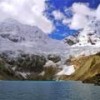
No Time Left to Adapt to Melting Glaciers
Water flows from Peru’s Cordillera Blanca, which has the most glaciers of any tropical mountain range in the world, are in a state of permanent decline 20 years sooner than forecasted.
Local Biogas Initiatives Open Virtuous Circle
Small local initiatives for the production of energy from organic waste could serve as the starting point for a network of green municipalities in Argentina.
Tuna Fisheries Must Make Short-Term Sacrifices
Countries involved in tuna fishing should remember that in exchange for having access to these resources, they also have the responsibility to manage them properly, says Spanish researcher María José Juan Jordá in this interview.« Previous Page — Next Page »


The Week with IPS

NEXT STOP - SDGs
Tracking global progress towards a sustainable world
Tracking global progress towards a sustainable world
