Languages
Monday, November 9, 2026



News and Views from the Global South
Active Citizens
Rio+20: Concrete Goals the Only Recipe for Success
Goals drive action, and that's why establishing a set of Sustainable Development Goals is so important to put the world on a sustainable pathway, experts said Saturday under the tropical fig and palm forest that covers much of the ground at the Pontifical Catholic University of Rio de Janeiro.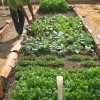
Cilantro Spices Up Coexistence with Drought in Brazil
Many grow lettuce, tomatoes, carrots, beets and other vegetables. But cilantro is ever-present in the gardens that are helping rural families weather the lengthy drought that is once again wracking Brazil’s impoverished Northeast.
Obama Wins Cautious Praise for Ending Deportation of Minors
President Barack Obama's administration announced on Friday that the United States would no longer deport certain young immigrants.
People’s Summit Alive With the Sound of Voices
Swallowed up in the crowd in front of the spectacular Guanabara Bay, indigenous leader Apolinario from Brazil’s Amazon rainforest acted as an impromptu guide on the first day of the People's Summit in Rio de Janeiro.
Earth’s Future Not for Sale, Activists Say
Just ahead of the start of the United Nations Conference on Sustainable Development (Rio+20), many are worried about the influence that corporations will have on the summit's agenda.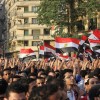
U.S.: “No Going Back” on Democratic Transition in Egypt, Says Clinton
As angry demonstrators gathered once again in Cairo's Tahrir Square to protest what many are calling a "soft coup" by the military, U.S. Secretary of State Hillary Clinton insisted that Washington still expects "a full transfer or power to a democratically elected civilian government" in Egypt.
Blood Flows in Solidarity in Argentina
Voluntary blood donations have risen markedly in the year ending Thursday Jun. 14 in Argentina, which hosted the World Blood Donor Day event for 2011. South Korea takes over for the coming year.
Activists Aren’t Mourning Obama’s Absence at Rio Summit
When a reluctant George H.W. Bush, Sr., then U.S. president, changed his mind and decided at the eleventh hour to address the 1992 Earth Summit in Rio, he sounded defensive in his strong response to charges that the United States was one of the major powers responsible for the some of the world's worst environmental ills - from greenhouse gases to conspicuous consumption.
Mine Tailings Pollute a Chilean Town’s Water
People in the small town of Caimanes in northern Chile will suffer severe health problems if water pollution produced by a tailings dam built by the Los Pelambres mining company is not cleaned up, experts warn.
Waking Up to the Price of Corruption
Weeks ahead of a national election in Papua New Guinea, 3000 people gathered in the capital, Port Moresby, for the sixth annual Sir Anthony Siaguru Walk against Corruption organised by Transparency International, PNG, to peacefully protest about an issue that affects every aspect of citizens’ lives.
Q&A: Volunteer Spirit Alive in Rio
When the Rio+20 summit gets underway in Brazil next week, the estimated 50,000 to 60,000 participants will not only include world leaders, government delegates and U.N. staffers but also a staggering array of activists from the far corners of the world.
Crisis Sows Community Gardens in Spain
The economic crisis is fuelling the search for less individualistic ways of life in Spain, and a growing interest in urban agriculture has given rise to flourishing community gardens on vacant lots in cities and towns.Asylum Seekers Protest in Silence
Terrible images are filtering in from the German Bavarian city of Wuerzburg, where one woman and six men have sewn their mouths shut, threading fishing wire through their lips to symbolise a point of no return in their hunger strike.CDs Become Weapon in Political Armoury
Kunasekaran Krishnan (43) is a member of the Socialist Party of Malaysia (PSM) who hopes his newly released CD of 10 “revolutionary songs” will help convince voters to back the Pakatan Rakyat (People’s Alliance) in the general election that is widely expected to be held this year.Private Interests Infiltrate G20 Summit
Business will push for the freeing up of trade in green goods and services, at the upcoming summit of heads of state of the Group of 20 (G20) industrialised and emerging countries in Mexico.
Indigenous Message to Rio+20: Leave Everything Beneath Mother Earth
Indigenous leaders from all over South America are making their way by foot, canoe and eventually on buses to be part of the Kari-Oca Caravan to Rio de Janeiro, to talk to world leaders at the United Nations Conference on Sustainable Development, Rio+20.
Defining Green Economy May Stymie Rio Summit
The thematic battle at the U.N. Conference on Sustainable Development (UNCSD) in Brazil next week will be primarily around the new concept of a "green economy" - and how best to define it.
Q&A: “We All Have to Start Being City Changers”
Building the cities of the future requires not only smarter planning but a profound shift toward greater equity and social justice, says Joan Clos, executive director of the U.N. Human Settlements Programme, or UN-HABITAT.
Desert Opera Finds New Meanings
The imposing stronghold is almost transparent, barely noticeable, in the pitch-black desert. On top of the stands, with a thousand kilowatts at his finger’s tip, Avi Yona Bueno turns the night into lights, revealing sets, sites, and sounds. “I’m god,” smiles the lighting designer. “I’m god to my children.”
Dam Threatens Turkey’s Past and Future
Hasankeyf, a small village in southeastern Turkey, has been under threat for 15 years. Home to approximately 3,000 people, the site is one of the oldest continuously inhabited human settlements, with an archaeological record going back at least 9,500 years.
SYRIA: Conscience Is Their Only Armour
With the international community vowing to ratchet up pressure on the Syrian government, non-violent activists say they remain undeterred even as the situation seems to be deteriorate daily.« Previous Page — Next Page »





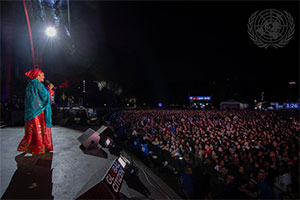 Global Citizen Festival in New York. Credit: UN Photo/Eskinder Debebe
Active citizens are committed to social change because they know that it is achievable. However, major political challenges face active citizens across the world. For example, in authoritarian regimes in Latin America where the hegemonic party has been in power for decades on end, protestors and human rights activists face enormous repression and struggle to materialize their advocacy into concrete results. The same can be said for Africans, where a shift towards elected government in recent decades has yet to translate into an effective voice in decision-making. Now, the Strengthening Citizen Demand for Good Governance, which uses evidence-based approaches – funded by DFID's Governance and Transparency Fund – seeks to raise their voices.
In 2025, the CIVICUS Monitor’s People Power Under Attack report revealed that civic freedoms are severely limited in 122 of 198 countries and territories, and only 7.2% of the global population now lives in countries where civic space is open. Through partnership with the Overseas Development Institute (ODI) and CIVICUS, IPS reporters across the continent will seek to define the extent and limits of state capability, government accountability and the responsiveness of leaders to the needs of citizens.

The Week with IPS

NEXT STOP - SDGs
Tracking global progress towards a sustainable world
Tracking global progress towards a sustainable world
