Languages
Saturday, November 21, 2026



News and Views from the Global South
Civil Society

TerraViva Comes to FAO
Dear Reader: TerraViva, a special publication of the IPS news agency, the leader in coverage of development issues, civil society and the emerging South, is once again circulating, this time in the meeting rooms and hallways of the FAO building.
Former War Zone Craves Democracy
For the first time since Sri Lanka’s 30-year-long civil conflict drew to a bloody finish in May 2009, casting an eerie hush over the Northern Province that had grown accustomed to the sounds of war, there is a buzz in the air generated by the prospect of provincial elections that hold the promise of radical change.
U.S. Moving Toward Controversial New Role in Global Energy Market
Energy specialists say that advancements in fossil fuel extraction technologies have sparked a "revolution" in U.S. energy production, especially given radical recent changes in the global energy market and the U.S. role within it.
Indian Farmers Flex Collective Muscles
Chelmet Padmamma, 42, of Babanagar village in southern India’s drought-prone Medak district, is a happy woman: the rain has come earlier this year, thrice soaking the three-acre farm that she co-owns with four other women from her village.
The “Secret Treasure” of Food Waste
Twenty-nine-year-old Andrzej W. and his partner lived for almost a year off of food found in the trash bin of the upscale supermarket Piotr i Pawel in Muranow, a neighbourhood near the centre of the Polish capital Warsaw. And they ate in style.
India Goes Bananas Over GM Crops
India’s environmental and food security activists who have so far succeeded in stalling attempts to introduce genetically modified (GM) food crops into this largely farming country now find themselves up against a bill in parliament that could criminalise such opposition.
Is the 2030 Goal for Hunger Eradication Realistic?
With less than three years before a 2015 deadline, the developing world is largely expected to miss one of the U.N.'s key Millennium Development Goals (MDGs): halving the number of people living in extreme poverty and hunger.
Coming Out in Droves Against Drones
Though the constant hum of unmanned aerial vehicles flying overhead makes a strong case for staying indoors, residents of Pakistan’s North Waziristan Agency are emerging in droves from their humble homes, some no bigger than huts constructed from mud and stones.
NSA Leaks Prompt Lawsuit and U.N. Action
Edward Snowden, 29, left behind a comfortable lifestyle in Hawaii as a private contractor for the Pentagon's National Security Agency (NSA) because he did not want to help create an "architecture for oppression" for fellow citizens.
Climate Change Threatens Water and Food Security in Antigua
With their islands devoid of rivers or streams, farmers in Antigua and Barbuda have been building dams and ponds for centuries, harvesting rainwater to irrigate their crops and provide drinking water for their livestock.
“Carbon Farming” Makes Waves at Stalled Bonn Talks
U.N. climate talks have largely stalled with the suspension of one of three negotiating tracks at a key mid-year session in Bonn, Germany.
‘Happy Prostitutes’ AIDS Campaign Sparks Debate
Happiness, the subject of endless philosophical discussions, has now become the focus of controversy in an HIV/AIDS prevention campaign aimed at prostitutes in Brazil. The campaign chief has been booted out and a further question has been raised: What are the limits of popular participation in the definition of public policies?
Scales Tip Towards Women in Jewish Religious Rights Struggle
The struggle for gender equality and Jewish pluralism took a highly symbolic turn on Sunday at the Western Wall, Judaism's most revered site and emblem of unity, as a group of women known as "Women of the Wall" prayed legally and in a way they saw fit.
Cairo’s Poor Convert Kitchen Waste Into Fuel Savings
The bio-gas digester on the roof of Hussein Farag's apartment in one of Cairo's poorest districts provides a daily supply of cooking gas produced from the kitchen waste his family would otherwise discard in plastic bags or empty into the clogged sewer below his building.U.S. Regulatory System “Stymied by Special Interests”
A broad-based alliance of public interest and other groups is warning that years of attacks by business interests has made the U.S. regulatory so inefficient that public safety is being put at risk.
Labour Violations Under Tight Wraps in Thailand
Next time you visit Walmart and throw that packet of frozen shrimp in your shopping cart, pause a moment.Ukraine Injects Addicts With Hope
As former presidents, senior diplomats and experts meet in the Lithuanian capital to discuss a litany of rights abuses, lethal epidemics and social destruction caused by repressive drug policies in Eastern Europe and Central Asia, pockets of hope for drug reform are emerging across the region.
Survivors Reluctant to Testify in New Genocide Trial
Fear and mistrust reign in Santa María Nebaj. The people of this Maya Ixil indigenous town in the highlands of northwestern Guatemala are worried about intimidation attempts to keep them from testifying again in a retrial of former dictator Efraín Ríos Montt.
Indian Women Talk About Sex – in Cyberspace
When 30-year-old Rita Datta (not her real name) decided on a whim to take a computer literacy course, she fell through the metaphoric looking glass into a virtual reality where the most taboo subject in India was transformed into the most simple and natural topic of conversation: sex.OP-ED: A Double Standard Won’t Do for Baku
Kseniya Sobchak, a well-known Russian political activist and social butterfly, is an outspoken critic of Russian leader Vladimir Putin. But, curiously, she seems to be taking a much softer line on Azerbaijan’s authoritarian-minded ruler, Ilham Aliyev.
U.S., Malaysia Lead Worldwide “Land Grabs”
Africa is the main target for "land grabs" by foreign investors, according to a new report on large-scale land acquisitions around the world released Monday.« Previous Page — Next Page »


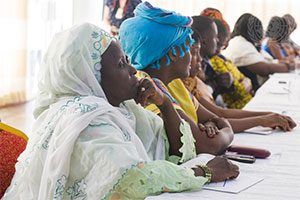 Representatives of Civil Society, Sierra Leone. Credit: UN Photo/Eskinder Debebe
Civil society faces mounting threats worldwide, even as it remains essential for democratic accountability, especially in countries struggling with economic instability and social inequality. However, at the same time, nations with weak democratic governance structures also systemically suppress the power of civil society. Human rights activists across the Global South frequently challenge issues such as political persecution and gender oppression, but in return face state-sanctioned punishment for their advocacy. Imprisonment and exile are common mechanisms of punishment that seek to erode the strength of civil society. The 2026 World Press Freedom Index has reached its lowest level in 25 years, with more than half of the world’s countries now falling into the "difficult" or “very serious” category for press freedom. IPS seeks to highlight the work of civil society across the Global South as well as the challenges that they face.
Updated by Yilan Batista and Shuli Wong August 2026

The Week with IPS

NEXT STOP - SDGs
Tracking global progress towards a sustainable world
Tracking global progress towards a sustainable world
