Languages
Saturday, November 21, 2026



News and Views from the Global South
Civil Society

Women Forge a Space for Themselves in Latin American Labour Movement
Misogyny is the word on the lips of women trade unionists in Latin America when asked what they have had to fight against to win spaces in the leadership bodies of labour unions in the region.
Monetising Human Waste and 101 (Slightly) Crazy Other Ideas
One, two or more of the 102 newly launched out-of-the box ideas to improve global health could be world-changing breakthroughs.
Cyber Bill Fails in U.S. Senate, but Online Privacy Concerns Live On
For the second year in a row, activists have successfully defeated a proposal to allow Internet companies to provide customers’ private information to government agencies and each other without risking violation of privacy laws and agreements.
Where the Sea Has Risen Too High Already
The deceptively calm waters of Langa Langa Lagoon on the west coast of Malaita Island in the Solomon Islands is home to thousands of people who have lived on artificial islands for centuries. For generations the islanders in this south-west Pacific nation have employed tenacity and ingenuity to maintain their existence on these tiny low-lying man-made atolls, devoid of freshwater and arable land. But climate change is now the greatest threat to their survival.
Older Women in Cuba Take Steps to Improve Quality of Life
Paediatrician Grisel Navarro says she is "a different kind of retiree," because she still practises her profession, goes out and about and refuses to be "at the beck and call of her family's and everyone else's needs," something that diminishes quality of life for many Cuban women when they retire from work.
Clampdown on CSOs Worldwide
As Zimbabwe is expected to head to the polls in a little less than two months, clampdowns on civil society in that southern African nation have increased, according to Godwin Phiri, western region chairperson of the National Association of Non-Governmental Organisations in Zimbabwe.
U.N. Recognises Wildlife Trafficking as “Serious Crime”
Environment groups are applauding a new United Nations decision to officially characterise international wildlife and timber trafficking as a serious organised crime, in a move that advocates say will finally give international law enforcement officials the tools necessary to counter spiking rates of poaching.Syria Says PM Escapes Car Bomb Attack
Syrian Prime Minister Wael al-Halqi has survived a bomb attack that targeted his convoy in central Damascus, Syrian state media report.
Activists Fight U.S. Aid to Develop El Salvador’s Pacific Coastline
Community leaders in El Salvador are opposed to the government's plans to use U.S. aid funds to develop the country’s Pacific coastline, on the grounds that it would threaten the environment in a vast area.Post-Conflict Trauma Haunts Solomon Islands
After ten years of working towards peace and reconciliation in the Solomon Islands in the South Pacific, following a five-year civil conflict known as the ‘Tensions’ (1998-2003) which left 30,000 people displaced and hundreds unaccounted for, people now go about their daily lives in improved freedom and personal security. But below the surface, untreated post-conflict trauma continues to impact many individuals and communities.
Bedouin Resist Israeli Shove
Dozens of metal and wooden tents cling to the rocky hillside, just outside of Jerusalem along the road leading to the Dead Sea, while the unmistakable red roofs of Israeli settlements peak out from behind opposite hilltops.
Leave It in the Ground, Climate Activists Demand
Nearly 70 percent of known reserves of oil, gas and coal must remain in the ground to avoid dangerous climate change. So why did the energy industry spend 674 billion dollars in 2012 looking for more?
U.S. Activists Outraged Over So-Called ‘Monsanto Protection Act’
Food safety advocates are outraged over revelations that U.S. Congress and President Barack Obama approved an act that includes a provision purporting to strip federal courts of the ability to prevent the spread of genetically modified organisms (GMOs).
Greeks Fight Canadian Gold-Diggers
Any sense of tranquility that hangs around the mountain of Skouries in northern Greece, 80 km east of Greece’s second largest city Thessaloniki, is a façade. Home to some of the oldest forests in Greece, the pristine region is now a battleground, as the local population takes on the Canadian mining giant Eldorado Gold Corporation and its local subsidiary, Hellas Gold.
U.S. Cities Joining Push to Dump Fossil Fuel Investments
Nearly a dozen U.S. cities have announced their interest in withdrawing municipal investments from fossil fuel companies, joining a fast-growing movement among colleges and universities that supporters say is allowing citizens concerned with environmental degradation and global climate change to act in lieu of federal action from the U.S. Congress.No Consensus on Judicial Reforms in Argentina
Comprehensive judicial reforms pushed by the government of Argentina on the argument that they will democratise the justice system are moving ahead in Congress in the midst of staunch resistance by the opposition, heated debate, and threats of future lawsuits challenging them as unconstitutional.
U.N. Task Force Purges Stigmas on Sexual Rights
Ishita Chaudhry spent the past 36 hours listening to U.N. delegates discuss population growth and development. She noticed that on “controversial” topics, such as sexual and reproductive rights, young people’s voices often get lost.
Austerity Leaves Domestic Violence Victims Stranded
Up to a quarter of women in Europe have experienced domestic violence at some point in their lives, according to the Council of Europe. But despite the widespread nature of the phenomenon, more often than not we ignore it. A short video launched last month in Serbia managed to break this silence.
Spring Brings Worse for Shias
The mob that surrounded the home of Mohamed Nour, an Egyptian Shia living in Cairo’s Bab El-Shaariya district, claimed it was on a mission to “inoculate” Egypt against Shia religious beliefs. Without intervention, Shia doctrine would spread across Egypt “like a cancer,” they had warned.
Portugal’s Carnation Revolution under the Shadow of the Troika
The anniversary of the peaceful Carnation Revolution that overthrew Portugal’s 1926-1974 dictatorship has gone from being a popular celebration to a day of mass protests against the draconian austerity policies of the government of Prime Minister Pedro Passos Coelho.
Rural Colombia Takes Its Place on the Agenda
International Fund for Agricultural Development (IFAD) initiatives working to overcome poverty and improve food security in the Colombian countryside can make a positive contribution to government efforts to tackle some of the most neglected problems facing this South American country.« Previous Page — Next Page »


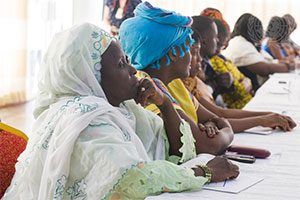 Representatives of Civil Society, Sierra Leone. Credit: UN Photo/Eskinder Debebe
Civil society faces mounting threats worldwide, even as it remains essential for democratic accountability, especially in countries struggling with economic instability and social inequality. However, at the same time, nations with weak democratic governance structures also systemically suppress the power of civil society. Human rights activists across the Global South frequently challenge issues such as political persecution and gender oppression, but in return face state-sanctioned punishment for their advocacy. Imprisonment and exile are common mechanisms of punishment that seek to erode the strength of civil society. The 2026 World Press Freedom Index has reached its lowest level in 25 years, with more than half of the world’s countries now falling into the "difficult" or “very serious” category for press freedom. IPS seeks to highlight the work of civil society across the Global South as well as the challenges that they face.
Updated by Yilan Batista and Shuli Wong August 2026

The Week with IPS

NEXT STOP - SDGs
Tracking global progress towards a sustainable world
Tracking global progress towards a sustainable world
