Languages
Wednesday, October 21, 2026



News and Views from the Global South
Aid

Economic Reforms Needed for Peace in South Sudan
Gatmai Deng lost three family members in the violence that erupted in South Sudan on Dec. 15 and lasted until the end of January. And he blames their deaths on the government’s failure to use the country’s vast oil revenues to create a better life for its almost 11 million people.
North Korea Doing Fine Without the South
If the North Korea of the 1990s was seen as a starving nation that produced an exodus of hungry people, then the picture should be even gloomier now – six years after it stopped receiving South Korea’s generous aid. But it’s not. The nation of 24 million people, widely said to be the most secretive in the world and a nuclear threat, appears to have weathered the years well.
The Race to Save the Caribbean’s Banana Industry
When Dean, the first storm of the 2007 Atlantic hurricane season, lashed Dominica on Aug. 16, it left behind a trail of destruction, claimed the lives of a mother and son, and decimated the island’s vital banana industry.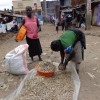
Casting Call for Kenya’s ‘Briefcase’ NGOs
Ben Okoth, 45, was born and raised in Kibera, the largest urban slum in Africa, situated just outside of Nairobi, Kenya’s capital. Over the years, he has encountered many non-governmental organisations (NGOs) working to improve the plight of the poor who live here.
Uganda’s Anti-Gay Bill Puts U.S. Aid at Risk
Ugandan President Yoweri Museveni’s authorisation of the Parliament’s so-called “kill the gays” bill has led Washington officials to announce a review of U.S. aid to the African country.
Uganda’s Human Rights Record Plunges With Signing of Anti-Gay Law
Uganda’s gays are bracing themselves for a spate of arrests and harassment as the country’s draconian anti-gay bill was signed into law by President Yoweri Museveni on Monday, Feb. 24.
EU No Instant Saviour for Ukraine
Ukrainians are facing years of pain and upheaval if the country moves towards closer EU integration – or the prospect of the country being left to “rot” if they do not, experts say following the weekend’s revolution.
Sun Smiles on a Cold Desert
Surendar Mohan, a catering assistant at the residential school Jawahar Navodiya Vidyalya, looks thankfully up at the sun from this cold high-altitude desert in northwest India.New Discontent Surfaces in Bosnia
Thousands of people have rallied in streets of major Bosnian cities since last week, demanding social justice, decent living conditions and resignation of top officials who they openly blame for unprecedented poverty and the country's economic decline.
South-South Cooperation Takes Off in Arab World
As the concept of South-South cooperation (SSC) continues to strengthen worldwide, some of the richest countries in the Arab world have been reaching out to the poor and the needy in the developing world.
In Bali, a Pivotal Moment for Climate Postponed
Facing a crucial meeting this week in Bali, the board of the U.N.’s Green Climate Fund (GCF) once again postponed drawing out the bulk of policy that will guide the fund as it prepares to open later in 2014.
‘No Way Back’ for Kiev Protesters
Bloody clashes that have left more than a score dead and more than a 1,000 injured in the Ukrainian capital could continue for weeks. Local people say there is now “no way back” for either side in what has become the worst crisis in the country’s post-Soviet history.
Troika Becomes the Villain in a Greek Tragedy
A humanitarian crisis is unfolding in Greece and other recession-hit European countries as they undergo harsh austerity measures in exchange for a bailout. At the heart of it is the Troika, say trade unions, civil society and rights activists.
Ordinary Spaniards Lend Saharawi People a Helping Hand
Volunteers are hard at work in an industrial warehouse in the Spanish city of Malaga, organising thousands of kilos of rice, sugar, lentils and oil to be shipped this February to Saharawi refugee camps in Tindouf, in the west of Algeria.
USAID Unveils Five-Year Plan in Afghanistan
Even as most international military forces are slated to leave Afghanistan by the end of 2014, USAID, the foreign aid arm of the U.S. government, is emphasising its sustained commitment to developing Afghanistan’s economy after the withdrawal.
After War Comes Peace, Not Prosperity
Sri Lanka’s war-battered Northern Province had reason to celebrate when the results of a countrywide exam were announced last December. Of the 16,604 students from the province who sat for the exam, 63.8 percent secured the required marks for entry into prestigious national universities.Philippines Makes Tentative Truce With Islamists
After two years of intensive negotiations, the Philippine government and the country’s largest rebel group, the Moro Islamic Liberation Front (MILF), have signed a final peace agreement, which paves the way for a lasting resolution of one of the world’s longest-running intra-state conflicts.
Bursting the ‘Blood Bubble’
The longstanding Israeli practice of labelling settlement products “Made in Israel” is leading to mounting opposition to the occupation.
Doctors Resist Deadly Vaccine
A spate of sudden infant deaths following vaccination in India has prompted leading paediatricians to call for stronger regulatory mechanisms to evaluate new vaccines for safety and efficacy before their acceptance into the national immunisation programme.
Economic Crisis in Mali’s North as the South Recovers
Under the harsh Sunday afternoon sun, Daouda Dicko washes his client’s clothes on the shore of the Niger River, which runs through Mali’s capital, Bamako. “I started doing this to survive two years ago. Now, I am used to it and I don’t mind the extra money it brings,” Dicko, who also works as a gardener, tells IPS.
Egypt’s Generals Face a Watery Battle
Heavy reliance on water intensive crops, a major upstream dam project for the Nile basin, and rising groundwater levels pushing at pharaoh-era monuments will be pressing issues for the next Egyptian president - whether military or civilian.« Previous Page — Next Page »





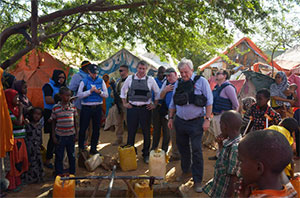 UN Emergency Relief Coordinator Visits Somalia. Credit: UN Photo/Tobin Jones
In recent years, conflicts have broken out across the world with no sign of slowing down or stopping. In times like this, millions of people globally are in dire need of humanitarian aid. Famine, warfare, natural disasters, and economic decline plague a host of nations, including Palestine, Sudan, Chad, Lebanon, and Haiti, to name a few. Humanitarian aid provides millions of people with critical services including healthcare, food, clean drinking water, psychosocial support, housing, and access to education. UN agencies such as the UNDP, UNICEF, the World Food Programme (WFP), UNHCR, UNRWA, and UNEP work with the UN Office for the Coordination of Humanitarian Aid (OCHA) and local organizations to come up with the best possible strategies to support affected communities. At the same time, humanitarian aid and those working on the frontlines are consistently threatened by both actors directly involved in conflict as well as those who are meant to contribute to the international humanitarian regime at large. The near-collapse of United States international aid structures in 2025, including the termination of 83% of USAID’s 6,300 global initiatives, has left millions of people without access to vital humanitarian assistance. 98 million people in 2025, only 65% of people targeted for humanitarian assistance, received the help they needed. In contrast, 123 million people received some form of humanitarian assistance in 2024, and OCHA’s 2026 Global Humanitarian Overview estimates that 239 million people are in need of assistance in 2026. IPS is well-positioned to discuss current initiatives to provide aid and relief through in-depth reporting and opinion content.

The Week with IPS

NEXT STOP - SDGs
Tracking global progress towards a sustainable world
Tracking global progress towards a sustainable world
