Languages
Tuesday, October 6, 2026



News and Views from the Global South
Energy

Chevron Rejects Shareholder Demands to Explain Record Political Spending
At an annual shareholder meeting held Wednesday, upper-level management for the oil conglomerate Chevron faced renewed questioning over its record-setting political contributions during last year’s national election.
Ramping Up Renewable Energy in the Philippines
As the Philippines grapples with frequent power outages and a growing demand for energy, government agencies and private groups say the answer to the country’s power needs may lie in alternative sources.
Wind Power Finds a Toehold in Green-Minded Nevis
When it comes to generating clean energy and reducing costs, the tiny Caribbean island of Nevis considers itself the leader within the nine-member Organisation of Eastern Caribbean States (OECS).
Advocates Cheer Tightening of Extractives Transparency Standards
Development groups and corruption watchdogs are applauding landmark new standards adopted Wednesday by an international initiative focused on ensuring greater transparency among oil and mining companies operating particularly in developing countries.
Indian Gov’t on Collision Course With Civil Society
For years India’s pro-liberalisation, Congress party-led coalition government chafed at civil society groups getting in the way of grand plans to boost growth through the setting up of mega nuclear power parks, opening up the vast mineral-rich tribal lands to foreign investment and selling off public assets.
Groaning Under Power Cuts, Scorching Temps in Pakistan
Raheel Tauseef is feeling quite powerless this summer. Frequent power outages in the industrial city of Faisalabad in the Punjab province of eastern Pakistan, where the 29-year-old and his family run three hosiery factories, are taking a heavy toll on their business.U.S. Congress Moves Toward Full Trade Embargo on Iran
The U.S. Congress moved closer here Wednesday to imposing a full trade embargo against Iran and pledged its support to Israel if it felt compelled to attack Tehran’s nuclear programme in self-defence.
Neighbours View Sharif as Yoked to Personal, National History
Following on Nawaz Sharif’s victory in the May 11 national elections in Pakistan, many analysts are indicating cautious optimism on the prospect that the new prime minister can strengthen bilateral relations with the country’s neighbours, particularly India.
Stressed Ecosystems Leaving Humanity High and Dry
Everyone knows water is life. Far too few understand the role of trees, plants and other living things in ensuring we have clean, fresh water.
Profits vs. Disaster in Arctic Meltdown
Many eyes are turning north to the Arctic, some in horror at the rapid decline of a key component of our life support system, others in eager anticipation at the untapped resources beneath the vanishing snow and ice.
Mexican Communities Sue Pemex for Environmental Justice
Fed up with oil spills from facilities belonging to Mexico’s state oil company Pemex, residents of two communities in the southeastern state of Tabasco are taking the country’s largest company to court in a bid for compensation for damage to the environment and agriculture.
Climate Change Is Happening… So What?
Seven in 10 U.S. citizens believe climate change is real and happening now. Yet most have never even contacted a government official about the issue, let alone volunteered with an environmental organisation or taken other action.
Resource Management Central to Equitable Development
Trillions of dollars a year are being produced through extractive industries, but just a tiny percentage of this money is impacting on the lives of poor communities in developing countries, according to a first-of-its-kind study released Wednesday.Nuclear Iran Can Be Contained and Deterred: Report
While preventing Iran from obtaining a nuclear weapon is preferable, the United States could successfully contain a nuclear Iran, according to a new report released here Monday by the Center for a New American Security, an influential think tank close to the administration of President Barack Obama.
Chile Looks to Volcanoes and Geysers for Energy
Chile is one of the countries with the greatest potential for geothermal energy development in Latin America, but a lack of incentives for investment in the sector has kept it from moving past the exploratory phase. A strategic partnership with New Zealand aims to change that situation.
Critics Slam California “Forest Offset” Plan
More than two dozen environmental organisations are urging California Governor Jerry Brown to disregard recommendations from a United Nations task force to include so-called forest “offsets” in the state’s new emissions-trading scheme.
Rich Countries Drag Feet at Climate Talks
Another week of international climate negotiations ended in Bonn, Germany last Friday, but there was little mid-level bureaucrats could do when world leaders remain in thrall to the fossil fuel industry, say environmentalists.Fragile States Show Signs of Progress Toward MDGs
Twenty of the world’s most fragile states, including those currently affected by conflict, have achieved one or more of the development targets outlined under the Millennium Development Goals (MDGs), the World Bank said this week.The West Disappoints Azerbaijan Government Critics
Democratisation activists in Azerbaijan are increasingly pessimistic about what they describe as the West’s lack of support for reform and the protection of basic rights in the energy-rich South Caucasus country.
Ecuador’s Indigenous People Still Waiting to Be Consulted
The Constitution of Ecuador adopted in 2008 establishes a broad range of rights for indigenous peoples and nationalities, including the right to prior consultation, which gives them the opportunity to influence decisions that affect their lives.
Aiming to Conserve Energy, Antigua Turns to Its Residents
In drought-plagued Antigua, where water and energy top the list of most precious resources, one campaign is encouraging islanders to conserve both of these commodities.« Previous Page — Next Page »





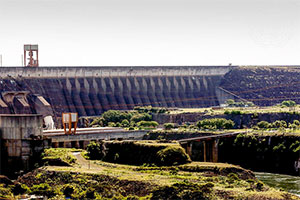 UN Power Plant, Paraguay. Credit: UN Photo/Evan Schneider
Energy has posed a great challenge for economies around the world. As global energy consumption skyrockets throughout the years, so does the need for sustainable solutions. The Sustainable Development Goals are essential in providing people with access to safe, affordable, and sustainable energy sources that minimize harm on the planet. Progress towards these goals opens the door for an advancement in modernization for communities on a global level and allows for a potential mitigation of tensions between nations.
The UN’s Summit of the Future in 2024 offered new initiatives that are being taken to achieve these goals, including a decreased reliance on fossil fuels, a switch to renewable energy sources, and improved climate financing.
IPS is well positioned to provide relevant, insightful, and compelling analysis of recent updates and measures being taken around the world to achieve a cleaner future.

The Week with IPS

NEXT STOP - SDGs
Tracking global progress towards a sustainable world
Tracking global progress towards a sustainable world
