Languages
Friday, November 20, 2026



News and Views from the Global South
Food and Agriculture
Rio+20: Transforming Political Platitudes into Economic Realities
When world leaders endorse the final plan of action, titled "The Future We Want, at the Rio+20 summit in Brazil next week, a lingering question may remain unanswered: how best can the United Nations transform political platitudes into economic realities?
Q&A: “Today’s Food System Is Failing Small Farmers”
With heads of state from more than 120 nations and tens of thousands of civil society and international development experts gathering for the U.N. Summit on Sustainable Development next week, it is accepted wisdom that rethinking agriculture is one of most critical issues facing this and future generations.
MEXICO: Yearly Floods the New Reality for Rural Women
Year after year, women in rural areas of the southeastern Mexican state of Tabasco have to get ready for floods that threaten their homes, crops and livestock.
Agriculture Key to Liberia’s Youth Unemployment Challenge
With his gold chain, baseball cap, and baggy denim shorts, Junior Toe wears the uniform of Liberia’s urban youth. Spend just a few minutes with the young man and it is evident that he possesses the street smarts to match the look.
How Would You Measure Success at the Rio Summit?
When the heavily hyped three-day U.N. Conference on Sustainable Development (UNCSD) comes to a close in Rio de Janeiro Jun. 22, what would be the yardstick to measure its successes and failures?
Partnerships make Sao Tome cocoa grow
 Small farmers in Sao Tome are reaping the benefits of entering niche markets. Andrea Serpagli, a spokesperson for the International Fund for Agricultural Development in Sao Tome, told Tinus de Jager that the success of the farmers sprout from partnerships and knowledge gained from other similar projects.

Traditional farmers adapt to climate change
Experts say small-scale farmers are in a better position to adapt to climate change. IPS’s Tinus de Jager interviews Andrea Serpagli, from the International Fund for Agricultural Development, on their successful programme in Sao Tome.

Fair Trade Alive and Well in Spain Despite Recession
The economic and financial crisis afflicting the countries of the European Union (EU) has scarcely affected sales of fair trade products from Latin America, especially food products, in Spain.
MEXICO Farmers Use Traditional Knowledge to Deal with Climate Change
Small farmers in Mexico, who receive little institutional support, are drawing on their traditional knowledge to deal with and adapt to climate change, experts say.
Calls for an African Green Revolution, Only Smarter
To deal with looming food crises in the coming decades, Africa needs a Green Revolution on par with what took place in Asia during the 1960s and 1970s, according to experts in Washington.
Farmers can grow food and bio fuels in West Africa
Tinus de Jager speaks to Hugo Verkuijl, DG of MaliBiocarburant, who produces biofuels “in a way that supplements farmers' incomes, contributes to poverty alleviation and respects the environment”. The question is whether farmers can grow both food and fuel in Western Africa.

RIO+20: A Stalemated U.N. in Do-or-Die Session on Action Plan
After weeklong negotiations, a meeting of the Preparatory Committee (PrepCom) to finalise a plan of action titled "The Future We Want" for next week's Rio+20 summit has failed to reach agreement - and deferred a decision to a final three-day session in Brazil.
24 Policies to End the Earth Emergency
Ecologically ignorant policies are largely responsible for the interlinked crises that are unraveling the planet's life support system.
Samoan Breadfruit Makes a Splash in the Caribbean
Can a single species of tree significantly reduce hunger, unemployment and deforestation in the tropics? Researchers and scientists behind a surge in breadfruit activity think so.
RIO+20: Earth Summit Negotiated the Size of the Zero
Amidst much political fanfare, the 1992 Earth Summit in Rio de Janeiro concluded with the adoption of the Rio Declaration on Environment and Development and the landmark Agenda 21 blueprint for a sustainable future in the 21st century.
EL SALVADOR Women Fight Blows from Climate Change with Sewing Machines and Eggs
Amanda Menjívar is moved by the sight of the 16 sewing machines donated to help a group of local women set up a sewing centre to get over the devastating effects of the disaster caused by Hurricane Ida in the Salvadoran town of Verapaz.
Family Planning and Subsistence Agriculture Key to Food Security
Papua New Guinea’s high fertility rate is exerting pressure on land and food production in a country where 80 percent of the population lives in rural communities. But the National Agricultural Research Institute (NARI) argues that traditions of subsistence agriculture provide a firm foundation to build food security for a growing population.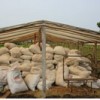
Cameroon farmers fight infertile soil
Farmers blame infertile soil for the low food crop yields in many part of Cameroon. Aaron Yancho Kaah reports from the North-western region the country.

Building a Company in Mozambique – One Peanut at a Time
When you board Mozambique’s national carrier, Linhas Aéreas de Moçambique, you will most likely be given small blue packets of peanuts to munch as the jet whisks you from the country’s capital, Maputo, to as far afield as Europe. Sugar, salt or chilli flavour. Take your pick.
Cell phones are working for West African farmers
While many farmers in West Africa are still struggling to get information on crops and farming techniques, it seems as if more readily available information ... on commodity prices and the weather ... are reaching even subsistence farmers in the region.
Invest oil money in infrastructure: IFAD
Concerns about oil money not reaching the poorest of the poor in West Africa still abound, but NGOs say issues can still be addressed. Steven Schonberger, the West and Central Africa regional economist for IFAD, told Tinus de Jager that oil money put into infrastructure could boost the agriculture in the region.
« Previous Page — Next Page »


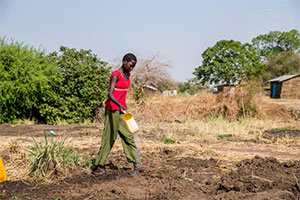 Farming on the Outskirts of Juba. Credit: UN Photo/JC McIlwaine
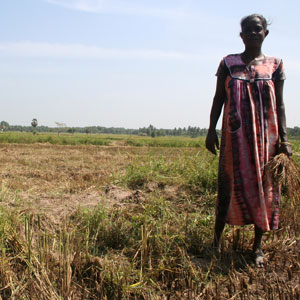
Promoting human and planetary health is a central focus of the United Nations, as laid out in the 2030 Sustainable Development Goals (SDGs). World hunger and unsustainable farming practices continue to be pressing concerns for the world. According to the 2025 State of Food Security and Nutrition in the World report by the Food and Agriculture Organization (FAO), 673 million people faced hunger in 2024. There are stark regional disparities, with the FAO projecting that 60% of the world population facing hunger will reside in Africa by 2030. Globally, the prevalence of food insecurity has remained consistently higher for women than men.
Sustainable and efficient national food systems are essential in preserving health, education, environmental well-being, peace, economy, and security. However, creating sustainable food systems can be a challenging endeavor, as food production takes a heavy toll on the environment. The agricultural sector accounts for a significant portion of greenhouse gases. Finding safe, sustainable, and ethical strategies to feed the world is crucial in ensuring planetary longevity. A recent initiative from 2023, the EU Regulation on Deforestation-free Products (EUDR), seeks to advocate for sustainable food systems. The main driver of deforestation is the expansion of agricultural land used to produce commodities like cattle, wood, cocoa, coffee, etc. The EUDR is part of the 2020 European Green New Deal and the EU Biodiversity Strategy for 2030 and aims to limit Europe’s consumption of products linked with deforestation by requiring that companies prove that their products are deforestation-free. Despite aiming to achieve major strides in sustainability, policies such as EUDR also raise socioeconomic concerns for targeted countries. Many emerging Latin American economies are impacted by the policy, and have raised the question of how developing countries can grapple with the tensions between economic development and advancing sustainability.
IPS has been at the forefront of providing compelling and insightful stories on communities facing hunger as well as the cost of food production. IPS uses statistics from FAO, the World Food Programme (WFP) and the International Fund for Agricultural Development (IFAD) to bring relevant and hard-hitting facts to readers. This gathering of information and data from such organizations helps bring the best stories from IPS journalists working in the different regions in consultation with experts on the ground.

The Week with IPS

NEXT STOP - SDGs
Tracking global progress towards a sustainable world
Tracking global progress towards a sustainable world