Languages
Friday, November 20, 2026



News and Views from the Global South
Food and Agriculture
Spicing Tradition With Taste
Kosher, in spoken English, might mean ‘proper’, ‘acceptable’, ‘legitimate’. Yet, sourced in the Bible, the Hebrew word incontrovertibly finds its way in Jewish cuisine. Food is kosher when suitable for consumption – that is, according to a set of religious dietary laws or kashrut.
Q&A: Planting the Seeds for Sustainable Development
By now, the dilemma is well recognised but hardly solved: as the global population grows, resources become increasingly scarce. Indeed, food production will have to increase by a whopping 60 percent by 2050 in order to meet the future demand for food and agricultural products.
Youth Farmers Have Great Needs and Low Expectations from Rio+20
Ulvia Abdullayeva, from Ganja in western Azerbaijan, has come to Rio to deliver a simple but critical message to world leaders and her national authorities: small farmers need protection and financing.Tension over Deadly Clash Between Peasants and Police in Paraguay
The death of 16 landless peasants and police officers in a clash in northeastern Paraguay drew attention once again to the long-standing problem of land ownership in the country, where 85 percent of all farmland is owned by just two percent of the population.
Hoping To Save Millions, Antigua Turns to Backyard Gardening
As a boy, Hilson Baptiste remembers going to his neighbour's home and giving them a large slice of pumpkin grown in his family's backyard garden. In return, he would be given two fish for his family.Rio+20 and beyond: together for a sustainable future
As stated in the 1972 United Nations Conference on the Human Environment and the 1992 Earth Summit, human beings are at the centre of sustainable development. However, even today, over 900 million people still suffer from hunger. Poor populations worldwide, especially in rural areas, are among those most vulnerable to the food, climate, financial, economic, social and energy crises and threats the world faces today.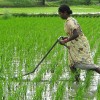
New Set of Sustainable Development Goals Looks Beyond 2015*
When world leaders from over 100 countries wind up their three-day Rio+20 summit in Brazil next week, they will leave behind the shattered remains of a slew of proposals that never got off the ground.
Rio+20: Concrete Goals the Only Recipe for Success
Goals drive action, and that's why establishing a set of Sustainable Development Goals is so important to put the world on a sustainable pathway, experts said Saturday under the tropical fig and palm forest that covers much of the ground at the Pontifical Catholic University of Rio de Janeiro.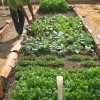
Cilantro Spices Up Coexistence with Drought in Brazil
Many grow lettuce, tomatoes, carrots, beets and other vegetables. But cilantro is ever-present in the gardens that are helping rural families weather the lengthy drought that is once again wracking Brazil’s impoverished Northeast.
Back to the Future With Local Rice Seeds
By coaxing a bumper 3.2 tonnes of rice out of each acre on his organic farm in this district famed for its ancient Buddhist monasteries, Charitha Wijeratne has convincingly proved that using indigenous seeds does not affect productivity.
Europe and Former Colonies Urge Action at Rio+20
Europe and 79 of its former colonies have sent a strong message to the U.N. Conference on Sustainable Development in Brazil next week that it should use the opportunity to both fulfill past promises and deal with "new and emerging challenges".
Earth’s Future Not for Sale, Activists Say
Just ahead of the start of the United Nations Conference on Sustainable Development (Rio+20), many are worried about the influence that corporations will have on the summit's agenda.
Nepal’s Female Farmers Fear Climate Change
When Arati Chaudhary’s husband left for India to find work as a migrant labourer, the job of managing farm and family fell on her slender shoulders.
Activists Aren’t Mourning Obama’s Absence at Rio Summit
When a reluctant George H.W. Bush, Sr., then U.S. president, changed his mind and decided at the eleventh hour to address the 1992 Earth Summit in Rio, he sounded defensive in his strong response to charges that the United States was one of the major powers responsible for the some of the world's worst environmental ills - from greenhouse gases to conspicuous consumption.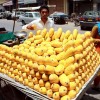
King of Fruit Reaps Few Rewards for Pakistani Farmers
In the summer heat, fresh mangos are the fruit of choice for politicians seeking to exchange favours with foreign dignitaries. But when it comes to global trade, the prospects of the so-called king of fruit are limited.
Q&A: Battle for Human Rights in Rio Is “Far From Over”
Human rights should be explicitly recognised as an indispensable ingredient of sustainable development at the Rio+20 summit in Brazil, says Navanethem Pillay, United Nations High Commissioner for Human Rights.Moringa Leaves Saving Lives in DRC
Seated under a tree, biologist Zozo Bazomba welcomes a steady stream of visitors to the Action Nature et Médecine centre in Bumbu commune in the DRC. Suffering from a range of ailments, they have come from across Kinshasa, the capital, in search of sachets of powdered moringa leaves.
Trade Pact with Europe Still a Tough Sell to Africa, Pacific Bloc
Caught between a proverbial rock and a hard place, African and Pacific countries are still unsure whether they should follow the lead of their Caribbean counterparts and sign a wide-ranging Economic Partnership Agreement (EPA) with Europe.
Q&A: Women Must Be at the Forefront of Rio+20, and Beyond
Unlocking women's energies and allowing them to become drivers of change could fuel the motor of sustainable development.
Crisis Sows Community Gardens in Spain
The economic crisis is fuelling the search for less individualistic ways of life in Spain, and a growing interest in urban agriculture has given rise to flourishing community gardens on vacant lots in cities and towns.
Defining Green Economy May Stymie Rio Summit
The thematic battle at the U.N. Conference on Sustainable Development (UNCSD) in Brazil next week will be primarily around the new concept of a "green economy" - and how best to define it.« Previous Page — Next Page »


 Farming on the Outskirts of Juba. Credit: UN Photo/JC McIlwaine
Promoting human and planetary health is a central focus of the United Nations, as laid out in the 2030 Sustainable Development Goals (SDGs). World hunger and unsustainable farming practices continue to be pressing concerns for the world. According to the 2025 State of Food Security and Nutrition in the World report by the Food and Agriculture Organization (FAO), 673 million people faced hunger in 2024. There are stark regional disparities, with the FAO projecting that 60% of the world population facing hunger will reside in Africa by 2030. Globally, the prevalence of food insecurity has remained consistently higher for women than men.
Sustainable and efficient national food systems are essential in preserving health, education, environmental well-being, peace, economy, and security. However, creating sustainable food systems can be a challenging endeavor, as food production takes a heavy toll on the environment. The agricultural sector accounts for a significant portion of greenhouse gases. Finding safe, sustainable, and ethical strategies to feed the world is crucial in ensuring planetary longevity. A recent initiative from 2023, the EU Regulation on Deforestation-free Products (EUDR), seeks to advocate for sustainable food systems. The main driver of deforestation is the expansion of agricultural land used to produce commodities like cattle, wood, cocoa, coffee, etc. The EUDR is part of the 2020 European Green New Deal and the EU Biodiversity Strategy for 2030 and aims to limit Europe’s consumption of products linked with deforestation by requiring that companies prove that their products are deforestation-free. Despite aiming to achieve major strides in sustainability, policies such as EUDR also raise socioeconomic concerns for targeted countries. Many emerging Latin American economies are impacted by the policy, and have raised the question of how developing countries can grapple with the tensions between economic development and advancing sustainability.
IPS has been at the forefront of providing compelling and insightful stories on communities facing hunger as well as the cost of food production. IPS uses statistics from FAO, the World Food Programme (WFP) and the International Fund for Agricultural Development (IFAD) to bring relevant and hard-hitting facts to readers. This gathering of information and data from such organizations helps bring the best stories from IPS journalists working in the different regions in consultation with experts on the ground.

The Week with IPS

NEXT STOP - SDGs
Tracking global progress towards a sustainable world
Tracking global progress towards a sustainable world

