Languages
Thursday, October 1, 2026



News and Views from the Global South
Food and Agriculture

Time Honoured Food Traditions, Pleasing for Palate and Planet
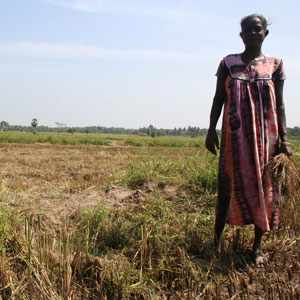
Balance is the absolute key, says Alia Chughtai, a journalist who started a catering service with filmmaker Akhlaque Mahesar, by the name of Aur Chaawal (And Rice), two years ago.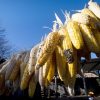
Why Seed Companies Fear México
Last month México’s Supreme Court provided hope for biodiversity, especially in the Global South, while flaming fear for seed companies. In a historic step, it ruled for corn advocates and against genetically modified (GMO) corn. The decision was a momentous act in country where maíz (corn) carries daily and sacred significance.
What Governments Should Learn from The Climate Activists
“Nothing about us without us” – that was the call from the indigenous rights advocate Ghazali Ohorella from the Alifuru people in the Maluku Islands, Indonesia during a panel at the climate summit in Glasgow.
Inequity in Funding: Africa’s Agripreneurs Pay a High Price for Start Up Finance
Africa has pinned its hopes on agriculture for the creation of jobs and the resulting reduction of poverty. But its role is being stymied by the high cost of financing.
Rich Food from Poor Fish, Making Food and Health Sustainable
During the COVID-19 lockdown in Uganda, a breastfeeding mother struggled to improve the health of her malnourished child. With the closure of her local health centre, she worried the child could die without urgent medical treatment.
COP26: Climate Action in Agribusiness Could Reduce Emissions by up to 7 per Cent
Targeted action in agriculture could have a massive impact on climate change, according to a joint brief by the European Bank for Reconstruction and Development (EBRD) and the Investment Centre of the Food and Agriculture Organization of the United Nations (FAO), published at the COP26 climate conference in Glasgow scheduled to end November 12.
COP26 – Adapting to the Climate Crisis
Look up any map showing today’s global humanitarian crises and you’ll find it awash in red alerts more than ever before. Climate emergencies are fast emerging in new areas that have never previously witnessed them, and they are accelerating humanity’s march towards the precipice in regions long battered by conflict, hunger and displacement.
‘West of The Nile and Around The Sudd’
Tensions and hostilities persisted until early 2019, when the regime of Omar al-Bashir - to a large extent symbolized by oppressing minority groups in the Darfurs, Blue Nile state and South Kordofan - finally ended. Meanwhile, many inhabitants of the Nuba Mountains and other parts of South Kordofan, had escaped to South Sudan, which had become independent in 2011. There, they found, however, a country with even more interethnic strains and assaults, resulting, in addition to the innumerable internally displaced persons, the flight of 2.3 million citizens to six countries in the region. An area characterized by perpetual political and ethnic tensions which often resulted in border crossings in opposite ways. The present case of refugees from Ethiopia to the Republic of Sudan is an example of this phenomenon in the IGAD-region. (The Intergovernmental Authority on Development (IGAD) is an eight-country trade bloc in Africa that includes governments from the Horn of Africa, the Nile Valley and the African Great Lakes. Its headquaters is in Djibouti City)
Magical Thinking on Fertilizer and Climate Change
As world leaders wrap up the UN Climate Summit in Glasgow, new scientific research shows that there is still a great deal of magical thinking about the contribution of fertilizer to global warming.
UN Food Systems Summit: Breakthrough or Missed Opportunity?
UNSG Antonio Guterres convened the first-ever UN Food Systems Summit which took place on 23-24 September. The Summit preparation had a well-designed structure with remarkable and appreciated leadership of Amina Mohammed, UN DSG. Due to the hard work of the UN Special Envoy, Agnes Kalibata, and her whole Team, the organisation and logistics of the Summit was excellent.
COP26: Combined Exclusive Maritime Zone for Africa to Combat Illegal, Unreported & Unregulated Fishing
“Working together means we widen the number of like-minded actors towards a common good” –Dr. Azza Karam, Secretary-General of Religions for Peace International. As global leaders and civil society actors participate in COP26 in Glasgow, Scotland, illegal, unreported, and unregulated fishing is a significant problem that must be tackled.
COP26 Discussions Must Prioritize Agriculture
Local, national and world leaders, and committed climate change activists are in Glasgow for the 26th UN Climate Change Conference of the Parties (COP26) to share the progress they’ve made since the COP21 in Paris six years ago and to discuss what comes next. One of the issues that must be on the table at COP26 is the worrying impact of climate change on agriculture in Africa.
COP26: The Many Links Between Food Systems & Climate Change: Message to Glasgow
Unless food systems transformation is put at the center of climate action, commitments governments have already made, and could make at COP26, will be jeopardized.
Risky business: Why Sustainability is now Central to Mitigating Risk
The COVID-19 pandemic has undoubtedly caused the largest economic and societal shock the world has experienced this century. Yet it was not unforeseen.
Transforming Food Systems To Defeat Hunger
During October, the World Food Month, there has been a huge increase in the number of qualified voices promoting new ways to transform food systems that would allow to reduce and eliminate hunger, of which more than 811 million people in the world are already victims.
COP26 Could Get Hot, but Southern African Region Needs it to be Cool and Committed
COP26 is almost upon us, and dire warnings abound that it’s boom or bust for a greener future. Meanwhile, everybody boasts about what they will do to cool down our planet, but there is a disjuncture between talk and action. Even Queen Elizabeth II of the host country, the United Kingdom, has grumbled publicly that not enough action is taking place on climate change.
COP26: Funding Innovation Crucial for Strengthening Climate-Stressed Food Systems
The global food system is facing more demands from society than ever before in modern times – and rightly so. From responding to the climate crisis to dealing with rising malnutrition and ensuring the sustainable use of natural resources and protection of biodiversity, the responsibility of our food systems is no longer just to “feed the world.”
An Ambitious, Stakeholder-Driven Climate Change Commitment Ahead of COP26: Eswatini’s Revised Nationally Determined Contribution (NDC) Process
There is no country today that has not experienced the effects of climate change, from changing weather patterns to extreme, devastating weather events.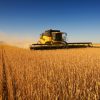
Grabbed
“Imagine that the land your family has worked for generations is suddenly stripped away from you, purchased by wealthy companies or governments to produce food or bio-fuels or simply as a profitable investment for other people, often far away. You watch on helplessly as vast tracts of land are cleared for mono-culture crops and rivers are polluted with run-off and chemicals.”
COP26: Building Climate Resilience Will Require a Focus on Those Furthest Behind
As the United Nations Climate Change Conference, also known as COP26, approaches (31 October -12 November in Glasgow, Scotland), climate action is more urgent than ever. Yes, we need climate change mitigation.
Guess Who’s Behind Paralysis on COVID19 in the UN Committee on World Food Security
‘COVID 19 has multiplied hunger and malnutrition challenges. We need transformative action!’ The first speaker at the UN Committee on World Food Security’s (CFS) 49th Plenary Session, the Secretary-General of the United Nations, turned the spotlight on the disastrous impacts of the pandemic that have afflicted communities around the world for close to two years.« Previous Page — Next Page »


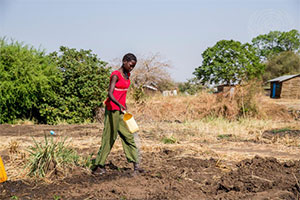 Farming on the Outskirts of Juba. Credit: UN Photo/JC McIlwaine
Promoting human and planetary health is a central focus of the United Nations, as laid out in the 2030 Sustainable Development Goals (SDGs). World hunger and unsustainable farming practices continue to be pressing concerns for the world. According to the 2025 State of Food Security and Nutrition in the World report by the Food and Agriculture Organization (FAO), 673 million people faced hunger in 2024. There are stark regional disparities, with the FAO projecting that 60% of the world population facing hunger will reside in Africa by 2030. Globally, the prevalence of food insecurity has remained consistently higher for women than men.
Sustainable and efficient national food systems are essential in preserving health, education, environmental well-being, peace, economy, and security. However, creating sustainable food systems can be a challenging endeavor, as food production takes a heavy toll on the environment. The agricultural sector accounts for a significant portion of greenhouse gases. Finding safe, sustainable, and ethical strategies to feed the world is crucial in ensuring planetary longevity. A recent initiative from 2023, the EU Regulation on Deforestation-free Products (EUDR), seeks to advocate for sustainable food systems. The main driver of deforestation is the expansion of agricultural land used to produce commodities like cattle, wood, cocoa, coffee, etc. The EUDR is part of the 2020 European Green New Deal and the EU Biodiversity Strategy for 2030 and aims to limit Europe’s consumption of products linked with deforestation by requiring that companies prove that their products are deforestation-free. Despite aiming to achieve major strides in sustainability, policies such as EUDR also raise socioeconomic concerns for targeted countries. Many emerging Latin American economies are impacted by the policy, and have raised the question of how developing countries can grapple with the tensions between economic development and advancing sustainability.
IPS has been at the forefront of providing compelling and insightful stories on communities facing hunger as well as the cost of food production. IPS uses statistics from FAO, the World Food Programme (WFP) and the International Fund for Agricultural Development (IFAD) to bring relevant and hard-hitting facts to readers. This gathering of information and data from such organizations helps bring the best stories from IPS journalists working in the different regions in consultation with experts on the ground.

The Week with IPS

NEXT STOP - SDGs
Tracking global progress towards a sustainable world
Tracking global progress towards a sustainable world