Languages
Monday, November 9, 2026



News and Views from the Global South
Humanitarian Emergencies

Greater Transparency Urged for U.N.’s South Sudan Mission
As South Sudan’s fragile ceasefire threatens to unravel, human rights groups are calling on the U.N.’s mission there to make public its human rights reporting, a step they say will help lay the groundwork for reconciliation that never took place following independence in 2011.
Starving for Access in Syria’s Yarmouk Camp
The refugee camp of Yarmouk represents one of the most severe examples of the humanitarian crisis in Syria, with foreign aid agencies unable to enter the opposition-controlled area that been effectively besieged since December 2012.
Gender Counts in the Aftermath of Disaster
The rise in natural disasters in the Caribbean due to climate change has led to increased suffering for both men and women, much of it as a consequence of socially constructed roles based on gender, experts say.
Mali’s Displaced Still Have Nothing To Return To
In her traditional orange headdress, Agaichetou Toure sits quietly in a waiting room in Kalaban-Koura, a popular neighbourhood on the outskirts of Mali’s capital Bamako.
U.S. Reforming “Outdated” Overseas Food Aid
U.S. lawmakers are in the final stages of approving reforms to a half-century-old system of providing overseas food assistance that critics say is outdated, inefficient and sometimes harmful to local economies in developing countries.
CAR’s Sectarian Strife Worsens Despite French, AU Troops
Reports of horrific revenge killing continued to emerge from the Central African Republic Wednesday, less than 24 hours after the Security Council voted to increase the international troop presence there and levy sanctions against those it suspects of war crimes.
Nowhere to Come In From the Cold
As the temperature dips to zero degrees Celsius, a chill has set into the lives of people like 44-year-old Rasool Khan at the Jalozai camp for internally displaced persons (IDPs) in Pakistan. Huddled in tiny tents, with just a plastic sheet over their heads and no heat, they pass sleepless nights in the bitter cold.
South Sudan’s Ceasefire Far from Conclusive
When representatives of the warring factions of South Sudan signed an agreement to end hostilities at a luxury hotel in Addis Ababa, Ethiopia on Thursday, Jan, 23, fervent applause and some high-pitched ululations erupted from the audience.
Ukraine Crackdown Hits Fight Against AIDS
Groups battling one of the world’s worst HIV/AIDS epidemics say their task may get “catastrophically” harder following the introduction of controversial laws in Ukraine in response to months of anti-government protests.
Swiss Spring for Syrian Refugees Passes
Switzerland facilitated family reunification for Syrians in September. So far, more than 1,100 Syrian refugees have benefited from the programme, while thousands are waiting at Swiss embassies in the region, hoping for a similar chance. Surprised by these numbers, Switzerland put an end to the programme.
OP-ED: The Arab World Has Changed, So Should Washington
As the Egyptian revolution against Hosni Mubarak celebrates its third anniversary, the military junta under General Abdel Fattah al-Sisi is resurrecting dictatorship under the veneer of “constitutional” legitimacy and on the pretense of fighting “terrorism.”
South Sudan’s Ceasefire Brings Hope For Half a Million Displaced
The overwhelming job of providing relief to the more than half a million displaced and wounded in South Sudan may have gotten a little easier with the signing of a ceasefire agreement last night in Addis Ababa, which is set to go into effect today.
Kenya’s Scorched Earth Removal of Forest’s Indigenous
Kenyan government security forces are forcefully evicting thousands of people, including the indigenous Sengwer tribe, from the Embobut forest in western Kenya by burning homes and possessions in an effort to promote forest conservation, safeguard urban water access and “remove squatters”.
New Leader in CAR, Same Human Rights Crisis?
The appointment of a new transitional president, Catherine Samba-Panza, in the Central African Republic (CAR) is generating optimism in some quarters that the country’s first female leader will manage to quell mounting ethnic strife.
Haiti’s “Public Housing” Projects Overlook Poorest
Named after a famous Haitian singer, the Lumane Casimir Village sits in the desert-like plain at the foot of Morne à Cabri and will eventually have 3,000 rental units. About 1,300 are now ready.
Questions Linger over Haiti Housing Projects
Four years after the Jan. 12, 2010 earthquake, questions continue to haunt the four main post-disaster housing projects built by the Haitian government.
Four Years After Haiti’s Earthquake, Still Waiting for a Roof
Mimose Gérard sits in her tent at Gaston Margron camp, surrounded by large bags filled with plastic bottles. She earns just pennies for each, but that’s better than nothing.
Thorny Path Toward Syrian Peace Process
The future of the complex armed conflict in Syria, which involves religious and ethnic factors as well as pressures from neighbouring countries and the strategic interests of global powers, will begin to take shape next week at a conference known as “Geneva 2.”
Small Projects, Big Changes in Climate Risk in Honduran Slums
For some 250,000 shantytown-dwellers in the Honduran capital, fear of dying or losing their home due to a landslide or other weather-related event has been reduced, thanks to a global warming mitigation plan that has carried out small infrastructure works in 180 ecologically and socially vulnerable neighbourhoods.
OP-ED: Avoiding Another Crisis in the Central African Republic
The European Union and the United Nations will co-chair a high-level meeting in Brussels on Monday, aiming to mobilise funding to provide immediate life-saving assistance for the Central African Republic.
Syrian Crisis Threatens Development in Arab World
The widespread sectarian violence and ongoing military conflicts in several political hotspots, including Syria, Iraq and Lebanon, have not only claimed thousands of human lives and devastated fragile economies but also undermined the U.N.’s longstanding plans to eradicate hunger and extreme poverty worldwide.« Previous Page — Next Page »





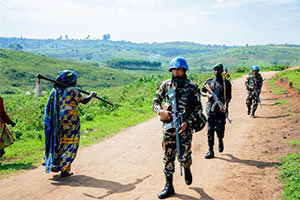 MONUSCO Peacekeepers and FARDC Soldiers Patrol Fataki Area. Credit: UN Photo/Jorkim Jotham Pituwa
Conflict, human rights violations, natural disasters, and famine have been at the forefront of concerns for humanitarian organizations. The escalation of humanitarian crises has led to over 239 million people in need of humanitarian assistance at the start of 2026, as estimated by OCHA’s Global Humanitarian Overview. The 2025 humanitarian appeal received only $12 billion, the lowest funding in over a decade, which has left 24 million fewer people reached in comparison to 2024. Conflict has remained the primary driver of crisis.
Humanitarian emergencies massively impact progress towards the Sustainable Development Goals (SDGs), adversely affecting economic development, inequality, education, planetary well-being, and poverty. Millions of people are faced with reduced access to essential services, including shelter, food, healthcare, and access to clean drinking water. UN Organizations such as UNHCR and the United Nations Children’s Fund (UNICEF) are committed to providing direct relief to affected communities when state governments cannot.
The United Nations 2024 Summit of the Future discussed measures that will be taken to reduce global inequality and promote peacekeeping efforts around the world. The recent UN Climate Change Conference (COP30) in Belém, Brazil, agreed to mobilize $1.3 trillion annually for climate action by 2035, operationalize the loss and damage fund, and triple adaptation finance. However, a fossil fuel transition commitment was not secured, despite climate change and the greenhouse effect being major contributors to humanitarian crises worldwide.
Countries across the world have also rallied to end humanitarian crises, as witnessed in conflicts such as Palestine and Ukraine. IPS is committed to providing relevant and in-depth reports of humanitarian emergencies around the world and their implications.

The Week with IPS

NEXT STOP - SDGs
Tracking global progress towards a sustainable world
Tracking global progress towards a sustainable world