Languages
Wednesday, November 11, 2026



News and Views from the Global South
Development & Aid
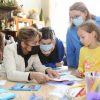
Education Cannot Wait in Moldova with Strategic Partners Scaling-up its Ukraine Crisis Regional Education Response to US$6.5 Million for Crisis-affected Children and Youth
Expanding on Education Cannot Wait’s (ECW) US$5 million Ukraine First Emergency Response grant announced in March, ECW today announced a new, initial US$1.5 million allocation to support the education in emergencies response for the Ukraine refugee crisis in Moldova while on mission with strategic partners USAID, FCDO/UK and Theirworld. This new allocation brings ECW’s total Ukraine crisis education response to US$6.5 million to date. The new grant will be delivered in partnership with the Government of Moldova to ensure refugee children and youth can access safe and protective learning opportunities. Investments will also benefit children in the host communities. The development of the grant will be facilitated through the coordination mechanism established for the education response.
Oil Crisis Offers Opportunities to the South and for the Green Energy Transition
The oil and gas supply crisis unleashed by the Russian invasion of Ukraine represents new business opportunities for the oil-producing countries of the developing South, both traditional and emerging, and also for accelerating the global transition to green forms of energy.
Drugged Water: A New Global Pandemic Hiding in Plain Sight?
People around the world are unknowingly being exposed to water laced with antibiotics, which could spark the rise of drug-resistant pathogens and potentially fuel another global pandemic, warns a new report.
Unintended Pregnancy Rates Highest in Africa: a Look at the Complex Reasons
The United Nations Population Fund recently released the 2022 State of World Population report. It highlights that almost half of all pregnancies between 2015 and 2019 were unintended. That amounts to roughly 121 million unintended pregnancies each year.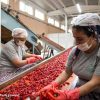
Food Systems Should Deliver Benefits in terms of Climate, Health and Society
Which country do you think best recognises the potential for changes to food systems to reduce emissions? Presumably a developed country, where agriculture is predominantly intensive, heavily subsidised and fuelled by fertilisers and irrigation, and where high consumption of animal proteins is the norm?
Kenya’s Ticking Bomb as Unemployed Youth Lured into Traffickers’ Dens
Ahmed Bakari’s ill-fated journey to ‘greener pastures’ started with a social media private message from a stranger back in 2017. The message said an international NGO was recruiting teachers and translators to work in Somalia.
Africa Commits to Green Recovery from COVID-19 Amid Daunting Challenges
Climate change activist Mithika Mwenda, the Executive Director of the Pan African Climate Justice Alliance (PACJA), is not reluctant to engage African governments to do what’s necessary to commit to post-COVID-19 green growth strategies.
Tackling the Pandemic of Inequality in Asia and the Pacific
After two years of human devastation, the world is learning to live with COVID-19 while trying to balance the protection of public health and livelihoods. For countries in Asia and the Pacific, this is challenging not only because national coffers are heavily strained by record public spending to mitigate pandemic suffering, but also due to deeper structural economic issues.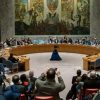
Why Africa is Divided Over the Russia-Ukraine War?
While the West has closed its ranks in response to the Russian invasion of Ukraine, the response in Africa has hardly been uniform. Following Russia’s military invasion of Ukraine on 24 February, various constituencies within the international community have reacted with a mixture of shock, anger, and trepidation as they ponder the invasion’s implications for international security.
China Debt Traps in the New Cold War
As China increases lending to other developing countries, ‘debt trap’ charges are growing quickly. As it greatly augments financing for development while other sources continue to decline, condemnation of China’s loans is being weaponized in the new Cold War.
Connecting the Dots for the Transforming Education Summit
Look around the world at this very moment. Whether we look at it in stark numbers and statistics, whether we look at it as a generational loss of basic human rights, including the right to an education, or whether we look inwardly and feel the unspeakable human suffering and devastation taking place, we all agree: we are at a historically low point in our collective humanity.
School Meal Programs Getting Back on Track in Central America, Despite Hurdles
A group of preschool students enthusiastically planted cucumbers and other vegetables in their small school garden in southern El Salvador, a sign that school feeding programs are being revived as the world emerges from the COVID-19 pandemic.
Traditional, Time-Tested Methods and a Modern App Helps Beat Climate Change
Even as erratic weather and extremely high temperatures increase pest infestation and affect harvests, a combination of traditional methods, integrated pest management through intercropping and multilayering is helping farmers in Ahmednagar and Aurangabad districts of Maharashtra, India.
Twilight for the 1951 Refugee Convention
Twilight for the 1951 Refugee Convention is becoming a 21st century reality for an increasing number of countries worldwide.
How Putin Underestimated Ukraine
In the eyes of the Kremlin leadership, the basic precondition of the successful war against Ukraine has been the perceived power of the Russian Armed Forces and possible superiority over the Ukrainian forces.
The Mayan Train and the Fight for Mexico’s Ancient Jungle
Along the wide slash of white earth in southwestern Mexico there are no longer trees or animals. In their place, orange signs with white stripes warn visitors: "Heavy machinery in motion," "No unauthorized personnel allowed".
A Guardian of Pacific Culture: The Pacific Community at 75
The Pacific Community turned 75 on the 6th of February 2022. As we mark 75 years of the Pacific Community’s Service to the region, on the 6th of each month we will feature a key moment in history for the organisation.
Worrying Insights from UN’s First-Ever Assessment of Water Security in Africa
When it comes to water security – a reliable, good supply of safe water – just 29 African countries have made some progress over the past three to five years. Twenty-five have made none.
Wake-Up Call as Millions of Africa’s Children at Risk of Missing Out on Education – Report
Marisol Ntalami is one of 747,161 candidates who sat for the national Kenya Certificate of Secondary Education in 2020. “I come from a pastoral community. My father has five wives and many children. I am the only girl in the family to have completed primary school and now secondary school. My mother fought very hard for me to stay in school. I am a first-year university student studying actuarial science,” she tells IPS.
How a Massive Climate Project Can Help Win Peace for Ukraine – And Help African Job + Food Crises
How would the late Archbishop Desmond Tutu have reacted to the Russian Invasion of Ukraine? Differently than you might think. The invasion of Ukraine is a mass human tragedy. It is killing Ukrainians, exposing families to violent atrocities, and has driven a refugee crisis of over 4 million people and counting. The war in Ukraine has also reawakened our fear of global war - even nuclear war - and the importance we place on global peace.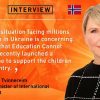
ECW Interviews Norway’s Minister of International Development Anne Beathe Tvinnereim
ECW: The International Disability Alliance (IDA), Government of Norway and Government of Ghana hosted the second Global Disability Summit in February. At the summit you called on partners to commit to ensuring children with disabilities can access their inherent human rights, including the right to education. How can we transform the delivery of education in emergencies to ensure no child is left behind?
« Previous Page — Next Page »





 2026 High-level Political Forum on Sustainable Development. Credit: UN Photo/Eskinder Debebe
In 2015, the United Nations and its Member States adopted the Sustainable Development Goals (SDGs) in an effort to make the world a more sustainable and peaceful place for future generations. Progress on the 17 SDGs has been uneven, and inequality persists across the globe. 10 years after adoption, the 2025 UN SDGs Report revealed that only 35% of the SDG targets are on track, with more than half moving too slowly, and 18% moving backwards from the 2015 baseline. Poverty remains one of the world’s most pressing issues, with hunger, violence, and inequality impeding the opportunities for all people to achieve success. In September 2024, the United Nations Summit of the Future introduced a new goal: to eradicate global poverty by 2030, ensure universal rights to basic services, and increase the overall standard of living in terms of industrialization, economic well-being, citizen health, and literacy. Furthermore, recent shifts in United States foreign aid policy – notably, major budget cuts to USAID and the termination of thousands of development programmes– have severely threatened vital lifelines of financial aid to impoverished communities around the world. Additionally, the United States’ withdrawal from the Paris Climate Agreement has undercut international efforts at sustainable development. With the upcoming 2030 deadline, the UN Secretary-General has called for urgent multilateralism across six priority areas: food systems, energy, digital connectivity, education, jobs and social protection, and climate and biodiversity. IPS sheds light on marginalized communities that struggle on a daily basis to survive and have their stories heard and respected.
Updated by Yilan Batista and Shuli Wong August 2026

The Week with IPS

NEXT STOP - SDGs
Tracking global progress towards a sustainable world
Tracking global progress towards a sustainable world
