Languages
Wednesday, November 11, 2026



News and Views from the Global South
Development & Aid

China’s Risky Strategic Game in Myanmar
Before the February 1 coup, China was among the top international partners of the now-in-opposition National League for Democracy (NLD). From 2015 to early 2020, when China closed its borders due to COVID-19, NLD leader Aung San Suu Kyi made five trips to China and met the Chinese President Xi Jinping five times.
Finance Nature-based Solutions to Quiet Nature’s Wrath – Experts
Climate change experts and leaders from the Commonwealth member states rallied behind calls to accelerate climate finance for nature-based solutions to arrest the pace of climate change, land degradation, and biodiversity loss.
Daughters of a Lesser God (II) 200 Million Girls Mutilated
While male circumcision is spread mainly among Muslim and other religious communities, and it is apparently accepted by some medical spheres, more than 200 million girls have already fallen prey to a dangerous, abhorrent practice, which is carried out in the name of social and religious traditions: Female Genital Mutilation (FGM).
As a Humanitarian Crisis Engulfs Afghanistan, Education Cannot Wait Makes Urgent Appeal for Access to Quality Learning for All Children
After leading a landmark, first-ever all-women mission to Afghanistan last week, Yasmine Sherif, Director of Education Cannot Wait, the United Nations global fund for education in emergencies and protracted crises, says that schools must reopen for all children and that girls, in particular, must be able to return to secondary school classrooms.
At COP26, EBRD Launches Plan to Mobilise Private Capital for Climate Finance
The European Bank for Reconstruction and Development (EBRD) has announced its intention to double the mobilisation of private sector climate financing by 2025.
Zimbabwe’s High-Risk Cross-Border Trade
Thirty-six-year-old Thandiwe Mtshali* watched helplessly as her informal cross-border trading (ICBT) enterprise came to a grinding halt when the Zimbabwean authorities closed the border with South Africa as part of global efforts to stem the spread of the deadly novel coronavirus.
UN Food Systems Summit: Breakthrough or Missed Opportunity?
UNSG Antonio Guterres convened the first-ever UN Food Systems Summit which took place on 23-24 September. The Summit preparation had a well-designed structure with remarkable and appreciated leadership of Amina Mohammed, UN DSG. Due to the hard work of the UN Special Envoy, Agnes Kalibata, and her whole Team, the organisation and logistics of the Summit was excellent.
COP26: Combined Exclusive Maritime Zone for Africa to Combat Illegal, Unreported & Unregulated Fishing
“Working together means we widen the number of like-minded actors towards a common good” –Dr. Azza Karam, Secretary-General of Religions for Peace International. As global leaders and civil society actors participate in COP26 in Glasgow, Scotland, illegal, unreported, and unregulated fishing is a significant problem that must be tackled.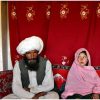
Daughters of a Lesser God (I) 800 Million Girls Forced to Be Mothers
Imagine your child, your daughter, being genitally mutilated and, further on, sold or even handed over for free to an older man who will force her to become a child mother, when her body is still far from being formed and thus able to bear with a so early pregnancy.
COP26 Discussions Must Prioritize Agriculture
Local, national and world leaders, and committed climate change activists are in Glasgow for the 26th UN Climate Change Conference of the Parties (COP26) to share the progress they’ve made since the COP21 in Paris six years ago and to discuss what comes next. One of the issues that must be on the table at COP26 is the worrying impact of climate change on agriculture in Africa.
Indigenous Communities & Human Rights Defenders Under Siege in Colombia
On 21 October, I had the honor of addressing the UN Security Council at the annual open debate on Women, Peace and Security. I spoke as a member of Cxhab Wala Kiwe, which means “Great People’s Territory” in the Nasa Yuwe language, also known as ACIN—Association of Indigenous Councils of the North of Cauca—in Colombia.
Mobilising the ‘Tools’ for Renewable Energy Investment in the Seychelles
Breaking the world’s reliance on fossil fuels and accelerating the global uptake of renewable energy will play a decisive role in diminishing the threat of global warming to the survival of life on earth, according to experts. But turning the vision into reality will demand unwavering political will and, critically, massive investment, which can no longer be shouldered solely by aid and development partners.
Obtaining Water, a Daily Battle in Argentina’s El Impenetrable Region
Next to the brick or adobe houses of El Impenetrable, a wild area of forest and grasslands in northern Argentina, loom huge plastic barrels where rainwater collected from the corrugated iron roofs of the houses is stored. However, the barrels are empty, because it has hardly rained for two years, local residents complain.
COP26: The Many Links Between Food Systems & Climate Change: Message to Glasgow
Unless food systems transformation is put at the center of climate action, commitments governments have already made, and could make at COP26, will be jeopardized.
Fighting Dengue Virus with Biological Weapons
Twenty-three-year-old Sarah Tajammal felt a sense of “impending doom” as she fought high fever, nausea, bouts of vomiting and extreme fatigue after being diagnosed with dengue two weeks back.
Will Glasgow Fix Broken Climate Finance Promises?
Current climate mitigation plans will result in a catastrophic 2.7°C world temperature rise. US$1.6–3.8 trillion is needed annually to avoid global warming exceeding 1.5°C.
Is Asia and the Pacific Ready for the Global Climate Stage?
As the leaders of Asia and the Pacific prepare to head to Glasgow for the 26th United Nations Climate Change Conference of the Parties (COP26), they can be sure that our region will be in the spotlight: many of the most vulnerable countries to the impacts of climate change are located here; the seven G20 members from this region are responsible for over half of global GHG emissions; and five of the 10 top countries with the greatest historic responsibility for emissions since the beginning of the twentieth century are from Asia.
Risky business: Why Sustainability is now Central to Mitigating Risk
The COVID-19 pandemic has undoubtedly caused the largest economic and societal shock the world has experienced this century. Yet it was not unforeseen.
Combating Energy Poverty in Chile with Community Inclusion
More than 90 percent of Chile's 17.5 million people have access to electricity. But many live in energy poverty because they do not have access to hot water, have unsafe connections, houses without thermal insulation and with indoor pollution, or can't afford to pay the monthly bill.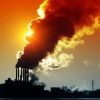
Any End to This Suicidal War? (II): More Lethal Gases and Fewer, Weaker Sinks
Another Year Another Record! The emissions of greenhouse gases continue to rise, the land and sea temperatures are higher than ever since there are records, and the ecosystems could fail their role as vital sinks absorbing carbon dioxide and as a buffer against larger temperature increases.
COP26: the Heat is On, But Climate Leadership is Off, Warns UN Report
When over 100 political leaders meet in Scotland next week for the UN Climate Change Conference, the very future of our planet seems to hinge on the outcome of the summit which is scheduled to take place October 31-November 12.« Previous Page — Next Page »





 2026 High-level Political Forum on Sustainable Development. Credit: UN Photo/Eskinder Debebe
In 2015, the United Nations and its Member States adopted the Sustainable Development Goals (SDGs) in an effort to make the world a more sustainable and peaceful place for future generations. Progress on the 17 SDGs has been uneven, and inequality persists across the globe. 10 years after adoption, the 2025 UN SDGs Report revealed that only 35% of the SDG targets are on track, with more than half moving too slowly, and 18% moving backwards from the 2015 baseline. Poverty remains one of the world’s most pressing issues, with hunger, violence, and inequality impeding the opportunities for all people to achieve success. In September 2024, the United Nations Summit of the Future introduced a new goal: to eradicate global poverty by 2030, ensure universal rights to basic services, and increase the overall standard of living in terms of industrialization, economic well-being, citizen health, and literacy. Furthermore, recent shifts in United States foreign aid policy – notably, major budget cuts to USAID and the termination of thousands of development programmes– have severely threatened vital lifelines of financial aid to impoverished communities around the world. Additionally, the United States’ withdrawal from the Paris Climate Agreement has undercut international efforts at sustainable development. With the upcoming 2030 deadline, the UN Secretary-General has called for urgent multilateralism across six priority areas: food systems, energy, digital connectivity, education, jobs and social protection, and climate and biodiversity. IPS sheds light on marginalized communities that struggle on a daily basis to survive and have their stories heard and respected.
Updated by Yilan Batista and Shuli Wong August 2026

The Week with IPS

NEXT STOP - SDGs
Tracking global progress towards a sustainable world
Tracking global progress towards a sustainable world
