Languages
Friday, November 20, 2026



News and Views from the Global South
Development & Aid

South-South Cooperation Offers Solutions to Urgent Climate Challenges
Climate change is the defining challenge of our time, and developing countries are recognized as hotspots for climatic risks. Through solidarity, peer-to-peer learning and collective self-reliance, developing countries are collaborating among themselves to address the threat.
The World had an ‘Unprecedented’ Number of People in Humanitarian Need this Year
The world had an unexpected number of people in crisis this year, which exceeded projected numbers the United Nations had expected, with climate change being one of the key crises that led to “needs to unprecedented levels” according to a new report.
Social Summit Demands Stronger Commitments in Climate Talks
As the COP25 deliberations enter the decisive final week, representatives of environmental and social organisations gathered in a parallel summit are pressing the governments to adopt stronger commitments in the face of a worsening climate emergency.
Fostering Sustainable Urbanization and Rural-Urban Linkages
As urbanization continues apace, coupled with rapid population growth and rural to urban migration, the challenges for inclusive rural transformation continue, and the importance of fostering improved rural-urban linkages for better food systems becomes increasingly important.. According to the UN, by 2050 some 66% of the world’s population of 9 billion is expected to live in urban areas. Such rapid urbanization is increasingly shaping the rural space and rural livelihoods (through markets, demand for agricultural goods and labour, migration, and through the provision of services to rural areas). It is therefore critical for the increasing emphasis on urban development to take into account the importance of rural development.
Climate Refugees Refused UN Protection & Denied Rights Under International Law
The term “environmental refugee” has gained prominence in recent years as climate change and desertification have threatened the livelihoods of millions of people, causing many to re-locate.
Children Risk Early Marriage: Climate Change One of the Factors
Filomena (15), a fisherman’s daughter from a village in Nampula Province, Mozambique was married to a 21-year-old from the same village.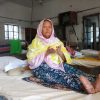
Building a Leprosy Free Bangladesh
Despite having remarkable success in leprosy control in the last decades, the Bangladesh government is now moving forward with a vision to build a leprosy- free country.
Saved Seeds are Seeds of Resilience
People have a right to define their own food system. This includes which seeds they use. Last week, farmers in Nakuru County, Kenya, celebrated the launch of “Ten rich, underutilized crops,” a publication and documentary that capture their efforts to promote and sustain the varieties they grow.
The Economic & Humanitarian Catastrophe Threatening Pacific Island Communities
When UN Secretary-General Antonio Guterres addressed the Economic and Social Commission for Asia and the Pacific (ESCAP) last month, he pointed out the dramatic impact of climate change triggering natural disasters around the world--- from glaciers that melt, ice caps that disappear and corals that bleach.
The Changing Distribution of World Population
In addition to its unprecedented rapid rate of demographic growth during the past 75 years, world population’s distribution across the planet has changed significantly over the past seven decades. The momentous global changes in humanity’s geographic distribution pose serious social, economic, political and environmental challenges and disquieting implications for the future.
Gains and Losses of Irregular Migration
While opening a newspaper or watching a TV program we are every day made aware of the plights of irregular migrants. Some recent examples among many – on 24 October, 39 Chinese nationals were found dead in a lorry trailer in Essex. They had apparently frozen to death within a refrigerator container with temperatures as low as -25C (-13F). This while tragedies occur almost daily on the Mediterranean Sea. On 26 November, a rescue vessel found a boat almost completely sunken. It had three dead bodies aboard. Fifty-five migrants were saved. Three of them were in a critical condition, and one died after reaching Melilla in Spain, where the migrants were brought in. Three children were among the survivors, though a further ten individuals were reported missing. Nowadays, such news items pass by almost imperceptibly. Every day, thousands of unfortunate human beings are trafficked all over the world to suffer underpaid, hazardous work, or prostitution.
Forced to Flee. Displaced with a Dream. Time for Action.
Genesis smiles and holds her hand up proudly to answer questions in class. She claps her hands in support of her classmates when they answer the teachers’ questions correctly. “I miss my cousins and aunts in Venezuela, she says.” Her smile fades and her lips tighten. She struggles to hold back her tears. “I can’t return. I want to stay here in my school, with my new friends.” Her smile returns, as she resolutely states: “I want to become a lawyer, so I can help solve problems.”
African Politicians Asked to Develop Legal Instruments to Fight Climate Change
African legislators have been challenged to come up with legal frameworks for climate change to enable countries avoid catastrophes and reactionary emergencies that eat up their budgets.
India’s Electric Mobility Needs Enabling Infrastructure to Pick up Speed
Dogged by intractable air pollution debilitating large northern swathes from mainly urban vehicle emissions, India earlier this year announced targets for a 40 percent non-fossil component in its fuel-mix by 2030 as part of its Nationally Determined Commitments (NDC) to the Paris accord on climate change. It aims for full electrification of public transit systems and of one-third private vehicles by 2030.
Sustainable Fisheries are Key in Addressing Food Security — and Women can Play an Important Role
Experts gathered in November to discuss the importance of sustainable fisheries and its role in eradicating world hunger at a fisheries symposium in Rome.
Nature-Based Climate Solutions Opportunity for Latin America
Protecting and restoring natural areas in Latin America, home to fifty percent of the planet’s biodiversity and over a quarter of its forests, is critical if the world is to avert a biodiversity and climate disaster.
Fostering Jobs, Entrepreneurship, and Capacity Development for African Youth: The Time for Disruption Is Now!
“There is no greater asset to Africa than its youth,” a statement that has been repeatedly proclaimed, but the continent still has a long way to go. Despite robust economic growth over the past two decades, a 1 percent increase in growth between 2000–14 was associated with only 0.41 percent growth in employment. This figure suggests that employment stood at less than 1.8 percent a year, far below the nearly 3 percent annual growth in the labor force. If this trend continues, 100 million people will join the multitudes of the unemployed in Africa by 2030.Volunteerism – An Antidote to a World in Flux
As the world warms, as inequality widens and as an increasing number of societies suffer from instability and conflict, many people are left wondering what they can do about it.
Indigenous Knowledge, a Lesson for a Sustainable Food Future
Local knowledge systems rooted in traditional practices and culture passed down generations provide sustainable solutions to food and nutritional insecurity on the back of climate change, a conference heard this week.
Fixing the Business of Food
Milan is the city where Leonardo da Vinci painted his iconic Last Supper. Frozen in time is the moment Christ told his disciples there was a traitor among them. Visitors to the painting can examine the expressions on the faces of the disciples and look the food they might have eaten – the bread and wine, and of course the spilt salt. As one delegate to the 10th International Forum on Food and Nutrition noted, the diet did not seem varied or healthy.African Development Bank launches digital tool to help African youth learn to code
The African Development Bank and technology firm Microsoft today launched the ‘Coding for Employment’ digital training platform, an online tool to provide digital skills to African youth, wherever they are across the continent.« Previous Page — Next Page »


 2026 High-level Political Forum on Sustainable Development. Credit: UN Photo/Eskinder Debebe
In 2015, the United Nations and its Member States adopted the Sustainable Development Goals (SDGs) in an effort to make the world a more sustainable and peaceful place for future generations. Progress on the 17 SDGs has been uneven, and inequality persists across the globe. 10 years after adoption, the 2025 UN SDGs Report revealed that only 35% of the SDG targets are on track, with more than half moving too slowly, and 18% moving backwards from the 2015 baseline. Poverty remains one of the world’s most pressing issues, with hunger, violence, and inequality impeding the opportunities for all people to achieve success. In September 2024, the United Nations Summit of the Future introduced a new goal: to eradicate global poverty by 2030, ensure universal rights to basic services, and increase the overall standard of living in terms of industrialization, economic well-being, citizen health, and literacy. Furthermore, recent shifts in United States foreign aid policy – notably, major budget cuts to USAID and the termination of thousands of development programmes– have severely threatened vital lifelines of financial aid to impoverished communities around the world. Additionally, the United States’ withdrawal from the Paris Climate Agreement has undercut international efforts at sustainable development. With the upcoming 2030 deadline, the UN Secretary-General has called for urgent multilateralism across six priority areas: food systems, energy, digital connectivity, education, jobs and social protection, and climate and biodiversity. IPS sheds light on marginalized communities that struggle on a daily basis to survive and have their stories heard and respected.
Updated by Yilan Batista and Shuli Wong August 2026

The Week with IPS

NEXT STOP - SDGs
Tracking global progress towards a sustainable world
Tracking global progress towards a sustainable world
