Languages
Sunday, November 8, 2026



News and Views from the Global South
Population

Despite Recession, Global Migration on the Rise
New international migration figures released by the United Nations Wednesday show that more people than ever are living abroad. Around 232 million of the global population of seven billion are considered international migrants, simply defined as persons living outside their country of birth.
Dwindling Water Supplies Make Every Drop Count
Drought and chronic water shortages played a significant role in sparking Syria's civil war and in unrest throughout much of the Middle East, water experts now believe.
Cuba Streamlines Public Health System
One challenge faced by the Cuban government, and a high priority for citizens, is improving the efficiency and sustainability of public health services, a constitutional right that the state is supposed to ensure for all.
Cuban Teenagers Overuse Abortion as Birth Control
In nearly all of Latin America, illegal abortion is a serious public health problem. But in Cuba, where abortion is legal, it is being overused by teenagers.
Mobile Phones Big Hit in Rural Zimbabwe
Prosper Muripo rents a small space in a general dealer’s shop at the Gotora shopping centre in Zimbabwe’s Mashonaland East province. He is one of the many people in rural Zimbabwe who earn a living selling recharge vouchers and charging mobile phone batteries on solar-powered chargers.
Q&A: “We Need a Decisive Win Against Polio”
Africa and Pakistan are now battling outbreaks of polio, threatening the extraordinary progress the world has made in fighting the almost-extinct disease. In the Horn of Africa, there are now 121 reported polio cases. Last year, there were 223 worldwide. Siddharth Chatterjee has served as the chief diplomat, head of strategic partnerships and international relations at the International Federation of the Red Cross and Red Crescent Societies, the world’s largest humanitarian network, since June 2011.
Sri Lanka Cornered Over Human Rights
That it would be a visit fraught with diplomatic tension was undoubted. Navanetham ‘Navi’ Pillay, the United Nations High Commissioner for Human Rights, was into the third day of her week-long visit from Aug. 25 to Aug. 31 to Sri Lanka when her entourage broke into animated discussion.
Migrant Rights Defenders in Mexico Face Growing Pressure
"No one can stop me from working for migrants' rights, because no one is above my own conscience," said Mexican Catholic priest Alejandro Solalinde.
Water Scarcity Could Drive Conflict or Cooperation
When the General Assembly declared 2013 the International Year of Water Cooperation (IYWC) three years ago, the U.N.'s highest policy-making body was conscious of the perennial conflicts triggered by competition over one of the world's most critical finite resources.
Native Americans Take Lead in Tar Sands Resistance
Native American tribes in the United States have taken the lead in opposing the expansion of the Athabasca Tar Sands in Alberta, Canada, engaging in civil disobedience to the point of arrest and attempting to physically block shipments of construction equipment from passing through their native lands.
Filming Uganda’s Own Stories
For four years Isaac Godfrey Nabwana made and sold bricks in Kampala’s Wakalinga slum. But now, thanks to his labours, he is building what he hopes will become Uganda's answer to Nollywood.
Cuban Doctors Bring Eyesight, Healthcare to Haiti
It's Saturday, and the entrance hall of a police station in front of the busy market in Salomon in the Haitian capital has become an improvised health post. In a few minutes there is a long queue of people waiting to be seen by the Cuban medical brigade.Nuclear Test Moratorium Threatened by North Korean Impunity
When the United Nations commemorates the International Day Against Nuclear Tests later this week, the lingering question in the minds of most anti-nuclear activists is whether or not the existing moratorium on testing will continue to be honoured - or occasionally violated with impunity.
Widows Celebrate a Little At Last
Namuna Gautam was among millions of Indian women who celebrated Rakshabandhan this year, but one thing set her apart. It was the first time the 80-year-old took part in the festival, in which sisters pray for the long life, health and happiness of their brothers.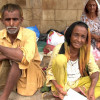
Few Pakistanis Donate Organs
Forty-year-old Sajja Bibi from Sukkur, 470 km from Pakistan’s port city of Karachi, has been camping on the pavement across from the Sindh Institute of Urology and Transplantation for over two years now.
Doctors in Brazil: Too Few, or Just Too Far Between?
Brazil plans to import doctors to provide healthcare in poor suburbs of large cities, impoverished regions of the interior and border areas. But is there really a shortage of doctors in this country?Aid Cuts Childbirth Risks in Bangladesh
Seven months pregnant, 24-year-old Shumi Begum has travelled 220 km from her village with her paternal grandmother to consult a specialist on childbirth.
Civil Society Trial Finds Oil Corp Guilty in Colombia
An “ethical and political trial on pillaging of natural resources” in Colombia condemned three foreign corporations, including Canada’s Pacific Rubiales Energy, which has dozens of oil and natural gas operations around the country.
Hard to Stay, Harder to Return
After working in Thailand legally for four years, many Myanmar migrant workers are facing an uncertain future in the coming weeks as their visas expire. Tired of the lack of security, they want the Myanmar government to improve the current labour agreement with Thailand.
OP-ED: Rising Temperature, Rising Food Prices
Agriculture as it exists today developed over 11,000 years of rather remarkable climate stability. It has evolved to maximize production within that climate system. Now, suddenly, the climate is changing. With each passing year, the agricultural system is becoming more out of sync with the climate system.
Musical Toilets for a Few While 2.5 Billion Lack Basics
Even as the United Nations laments the fact that more than 2.5 billion people in the developing world are still without adequate sanitation, both Japan and South Korea have gone upscale: offering automated toilets and piped-in classical music.« Previous Page — Next Page »





 One Thousand Internally Displaced Persons (IDPs) Relocated from Tomping Camp in South Sudan. Credit: UN Photo/Isaac Billy
It took hundreds of thousands of years for the world’s human population to cross one billion in 1804. Approximately 200 years later, the population has multiplied sevenfold. In 2023, the global population crossed 8 billion, and is expected to reach 9 billion before 2050. With the planet more crowded than ever, it is essential to keep track of population trends, urbanization, migration, and reproduction across the world.
Life expectancy has seen significant strides in the past century, largely due to economic development and increased standards of living. On the contrary, trends in global fertility are shifting, with certain regions in Africa and Asia reporting higher rates, while parts of Europe and North America report stagnant or lower rates. This is in part due to differences in sexual and reproductive healthcare, as well as societal and economic conditions around the world. For example, child marriage is prevalent in certain societies, where childbearing is also considered a familial duty. Meanwhile, stagnating economies frequently experience lower marriage and childbearing rates.
The increase in migration and urban development around the world is also linked to global population trends. By 2050, it is expected that approximately 66 percent of all people will live in cities. Furthermore, global crises such as warfare and natural disasters also prompt transnational migration. Transnational migration is linked to a variety of socioeconomic issues in both host and receiving countries: migrants often leave developing countries with less access to educational and economic opportunities and arrive in developed countries where they are frequently the targets of ethnic, racial, and cultural discrimination, and economic exploitation. Recent crises in Europe and the United States demonstrate the importance of advocating for migrants worldwide. As migrants from the Global South are increasingly stripped of their legal and civic rights in unlawful deportations, or targeted in acts of identity-based violence, it is essential to keep track of population trends and protect the human rights of migrant populations. Climate-related disasters are now a major driver of displacement, with nearly half of all new internal displacements in 2025 being disaster-related.
IPS is devoted to covering issues surrounding population trends, migration, and reproduction through its compelling articles, which use both statistics and human stories to provide readers with robust and informative viewpoints.

The Week with IPS

NEXT STOP - SDGs
Tracking global progress towards a sustainable world
Tracking global progress towards a sustainable world
