Languages
Sunday, November 8, 2026



News and Views from the Global South
Population

China Outranks West to Grab Top Spot in Global Tourism
China, which has outranked Japan as the world's second largest economy and moved ahead of Russia as the world's second largest military spender, has hit the top spot in global tourism.
Insecurity the “Achilles’ Heel of Development” in Latin America
Development experts here are warning that widespread, unchecked violence against citizens in Latin America is posing a threat to the development of the entire region.
Q&A: Ecuador Guarantees Right to Free Emergency Contraception
The government of Ecuador is determined to curb the growing number of teen pregnancies, and has begun to knock down barriers that stand in the way of the right to a responsible sexual and reproductive life.
World Bank, IMF Link Urbanisation with Development
Two of the world’s largest multilateral institutions have released new data linking greater urbanisation with higher levels of human development, and are announcing that they will place greater priority on issues of urbanisation in coming decades.
Land, But No Paradise, for Brazil Massacre Survivors
The order came from the office of the governor of the northern Brazilian state of Pará, Almir Gabriel, at 5:00 PM on Apr. 17, 1996: clear route PA-150, the epicentre of social protests for land reform, at any cost.
Luxury Homes Block Up Delta near Buenos Aires
Gated residential communities on the Paraná Delta have sprawled out of control in recent years, and are plugging up the local ecosystem and preventing the natural runoff of water that cushions the impact of floods in a vast area near the Argentine capital.
Q&A: Innovation Key to Sustainable Development Goals
Innovation, as the fruit of science and technology, will play a fundamental role in the Sustainable Development Goals that could go into effect in 2015, says Néstor Osorio, president of the United Nations Economic and Social Council.
Give a Teenager a Camera, Watch the World Change
Today's youth are hardly passive consumers of content – they create it, endlessly updating via social media and spreading information faster than one can say “go".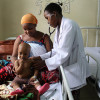
Global Health Plan Aims to End a Third of Childhood Deaths
The United Nations has unveiled a major framework aimed at, for the first time, coordinating worldwide efforts to work simultaneously to end childhood pneumonia- and diarrhoea-related deaths by 2025.
Agriculture Still the Cinderella of Colombia
Wearing a dusty hat and a smile that lights up his face, the septuagenarian José Alicapa does not shrink from the overwhelming bustle of the Colombian capital, which he reached after a 13-hour bus drive from the western province in Caldas.
In Haiti, April Showers Don’t Always Bring Flowers
In Haiti, a simple spring shower that would barely be noticed in most countries can cause devastating floods, due to the severe deforestation and erosion that impedes the absorption of rain.
OP-ED: Letting Nature Take Its Course?
Is sustainability still possible? Yes. Is it still probable? No. With bold action today, tomorrow, and in years to come, we could succeed in creating a sustainable and prosperous society. But what does bold action actually mean?
Urban Youth Go Back to the Land
 Down the main road in Munda, a coastal town on the North Georgia Island of the Solomon Islands, past the wharf, the market and a small collection of shops, Patrick Arathe’s farm is reached by walking first across the runway of the local airport and finally along a dirt track that winds between residential buildings until it opens into a large clearing.
Impunity, Machismo Fuel Femicides in El Salvador
Several brutal, high-profile murders of women in the last few weeks in El Salvador are just the latest reminder that this is one of the countries in the world with the highest number of femicides, the term used to describe the killing of women because they are female.
U.S. Global Health Cuts Threaten Gains on Lethal Diseases
A U.S.-based civil society coalition is calling on Congress and President Barack Obama’s administration to keep spending on global health aid at current levels, warning that recent budget cuts risk a dangerous backslide in health and development gains achieved over the past three decades.
U.N. Chief Singles Out Monaco for Raising Climate Awareness
When Secretary-General Ban Ki-moon visited Kiribati in 2011, he had "an unexpected insight" into the fear that stalks the Pacific Island nation.
Q&A: Obesity and Hunger Are Two Sides of the Same Problem
Over 40 million children under the age of five were overweight in 2010. In fact, since 1980, the worldwide prevalence of obesity has doubled, according to the British medical journal the Lancet.
The Other Side of the Coin in Spain
Wholemeal rye bread, lettuce and chard are some of the products on offer from the El Caminito urban vegetable garden at the small organic produce market in this southern Spanish city, with prices set in "comunes", one of more than 30 social currencies circulating in the country.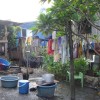
Water Shortage Hits Pacific Women
The Solomon Islands, a developing island nation in the south-west Pacific Islands, has one of the highest urbanisation rates in the region, and the basic service infrastructure is struggling to cater for the influx of people from the provinces to the capital, Honiara. Thirty-five percent of the city’s population, who live in informal settlements, are facing the health consequences of a dire shortage of clean water and sanitation.
Troops May Join Mexico’s Fight Against Hunger
The Mexican government is considering using the armed forces, which face serious human rights accusations from their involvement in the war on drugs, to collect socioeconomic data from the low-income households that will benefit from the National Crusade Against Hunger.Q&A: A Healthy Verdict from India
India’s refusal to grant patent protection for the anti-cancer drug Glivec, developed by Swiss drugmaker Novartis, is a victory for the developing world, which depends on low-cost exports of generic medicines from the Asian giant, said public health specialist Germán Velásquez.« Previous Page — Next Page »





 One Thousand Internally Displaced Persons (IDPs) Relocated from Tomping Camp in South Sudan. Credit: UN Photo/Isaac Billy
It took hundreds of thousands of years for the world’s human population to cross one billion in 1804. Approximately 200 years later, the population has multiplied sevenfold. In 2023, the global population crossed 8 billion, and is expected to reach 9 billion before 2050. With the planet more crowded than ever, it is essential to keep track of population trends, urbanization, migration, and reproduction across the world.
Life expectancy has seen significant strides in the past century, largely due to economic development and increased standards of living. On the contrary, trends in global fertility are shifting, with certain regions in Africa and Asia reporting higher rates, while parts of Europe and North America report stagnant or lower rates. This is in part due to differences in sexual and reproductive healthcare, as well as societal and economic conditions around the world. For example, child marriage is prevalent in certain societies, where childbearing is also considered a familial duty. Meanwhile, stagnating economies frequently experience lower marriage and childbearing rates.
The increase in migration and urban development around the world is also linked to global population trends. By 2050, it is expected that approximately 66 percent of all people will live in cities. Furthermore, global crises such as warfare and natural disasters also prompt transnational migration. Transnational migration is linked to a variety of socioeconomic issues in both host and receiving countries: migrants often leave developing countries with less access to educational and economic opportunities and arrive in developed countries where they are frequently the targets of ethnic, racial, and cultural discrimination, and economic exploitation. Recent crises in Europe and the United States demonstrate the importance of advocating for migrants worldwide. As migrants from the Global South are increasingly stripped of their legal and civic rights in unlawful deportations, or targeted in acts of identity-based violence, it is essential to keep track of population trends and protect the human rights of migrant populations. Climate-related disasters are now a major driver of displacement, with nearly half of all new internal displacements in 2025 being disaster-related.
IPS is devoted to covering issues surrounding population trends, migration, and reproduction through its compelling articles, which use both statistics and human stories to provide readers with robust and informative viewpoints.

The Week with IPS

NEXT STOP - SDGs
Tracking global progress towards a sustainable world
Tracking global progress towards a sustainable world
