Languages
Sunday, November 8, 2026



News and Views from the Global South
Population

Nepal Unprepared for Imminent Earthquakes
Nepal now ranks 11th on a list of the world’s most earthquake-prone countries, yet it remains one of the least disaster-prepared nations globally.
Chile in the Vanguard of Monitoring AIDS Therapy
In Chile, not only do all people diagnosed with HIV/AIDS receive treatment, but the country also has advanced mechanisms for monitoring outcomes of the antiretroviral therapy.
Keeping African Roots Alive in Brazil
A Nigerian diviner dances and sings next to a Brazilian priest of the Candomblé religion, brought to this South American country by African slaves, that is now being rescued from oblivion in school texts on national history and culture.
Pakistan Attacks Pneumonia With Free Vaccine
Medical practitioners at the National Institute of Child Health (NICH), a leading government-run children’s hospital in Karachi, hope that this will be the last winter they have to treat a stream of children suffering from pneumonia.
Making Waste Management a Sport in India
In a country notorious for the inability to deal with the waste it generates, municipal officials in the southern Indian state of Andhra Pradesh are now resorting to making waste management a competitive sport, in their bid to cajole the entire nation to clean up.
Sustainable Fashion Born in Brazil’s Favelas
A Brazilian designer has taken fashion from the exclusivity of the catwalk to the reality of the favela, to demonstrate that styles, trends and fads are also born in these poor neighborhoods of cities like Rio de Janeiro.
An Agreement For Peace Means a Promise of Tourism
International travellers may soon get to enjoy the scenic spots and rich cultural heritage of Muslim Mindanao, the Philippines’ southernmost island group, without the threat of being caught in the crossfire of the region’s conflict.
Remittances Rise Despite West’s Economic Weakness
Despite recession in Europe and a weak recovery in the United States, remittances to developing countries have been growing at a strong pace over the last year and are likely to accelerate further through 2015, according to a new report released here Tuesday by the World Bank.
Tomorrow Is Too Late for Adaptation to Climate Change
You can still see broken plates, toys, books and some photographs among the rubble that was once the homes of Rey Antonio Acosta’s family and other families in Mar Verde, the beach community where Hurricane Sandy made landfall in this eastern Cuban city.
First Burning Homes, Now Border Patrols
In late August, Mohammad Saifuddin (not his real name), together with his wife, three daughters and son, fled the carnage of communal violence in western Myanmar’s Rakhine province and headed for the border of neighbouring Bangladesh.
Q&A: “War Helped Unify Angola”
A visitor to Angola might be surprised at the calm surrounding Angola’s accelerated rehabilitation and construction of infrastructure a decade after the end of so many years of war, and at the lack of after-effects like ethnic violence, armed gangs, or the settling of accounts.‘Lifestyle Diseases’ Plague Indian Women
Sreelakshmi, an office executive in a major diagnostic laboratory in Thiruvananthapuram, the capital city of the southern Indian state of Kerala, ends her 11-hour working day to return home at night to a mountain of domestic chores.
Fixing the ‘Silent’ Sanitation Crisis
Organisers of this year’s World Toilet Day, which falls on Nov. 19, are using the slogan ‘I give a shit – do you?’ to break the silence around the crucial issue of sanitation and remind the international community that 2.5 billion people around the world don’t have access to clean and private toilets.
Thinking Outside the Stall on World Toilet Day
When the United Nations commemorates World Toilet Day next week, there will be a lingering question in the minds of activists: how best can water and sanitation be given high priority in the proposed Sustainable Development Goals (SDGs) in the U.N.'s post-2015 economic agenda?
How African Men are Changing Traditional Beliefs
Charles Kayongo of Uganda is a father of two girls aged five and three. And even though age-old traditions among his ethnic group, the Baganda, say a man should have an unlimited number of children and a son as an heir, Kayongo refuses to have more children.
Soy and Sugar Cane Fuel Native Land Conflicts in Brazil
The threat of mass suicide by native Guaraní-Kaiowá people in southwest Brazil brought to light a new formula for worsening conflicts over indigenous territory: the expansion of the cultivation of soy beans and sugar cane, two top export crops.
Family Planning Falters Despite Treaty Commitments
Since the 1966 International Covenant on Economic, Social and Cultural Rights, the United Nations has consistently maintained that family planning is a basic human right to be exercised by all - not just the wealthy and otherwise privileged.
Family Planning Skips Millions in Pakistan
Thirty-year-old Shahida Saleem, who was not educated past the tenth grade, is a mother of two, living with her family in Karachi. Six months ago she suffered a miscarriage and her doctor, concerned about her anaemic condition, advised her to space out her next pregnancy by taking contraceptives.
Unsafe Abortions Threaten Thousands in Eastern Europe
Pressure from the Catholic Church, social stigma, a lack of information about sexuality and reproductive health and limited access to reproductive healthcare services are putting the lives of hundreds of thousands of women across Eastern Europe at risk.
Soup Kitchens Overwhelmed in Crisis-Ridden Spain
A huge pot of rice steams on the stove at the soup kitchen run by Emaús in the municipality of Torremolinos, on the outskirts of this southern Spanish city. This morning, like every other, Pepi, Adriana and Diego are cooking for over a hundred people who can no longer afford to feed themselves.
Racism Is Bad for Health
If a black woman and a white woman both need emergency obstetric care, a Brazilian doctor will assist the white woman because of the stereotype that black women are better at handling pain and are used to giving birth.« Previous Page — Next Page »





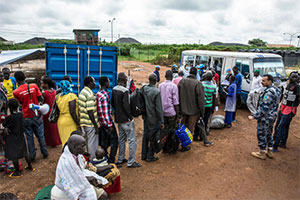 One Thousand Internally Displaced Persons (IDPs) Relocated from Tomping Camp in South Sudan. Credit: UN Photo/Isaac Billy
It took hundreds of thousands of years for the world’s human population to cross one billion in 1804. Approximately 200 years later, the population has multiplied sevenfold. In 2023, the global population crossed 8 billion, and is expected to reach 9 billion before 2050. With the planet more crowded than ever, it is essential to keep track of population trends, urbanization, migration, and reproduction across the world.
Life expectancy has seen significant strides in the past century, largely due to economic development and increased standards of living. On the contrary, trends in global fertility are shifting, with certain regions in Africa and Asia reporting higher rates, while parts of Europe and North America report stagnant or lower rates. This is in part due to differences in sexual and reproductive healthcare, as well as societal and economic conditions around the world. For example, child marriage is prevalent in certain societies, where childbearing is also considered a familial duty. Meanwhile, stagnating economies frequently experience lower marriage and childbearing rates.
The increase in migration and urban development around the world is also linked to global population trends. By 2050, it is expected that approximately 66 percent of all people will live in cities. Furthermore, global crises such as warfare and natural disasters also prompt transnational migration. Transnational migration is linked to a variety of socioeconomic issues in both host and receiving countries: migrants often leave developing countries with less access to educational and economic opportunities and arrive in developed countries where they are frequently the targets of ethnic, racial, and cultural discrimination, and economic exploitation. Recent crises in Europe and the United States demonstrate the importance of advocating for migrants worldwide. As migrants from the Global South are increasingly stripped of their legal and civic rights in unlawful deportations, or targeted in acts of identity-based violence, it is essential to keep track of population trends and protect the human rights of migrant populations. Climate-related disasters are now a major driver of displacement, with nearly half of all new internal displacements in 2025 being disaster-related.
IPS is devoted to covering issues surrounding population trends, migration, and reproduction through its compelling articles, which use both statistics and human stories to provide readers with robust and informative viewpoints.

The Week with IPS

NEXT STOP - SDGs
Tracking global progress towards a sustainable world
Tracking global progress towards a sustainable world
