Languages
Sunday, November 8, 2026



News and Views from the Global South
Population

BRAZIL: Child-Adapted Formula to Deal Major Blow to Chagas Disease
A new paediatric formulation developed in Brazil holds out hope for a cure for over 90 percent of newborn babies infected with Chagas disease, a parasitic infection endemic in 21 Latin American countries, where it kills more people every year than malaria.Poverty and Racism Fuel HIV/AIDS Epidemic in U.S.
On World AIDS Day, all eyes are fixed on the global south, where a preventable HIV/AIDS epidemic across Asia, Africa and Latin America has infected almost 33 million people.
Andean Migrant Women Create Opportunities
Women make up a majority of migrants from South America's Andean region and they send more money home to their families than men, according to a study carried out in Bolivia, Colombia, Ecuador and Peru.
LATIN AMERICA: Female Condoms in Short Supply
In spite of the growing spread of HIV/AIDS among women in Latin America and the Caribbean, the female condom, which could put them in charge of their health, is not readily available.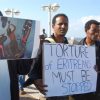
ISRAEL: Eritreans Flee From Dictatorship to Detention
Standing across the street from the American embassy in Tel Aviv, more than 200 Eritrean asylum seekers chanted "Yes to justice! Yes to humanity!", and demanded international intervention to stop torture camps in the Egyptian Sinai. Protests by African asylum seekers in Israel are growing, in the face of increasingly tough policies by the Israelis.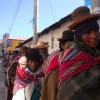
Lessons from the Andes on Budgeting to Close the Gender Gap
Three countries in South America's Andean region, Bolivia, Ecuador and Peru, have a great deal to teach and share with those meeting in Busan, South Korean this week to discuss, among other things, how to make sure that development aid incorporates a gender focus in order to be effective.SPAIN: Self-Financed Communities “A Tool for Building Trust”
On the first Sunday of every month, Abdoulaye Fall, from Senegal, meets a group of people in Barcelona, to contribute money to a common fund or to take out a loan. This is one of 60 self-financed communities in Spain, an alternative to traditional banking systems that is having a powerful social effect.
Q&A: “Gender Budgets Help You Think About People”
Gender responsive budgeting (GRB), a U.N. Women tool to curb inequality, "helps you think about people...and to use resources in a more effective manner," says Lorena Barba.
LATIN AMERICA: How to Prevent ‘Femicide’
Vanina Alderete, an 18-year-old from Argentina, is a survivor of a particularly heinous case of domestic violence: when she was 11, her father killed her mother and her two little brothers and left her seriously injured.
EU: Conditions Faced by Roma People – from Bad to Worse
Roma leaders are alarmed at the growing discrimination faced by their people in Europe, especially because of the anti-gypsy stance taken by many political parties, which blame the ethnic minority group for a wide range of social ills.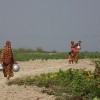
Bangladesh Demands Climate Justice
Mosammet Monwara walks more than three km every alternate day to fetch water for her family of five in a heavy earthen pitcher.MIDEAST: Erdogan Most Popular Leader By Far Among Arabs
Despite repeated expressions of support by President Barack Obama for democratic change during the "Arab Spring", the United States remains widely distrusted in the region, according to a major new survey of public opinion in five Arab countries released here Monday.
AFRICA: Wanted: Greener Cities
In Africa, where urbanisation will be one of the major developments over the next few decades, it will be key for cities to figure out how to handle rapid urban expansion and much-needed economic growth, while creating more environmentally-friendly cities and reducing their carbon footprint at the same time.
CLIMATE CHANGE-PERU: Rural Women Share Their Trials and Wisdom
"This year the freeze killed my crops, our small livestock died, and now I can't even sleep because I'm worried sick thinking about how to put food on my family's table, since I'm a widow," said Rosaura Huatay, an indigenous farmer in Peru's northern Andes highlands.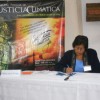
Mexican Women Demand Climate Justice
After two weeks without water, the taps finally started running again in the home of Araceli Salazar and her neighbours in the poor, crowded neighbourhood of Iztapalapa on the east side of the Mexican capital.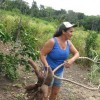
Brazil Commits to Quality Food for All
Representatives of the Brazilian federal and municipal governments and of indigenous, black and riverbank communities and other groups that make the population of this country so diverse assumed a commitment to fight for "the human right to an adequate diet."
CUBA: Same-Sex Couples Want to Be Counted
Communist Party militant, gay rights activist, journalist and blogger Francisco Rodríguez has triggered an online debate in Cuba by calling for sexual diversity to be identified in the next census, due in September 2012.ARGENTINA: Fighting ‘Machismo’ Is a Guy Thing
An original campaign led by men is getting thousands of men in Argentina to reflect on the abuse of power and commit themselves to helping eradicate violence against women.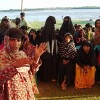
CLIMATE CHANGE: Bangladeshi Women on the Brink
Char Nongolia village is a basket case when it comes to climate change impacts such as increasing salinity, frequent cyclones, tidal surges, erratic rainfall and extended droughts.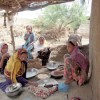
PAKISTAN: Wanted: A Revolution For Girls
Sixteen-year-old Noor Bano believes nothing short of a revolution will convince the men in Malangabad – her remote village in the Khairpur district of the Sindh province, some 460 kilometres from the southern port city of Karachi – to treat women as equals.
ARGENTINA: Women Gain Budget Know-How
"After so many years of feminist activism, we still hadn't realised that you need money to get things done. When I finally understood that, it was like seeing the light. It was a whole new avenue to explore," Argentine activist Noemí Chiarotti told IPS.« Previous Page — Next Page »





 One Thousand Internally Displaced Persons (IDPs) Relocated from Tomping Camp in South Sudan. Credit: UN Photo/Isaac Billy
It took hundreds of thousands of years for the world’s human population to cross one billion in 1804. Approximately 200 years later, the population has multiplied sevenfold. In 2023, the global population crossed 8 billion, and is expected to reach 9 billion before 2050. With the planet more crowded than ever, it is essential to keep track of population trends, urbanization, migration, and reproduction across the world.
Life expectancy has seen significant strides in the past century, largely due to economic development and increased standards of living. On the contrary, trends in global fertility are shifting, with certain regions in Africa and Asia reporting higher rates, while parts of Europe and North America report stagnant or lower rates. This is in part due to differences in sexual and reproductive healthcare, as well as societal and economic conditions around the world. For example, child marriage is prevalent in certain societies, where childbearing is also considered a familial duty. Meanwhile, stagnating economies frequently experience lower marriage and childbearing rates.
The increase in migration and urban development around the world is also linked to global population trends. By 2050, it is expected that approximately 66 percent of all people will live in cities. Furthermore, global crises such as warfare and natural disasters also prompt transnational migration. Transnational migration is linked to a variety of socioeconomic issues in both host and receiving countries: migrants often leave developing countries with less access to educational and economic opportunities and arrive in developed countries where they are frequently the targets of ethnic, racial, and cultural discrimination, and economic exploitation. Recent crises in Europe and the United States demonstrate the importance of advocating for migrants worldwide. As migrants from the Global South are increasingly stripped of their legal and civic rights in unlawful deportations, or targeted in acts of identity-based violence, it is essential to keep track of population trends and protect the human rights of migrant populations. Climate-related disasters are now a major driver of displacement, with nearly half of all new internal displacements in 2025 being disaster-related.
IPS is devoted to covering issues surrounding population trends, migration, and reproduction through its compelling articles, which use both statistics and human stories to provide readers with robust and informative viewpoints.

The Week with IPS

NEXT STOP - SDGs
Tracking global progress towards a sustainable world
Tracking global progress towards a sustainable world
