Languages
Sunday, November 8, 2026



News and Views from the Global South
Population
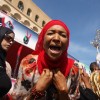
Cornered in Free Libya
"We’ve walked all the way here to tell everybody that we are being treated like dogs," said 23-year old Hamuda Bubakar, among a couple of hundred black refugees protesting at Martyrs Square in Tripoli. "I’d rather be killed here. I wouldn’t be the first, or the last."
GUATEMALA: “We Want Girls to Be Visible”
"I learned to not be afraid, and to love myself. Before, I never wanted to talk to people because I felt like they looked down on me and that I was no good," says 12-year-old Hilda Tura, one of the participants in a programme fostering leadership among indigenous girls in Guatemala.
MALAWI: No Social Safety Nets for the Poor
In Mbedza village, a remote rural community in southern Malawi, Fedson Feston beams an infant’s awkward smile and swings his tiny arms up towards the face of his mother. Four months old, Fedson is too young to know how lucky he is to be alive.
POPULATION-CUBA: Young People as Agents of Change
At 19, Liz Sandra Falcón had never imagined that every decision she made could have an impact beyond her own life: not only on people close to her, but on Cuban society itself, and even – although it might seem like an exaggeration – on global tendencies.
Brazil’s Health System Inspires Abroad, Frustrates at Home
News that the government of South Africa was inspired by Brazil's health system in setting up its own universal coverage scheme might meet with scepticism in this South American country.
ENVIRONMENT-THAILAND: ‘Bangkok Ignored Warnings’
This sinking mega-city’s eight million people are paying the price of ignoring warnings over many years concerning its climate vulnerability and the incapacity of its soggy foundations to handle flooding.
Climate Change Could Unravel Development Progress
The United Nations unveiled its 22nd annual Human Development Report on Wednesday, with grave warnings that unless countries take action against climate change and implement sustainable solutions, progress in human development will be in serious jeopardy.
U.S.: Latinos Call for Immigration Reform, Not Record Deportations
In his campaign, President Barack Obama promised to make comprehensive immigration reform a top priority – a pledge mainly directed at Latino voters.
Libya’s “Other” Victims
Suleyman and Rasool have come to the University of Bani Walid, in western Libya. If they are lucky they might find some chemistry notes and, perhaps, a computer that works. Unfortunately it is not likely, since NATO reduced the campus to rubble.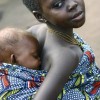
Seven Billion People, Seven Billion Possibilities, Says UNFPA
When Adnan Nevic was born in Bosnia-Herzegovina back in October 1999, he was hailed as the world's six billionth person, triggering a visit to Sarajevo by then Secretary- General Kofi Annan.POPULATION: Youth Bulge Adds to Pakistan’s Woes
Pakistan’s population explosion is posing a greater danger than militancy and religious intolerance, says noted medical doctor and demographer Farid Midhet.THAILAND: Bangkok Braces for Month of Floods
As the Thai Airways flight descends into Suvarnabhumi International Airport, passengers pull out cameras to snap pictures of flood waters rising inexorably and predicted to inundate the capital city by the end of the week.
UNESCO Study Reveals Widening Secondary Education Gap
Arguing that an educated population is a country's greatest wealth, the U.N. Educational, Scientific and Cultural Organisation (UNESCO) says there is no escape from poverty without a vast expansion of secondary education worldwide.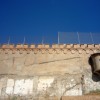
SPAIN: Detained Immigrants “Are Treated Like Criminals”
"It was very tough, like being in prison," says 29-year-old Algerian immigrant Sid Hamed Bouziane, in slow Spanish, about his 28-day stay at the Immigrant Detention Centre, or CIE, in the southern Spanish city of Málaga.CANADA: Anti-Smuggling Law Punishes Victims, Critics Charge
A former immigration officer and a refugee lawyer both agree on one issue regarding a controversial Canadian bill: The government's plan to expedite anti-human smuggling legislation is unlikely to deter the flood of undocumented migrants to the country and instead bolsters Ottawa's stature as tough on protecting national borders.
Looking to the Sahel for Lessons in Pushing Back Deserts
Nearly all our food comes from the Earth's limited food- producing lands, but those lands continue to be degraded, guaranteeing far higher food prices and less food in the future, experts warn.MIDEAST: Palestinian Refugees Consider a Model for Return
In a new project that has tackled one of the most divisive issues plaguing the Palestinian-Israeli conflict, a diverse group of academics, architects, urban planners and Palestinian and Israeli human rights groups are examining how the right of return of Palestinian refugees can be implemented on the ground.Worsening Economy Hardening Views on Migrants
"Since the economic crisis, migrants are increasingly at risk from racism and xenophobia," president of the United Nations General Assembly Nassir Abdulaiziz Al-Nasser said at a meeting on migration and communication in Helsinki Thursday.RIGHTS-JAPAN: Lifer’s Case Tells Migrant Workers’ Plight
A Nepalese worker serving life for a murder he denies committing has become the rallying point for activists lobbying for the rights of migrant labour.
NAMIBIA: German Extermination Marginalised Ethnic Groups
Over 100 years after the attempted extermination of Namibia’s indigenous men, women and children, 20 of the 300 skulls that had been stolen for racial research have finally returned home from Germany.After Torture, Homelessness Is Lucky
When Saoul decided to take the risk of leaving Chechnya for France, he could not imagine how much trouble protection could mean once he got here.« Previous Page — Next Page »





 One Thousand Internally Displaced Persons (IDPs) Relocated from Tomping Camp in South Sudan. Credit: UN Photo/Isaac Billy
It took hundreds of thousands of years for the world’s human population to cross one billion in 1804. Approximately 200 years later, the population has multiplied sevenfold. In 2023, the global population crossed 8 billion, and is expected to reach 9 billion before 2050. With the planet more crowded than ever, it is essential to keep track of population trends, urbanization, migration, and reproduction across the world.
Life expectancy has seen significant strides in the past century, largely due to economic development and increased standards of living. On the contrary, trends in global fertility are shifting, with certain regions in Africa and Asia reporting higher rates, while parts of Europe and North America report stagnant or lower rates. This is in part due to differences in sexual and reproductive healthcare, as well as societal and economic conditions around the world. For example, child marriage is prevalent in certain societies, where childbearing is also considered a familial duty. Meanwhile, stagnating economies frequently experience lower marriage and childbearing rates.
The increase in migration and urban development around the world is also linked to global population trends. By 2050, it is expected that approximately 66 percent of all people will live in cities. Furthermore, global crises such as warfare and natural disasters also prompt transnational migration. Transnational migration is linked to a variety of socioeconomic issues in both host and receiving countries: migrants often leave developing countries with less access to educational and economic opportunities and arrive in developed countries where they are frequently the targets of ethnic, racial, and cultural discrimination, and economic exploitation. Recent crises in Europe and the United States demonstrate the importance of advocating for migrants worldwide. As migrants from the Global South are increasingly stripped of their legal and civic rights in unlawful deportations, or targeted in acts of identity-based violence, it is essential to keep track of population trends and protect the human rights of migrant populations. Climate-related disasters are now a major driver of displacement, with nearly half of all new internal displacements in 2025 being disaster-related.
IPS is devoted to covering issues surrounding population trends, migration, and reproduction through its compelling articles, which use both statistics and human stories to provide readers with robust and informative viewpoints.

The Week with IPS

NEXT STOP - SDGs
Tracking global progress towards a sustainable world
Tracking global progress towards a sustainable world
