Languages
Thursday, September 24, 2026



News and Views from the Global South
Population

Bougainville Women Turn Around Lives of ‘Lost Generation’
Finding a sense of identity and purpose, as well as employment are some of the challenges facing youths in post-conflict Bougainville, an autonomous region in eastern Papua New Guinea in the southwest Pacific Islands.
Antibiotic Resistance Requires Global Response Similar to AIDS, Climate Change
Addressing antibiotic resistance will require a global political response similar to the way the world has reacted to climate change or HIV / AIDS, Sweden’s Minister of Public Health Gabriel Wikstrom, told IPS recently.
Youth Leaders Push for More Progressive Action to End HIV AIDS
Young people are disproportionately affected by HIV, yet their concerns about sexual education, and discrimination of key populations were ignored at the UN General Assembly High Level Meeting on ending AIDS.
The Art of Covering Up in Somaliland
Amid the hustle and bustle of downtown Hargeisa, Somaliland’s sun-blasted capital, women in various traditional Islamic modes of dress barter, argue and joke with men—much of it particularly volubly. Somaliland women are far from submissive and docile.
A Triple Threat in the Fight Against AIDS
The exclusion of key regions, contexts and actors must be addressed in order to successfully and significantly reduce HIV and AIDS by 2020, many have noted during the High Level Meeting on Ending AIDS this week.
‘What Can We Do for You?’ Aid Projects Pour Into Myanmar
International aid agencies, big and small, are beating a path to Myanmar, relishing the prospect of launching projects in a nation of 51 million people tentatively emerging from more than five decades of military rule.
Asia-Pacific Region Aims at Hunger-Free Goal by 2030
The Asia Pacific region - home to two of the world's most populous countries - faces major food security challenges. According to the Asian Development Bank (ADB), both China and India are not only two of the world's biggest producers of food but also the world's biggest consumers.
Humanitarian Aid – Business As Unusual?
Big business is most often seen by human rights defenders and civil society organisations as “bad news,” as those huge heartless, soulless corporations whose exclusive goal is to make the biggest profits possible. Too often and in too many cases this is a proven fact.
New Protocol Aims to Cut Trillion-Dollar Food Waste Bill
Four years ago, 27-year-old Tsering Dorji of western Bhutan’s Satsam village took to organic vegetable farming. Since then, thanks to composted manure and organic pesticide, the soil health of his farm has improved, and the yield has increased manifold.
Polynesian Voyagers Bring Messages of Hope to UN on World Oceans Day
Polynesian voyagers who have sailed the world by canoe using ancient navigation skills will bring pledges they collected along the way to the UN on Wednesday as part of World Oceans Day celebrations.
“Them” and “Us”, a Metaphor for Urban Inequality
For the inhabitants of “Bajo Autopista” (Under the Freeway), a slum built under an expressway in the Argentine capital, “they” are the people who live in areas with everything that is denied to “us” – a simple definition of social inclusion and a metaphor for urban inequality.
Q&A: Crisis and Climate Change Driving Unprecedented Migration
Climate change is now adding new layers of complexity to the nexus between migration and the environment.
Stepping Up the Fight to End Cholera and Chikungunya Outbreaks in Mandera County, Kenya
Mandera’s double whammy, the concurrent outbreaks of cholera and chikungunya, is bringing to the fore the need for accelerated epidemic preparedness and prevention systems.
LGBT Communities Silenced in HIV Reduction Efforts
Treatment for HIV and AIDS has increased, but key populations including lesbian, gay, bisexual and transgender (LGBT) communities continue to be left behind and even excluded altogether.
Battered by Storms, Sri Lanka Rethinks Food Security
The picture could be straight out of a tourist postcard – a sleepy green mountain with misty clouds floating above the canopy – if not for one fatal flaw: the ugly gash running right through the middle.
Young African Women More Vulnerable to HIV
When Lebogang Brenda Motsumi was 16 years old she fell pregnant, terrified about what her life would look like, she went to a backdoor clinic for an abortion.
Time to Change Expectations: Zero Retribution to Zero Tolerance
The drugging, abduction and violent gang rape of a 16-year-old girl in Rio de Janeiro, Brazil calls us all to turn the tide of sexual violence against women and girls in Brazil and in every country in the world.
Banking on the Milk of Human Kindness
The recent launch of Amaara, New Delhi's first human milk bank, has been greeted with much cheering. The initiative endorses the long-term goal of reducing infant mortality and addresses the critical issue of lack of mothers' milk for physically fragile newborns in India's capital city.The Price of Non-Governmental Growth
It is well known that since the 1980s, Bangladesh has made astonishing progress on a wide variety of development indicators such as reducing the prevalence of extreme hunger and poverty, increasing primary education enrolment rates, and reducing child and maternal mortality. This progress has been mirrored by an impressive record of sustained GDP growth, spanning decades. In contrast to these successes, the quality of our democratic institutions has languished to the point where they now threaten to undermine all these hard-won gains. This article argues that the provision of public goods and services by non-governmental organisations (NGOs) has not only contributed to these successes, but also to this failure.
Latest Population Projection of 25 Million Poses Serious Challenges
The most recent population projections expect the Island’s population to reach 25 million by 2042 and 25.8 million by 2062. It is expected to stabilise around the mid 2060s at 25-26 million. This is a significant departure from earlier projections that expected population stability much earlier at around 23-24 million in the 2030s and to decline thereafter.
Menstrual Hygiene Gaps Continue to Keep Girls from School
Around the world girls are struggling to stay in school when their menstrual hygiene needs are forgotten or ignored, yet the water, sanitation and hygiene (WASH) and education sectors have remained reluctant to address the issue.« Previous Page — Next Page »


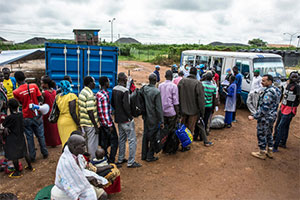 One Thousand Internally Displaced Persons (IDPs) Relocated from Tomping Camp in South Sudan. Credit: UN Photo/Isaac Billy
It took hundreds of thousands of years for the world’s human population to cross one billion in 1804. Approximately 200 years later, the population has multiplied sevenfold. In 2023, the global population crossed 8 billion, and is expected to reach 9 billion before 2050. With the planet more crowded than ever, it is essential to keep track of population trends, urbanization, migration, and reproduction across the world.
Life expectancy has seen significant strides in the past century, largely due to economic development and increased standards of living. On the contrary, trends in global fertility are shifting, with certain regions in Africa and Asia reporting higher rates, while parts of Europe and North America report stagnant or lower rates. This is in part due to differences in sexual and reproductive healthcare, as well as societal and economic conditions around the world. For example, child marriage is prevalent in certain societies, where childbearing is also considered a familial duty. Meanwhile, stagnating economies frequently experience lower marriage and childbearing rates.
The increase in migration and urban development around the world is also linked to global population trends. By 2050, it is expected that approximately 66 percent of all people will live in cities. Furthermore, global crises such as warfare and natural disasters also prompt transnational migration. Transnational migration is linked to a variety of socioeconomic issues in both host and receiving countries: migrants often leave developing countries with less access to educational and economic opportunities and arrive in developed countries where they are frequently the targets of ethnic, racial, and cultural discrimination, and economic exploitation. Recent crises in Europe and the United States demonstrate the importance of advocating for migrants worldwide. As migrants from the Global South are increasingly stripped of their legal and civic rights in unlawful deportations, or targeted in acts of identity-based violence, it is essential to keep track of population trends and protect the human rights of migrant populations. Climate-related disasters are now a major driver of displacement, with nearly half of all new internal displacements in 2025 being disaster-related.
IPS is devoted to covering issues surrounding population trends, migration, and reproduction through its compelling articles, which use both statistics and human stories to provide readers with robust and informative viewpoints.

The Week with IPS

NEXT STOP - SDGs
Tracking global progress towards a sustainable world
Tracking global progress towards a sustainable world
