Languages
Friday, August 14, 2026



News and Views from the Global South
Financial Crisis

Reconsidering Policies and Strategies in the South
There are numerous reasons to believe that the forces that have been driving growth in developing and emerging economies since 2009 cannot be sustained over the medium term. At the same time, it is impossible to return to the extremely favourable international economic conditions that prevailed before the eruption of the global crisis.
Canada Downsizes Military Bootprint, in War and Peace
Canada’s military buying binge under the current Conservative government has hit a financial brick wall in these austere times, but there is no nostalgic return in sight for Ottawa's once robust participation in United Nations-led peacekeeping missions.
Remittances Rise Despite West’s Economic Weakness
Despite recession in Europe and a weak recovery in the United States, remittances to developing countries have been growing at a strong pace over the last year and are likely to accelerate further through 2015, according to a new report released here Tuesday by the World Bank.
How Austerity Plans Failed the European Union
The austerity programmes being rolled out in virtually every member state of the European Union (EU) - particularly in Greece, Portugal, Spain and Italy - have failed to reach their stated objective of consolidating public finances in order to solve sovereign debt crises.
Soup Kitchens Overwhelmed in Crisis-Ridden Spain
A huge pot of rice steams on the stove at the soup kitchen run by Emaús in the municipality of Torremolinos, on the outskirts of this southern Spanish city. This morning, like every other, Pepi, Adriana and Diego are cooking for over a hundred people who can no longer afford to feed themselves.
Lead Funder on AIDS, Malaria, TB Gets a Reboot
After weathering the departure of its executive director amidst a misallocation scandal earlier this year, the world's largest funder of programmes to address HIV/AIDS, tuberculosis and malaria is poised to announce a new leader Thursday.
Faces of the Crisis in a Protesting Europe*
Out-of-work engineers, family businesses that are falling apart, people working in precarious conditions in an ailing labour market – it’s a description of Spain, but it could just as easily be Portugal, Greece or Italy…
Creditors’ Stalemate Brings Greece to Knife Edge
Ignoring the thousands of protestors gathered outside the Greek parliament on Wednesday, the government voted in public spending cuts amounting to 17 billion dollars in an economy already on its knees from a lacerated budget.
Bankers, Swindlers
For anyone who might not have realised it yet, the current crisis is demonstrating beyond a shadow of a doubt that the financial markets are the lead players in the current economic situation in Europe. Power has passed from the politicians to speculators and crooked bankers. This is a fundamental change.
Despite Poverty Pacific Islands Score on Child Mortality
The Pacific Islands are making steady progress on reducing child mortality, but most are struggling to eradicate poverty and generate employment for young and rapidly growing populations.
For Champions of Degrowth, Less Is Much More
The concept of degrowth is not a very comfortable one in overdeveloped countries such as the United States.Serbia Sinks Into Depression
Renato Grbic is a simple Belgrade fisherman, who grew up on the shores of the Danube River in Belgrade, but he performs an additional job that he is not paid for.Uphill Struggle for Caribbean Financial Services Sector
In the 1980's, Caribbean countries wanted to shore up their prospects of social and economic development in the coming decades, so they looked to the financial services sector to spur employment and development. They managed to develop a robust industry, particularly in the Bahamas and the Cayman Islands.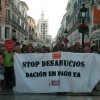
Defying Foreclosures in Spain
Shouting slogans against bank foreclosures, dozens of protesters in this southern Spanish city gathered Wednesday to prevent the eviction of a Moroccan family who couldn’t afford to meet their mortgage payments.EU Crisis’ Ripple Effects in Latin America
The crisis in Europe may provide an opportunity for Latin America and the Caribbean to recast the bi-regional relationship based on higher education and investments with a social and environmental focus, according to the ministerial Council of the Latin American and Caribbean Economic System.
Amid Food Crisis, Caribbean Agriculture Going to Seed
With the average age of a farmer in the Caribbean now 62 years old, there is growing concern that commercial agriculture is on a path to extinction – a dire scenario for a region already shouldering a massive food import bill.
Brazil Frustrated with European “Backtracking” on IMF Reforms
In the aftermath of last week’s elections to the International Monetary Fund (IMF)’s executive board, Brazil and others are expressing frustration that a reforms process aimed at increasing the representation of developing countries is being stymied by European countries.
India to Conserve Biodiversity at Grassroots
India’s National Biodiversity Authority (NBA) is actively promoting decentralised grassroots livelihoods as the best way to conserve biodiversity as mandated by the Nagoya Protocol on access and benefit sharing (ABS).
Some Caribbean Hotels Back Away from Battered Coastlines
The postcards portray sand, sea and sun. But key players in the Caribbean tourism industry are warning that it's time to shift gears away from the region's threatened coastlines and instead promote inland attractions like biodiversity.
Record Number Seeks Food Aid in the U.S.
Against the backdrop of a spreading global economic crisis, exacerbated by changing climate patterns, the global aim of guaranteeing food security for all by 2015 appears to be far from being achieved.
Purveyors of Death Flourish in Spain During Crisis
At the height of the economic and financial crisis, the Spanish government is promoting the export of weapons, creating concern among civil society organisations that say commercial interests are prevailing over the law and human rights.« Previous Page — Next Page »


Banking panics, recession, loss of market value, deflation. Is the current financial crisis in any way comparable with the Great Depression of 1929? And more importantly, how is it affecting the weakest? IPS brings you worldwide coverage of the impacts of this crisis.

The Week with IPS

NEXT STOP - SDGs
Tracking global progress towards a sustainable world
Tracking global progress towards a sustainable world
