Languages
Sunday, November 15, 2026



News and Views from the Global South
Economy & Trade

Stand Tall, UN Humanitarians
Most people around the world were glad to see the back of 2020: From the devastating bushfires in Australia to the plagues of locusts through East Africa stretching across Arabia to Pakistan, extreme weather, melting ice sheets at the poles, and Covid-19 that still engulfs the globe.
2021: Year of Living Dangerously?
Goodbye 2020, but unfortunately, not good riddance, as we all have to live with its legacy. It has been a disastrous year for much of the world for various reasons, Elizabeth II’s annus horribilis. The crisis has exposed previously unacknowledged realities, including frailties and vulnerabilities.
This Is Not a Goodbye, Kenya – Asante na Kwaheri ya Kuonana
Happy New Year, Kenya. Several milestones in my personal and professional life have made Kenya a cherished place for me. I started my UNICEF career in Rumbek, South Sudan in June 2000, and my rest and recuperation breaks were in Nairobi. In fact Kenya was the first African country I had ever visited and, frankly, it was love at first sight.

How Women-centred Digital Platforms can Enhance Empowerment
A cherished snapshot of a happy mother and a smiling grandmother is universally associated with a good childhood. In the movies, TV, or media, a broken or depressed mother’s face is hardly seen. But the reality is somewhat different. The measures communities and society take to ensure that women and girls are protected and supported are often questioned.
Mining giant Rio Tinto Face Environmental, Human Rights Complaint in Papua New Guinea
Local communities in the vicinity of the abandoned Panguna copper mine, have taken decisive action to hold the global mining multinational, Rio Tinto, accountable for alleged environmental and human rights violations during the mine’s operations between 1972 and 1989.
Reflecting Back and Imagining Forward
What a challenging year 2020 has been! A year of living dangerously – “Tahun vivere pericoloso”- perhaps these words of late President Soekarno of Indonesia are the best description. Fortunately, I managed to remain sane, reading and writing op-eds (mostly about the pandemic, here, here).
2020: A Yet More Devastating Year Closes With At Least Some Signs Of Hope
Despite its grim record of multiple natural disasters and a deepening climate crisis, one could be forgiven for looking back on 2019 with a degree of nostalgia. There is no disguising the extent of the calamity wrought this year by COVID-19, yet as we approach the end of 2020 we may also draw strength from positive developments emerging.
The World in 2021
The year 2020 is ending with the world caught up in an unprecedented human and economic crisis. The pandemic has contaminated 75 million people and killed 1.7 million. With the lockdowns, the global economy has suffered the worst recession in 75 years, causing the loss of income for millions of people. In such a bleak environment, what will the new year bring? Whilst uncertainty is the only certainty, eight points are likely to be key in the year ahead: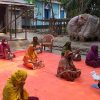
The Impact of COVID-19 on Child Marriage and Other Gender-Based Violence
I recently visited rural areas of Bangladesh amid the COVID-19 pandemic and returned to Dhaka with a new understanding of the impact that COVID-19 is having on child marriage, a harmful practice that is a global challenge. The fundamental shift that I saw was that child marriage, which has typically been encouraged by struggling parents, is now being encouraged by struggling girls. This worrisome trend underscores a new burden of the pandemic on the poor.
How Africa can Lead the World in the COVID-19 Recovery
Africa, compared to Asia, Europe and the US, has largely escaped the devastating death toll of COVID-19, accounting for a fraction of the world’s 63 million cases.
America has a Chequered Past in International Environmental Diplomacy
When it comes to international environmental diplomacy, America has a chequered past. It stood at the forefront of the international battle to fix the ozone hole and has shaped many key international agreements. Sadly, US positions are not always built on solid political ground at home. Twice, in the climate change process, this has led to the United States forging an agreement, only to then walk away. This happened with the 1997 Kyoto Protocol which then Vice-President Gore flew to Japan to sign in the full knowledge that a Republican dominated Senate would never ratify the deal. It happened again five years ago, with former President Obama closing that landmark deal (and John Kerry signing at the UN), only for President Trump to tear it up a few weeks later.
Five Years since the Paris Agreement: The Race to Net Zero Is On
In the wake of the worldwide COVID-19 pandemic, there are both challenges and opportunities in ensuring that COP26, a UN climate change summit, builds confidence in the Paris Agreement as an effective tool to avoid climate crisis.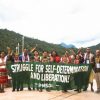
Reclaim Your Rights: Defend Indigenous People’s Lands
Rights are earned through hard-fought struggles. And for Indigenous Peoples (IP), its fulfillment comes from the collective and continuous defense of ancestral land and territory, and assertion of their ways of life and the right to self-determination.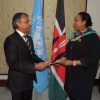
Sid Chatterjee Epitomizes the New Leadership Model of UN Resident Coordinators Worldwide
Siddharth Chatterjee, who has served with the United Nations for over 20 years, has been appointed as the new Resident Coordinator in China, the world’s second largest economy after the United States.
Getting Children in Lebanon Back to School Amongst Multiple Crises
Education and health care were high on the agenda when the United Nations vowed to work toward a better future by setting 17 Sustainable Development Goals (SDGs) to be met by 2030.
Intellectual Property Monopolies Block Vaccine Access
Just before the World Health Assembly (WHA), an 18 May open letter by world leaders and experts urged governments to ensure that all COVID-19 vaccines, treatments and tests are patent-free, fairly distributed and available to all, free of charge.
Discriminatory Laws Still Holding Women Back in the Middle East
Decades of aggressive efforts to create equal opportunities for women, shatter the glass ceiling and build a more inclusive society only ends up in failure, when the key stake holders refuse to acknowledge discriminatory laws, socio-cultural and religious set ups that continue to threaten progress made by the female work force.
R & D Expenditure: How to Raise It and Why
Economic growth is the time-tested method of raising living standards and, if not accompanied by large increases in inequality, lowering poverty. Since World War II, economic growth has lifted hundreds of millions of people out of poverty, including in South Asia.
Africa Readying for Free Trade, Come January 2021
One day in February 2020, Accra-based coffee and cocoa trader Meron Dagnew visited the Secretariat of the African Continental Free Trade Area (AfCFTA) to introduce herself, even before the Secretariat was fully operational.
GGGI selected as Technical Assistance Providers for Burkina Faso and Viet Nam by K-CEP
The Kigali Cooling Efficiency Program (K-CEP), a philanthropic collaboration, has selected the Global Green Growth Institute (GGGI) as technical assistance providers to improve access to and the efficiency of cooling in Burkina Faso and Viet Nam.
Women’s Bodies, COVID-19 and Male Chauvinism
COVID-19 has in some nations been converted into a noxious, political issue. One of many worrying examples is the rhetoric of Brazil´s president. On 10 November, when Brazil´s COVID-19 death toll surpassed 162,000 victims – the numbers have continued to raise and are now 179,032 second only to USA´s 296,745 – Jair Bolsonaro minimized the effects of COVID-19 by stating: ”All of us are going to die one day. There is no point in escaping from that, in escaping from reality. We have to cease being a country of sissies.” Bolsonaro actually said maricas, which like sissies is slang for gay people. Both expressions originally indicated ”small girls” – marica is a diminutive of Maria and sissy of “kid sister”. Bolsonaro thus defined homosexuality as effeminacy by associating gay men with affectation and cowardice. By connecting disease, fear, and femininity the Brazilian president not only ignored the strength and courage women throughout history have demonstrated by enduring childbirths and caring for others, it also shows a strong disregard for gender equality and the rights of women and gay people.« Previous Page — Next Page »


 UN Commission on International Trade Law Holds Colloquium on Harmonizing Law in Age of Digital Trade and Finance. Credit: UN Photo/Manuel Elías
Trade has historically been a geopolitical tool that can both be used to propel development as well as entrench inequalities. In various nations in East Asia and Latin America, increased trade, as often seen in export booms, has allowed them to achieve influential standings within the global economy. On the other hand, many low-income countries in Sub-Saharan Africa, Asia, and Latin America struggle to maintain a robust trade performance, and oftentimes are subjugated to exploitative trade dynamics through intense extraction of their natural resources. In recent decades, international trade has reached a new era as emerging economies across the world are rising in economic preeminence. Stable international trade is crucial to world peace as global interconnectedness facilitates reliable diplomacy. Nevertheless, significant challenges are on the rise. Notably, a major wave of United States tariff escalations in January 2025 lifted US import taxes to their highest level since the 1930s, changing market dynamics and forcing renegotiations with global trading partners.These articles are aimed at informing readers about the complexities of trade and its varying effects on development, with a special focus on the consequences of the global economic crisis, the potential of fair trade and the gender implications of trade policies.
Updated by Yilan Batista and Shuli Wong August 2026

The Week with IPS

NEXT STOP - SDGs
Tracking global progress towards a sustainable world
Tracking global progress towards a sustainable world
