Languages
Friday, November 20, 2026



News and Views from the Global South
Economy & Trade

Saving the Arctic Requires Action on Climate Change and Air Pollution
Arctic temperatures have increased twice as much as the global average in the past 100 years. Recent photos show that thousands of walruses normally resting on sea ice between dives to find food have been forced to crowd ashore because of extreme sea ice melt in Alaska. Such photos have once again reminded us that it is high time we take serious action on climate change if we want to save the Arctic.
Opinion: NGOs Still Leading the Global Debate on Climate
Civil society organizations, known as NGOs, have for decades used their non-government status to prod officials, politicians and business on climate issues. Veteran campaigners Greenpeace, Friends of the Earth, Oxfam, Kenya’s tree planters, India’s Chipko tree-hugging protectors and indigenous movements worldwide first raised the issues of protecting the Earth and its atmosphere.
Farmers Urge Solutions at Climate Change Talks
Recognizing that agriculture plays a significant role in global warming, farmer associations say they want to offer solutions, and they’re urging governments to include them in negotiations during the United Nations Climate Change Conference taking place Nov. 30 to Dec. 11 in Paris.Military Budgets Unexplored Source for Development Funding
As the United Nations continues its intense search for trillions of dollars needed to finance 17 Sustainable Development Goals (SDGs) adopted by world leaders last September, there is one rich source that remains unexplored: world military budgets.
Climate Showdown Starts in Paris
Paris has finally arrived. During the next two weeks, a massive conference centre in the outskirts of the French capital will play host to the ultimate United Nations conference and the single most important climate change event in decades.
Native Seeds Help Weather Climate Change in El Salvador
Knife in hand, Domitila Reyes deftly cuts open the leaves covering the cob of corn, which she carefully removes from the plant – a process she carries out over and over all morning long, standing in the middle of a sea of corn, a staple in the diet of El Salvador.
Paris Climate Summit Opens With Dire Warning
When the climate summit opened in Paris on Monday, the mood was overwhelmingly pessimistic -- largely about the current state of the global environment.
In Botswana: Leaving the Corporate Office to Work the Land – and Finding Opportunity
Beauty Manake moves around these days with a “million dollar” smile on her face. The 31-year old woman from Botswana now runs a thriving vegetable and livestock farm, as well as an agribusiness consultancy group.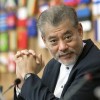
Addressing Climate Change Through Sustainable Development
Climate change impacts are already upon us. Sea levels are rising, glaciers and ice are melting. People in poor countries are struggling to cope and adapt. Even developed countries are facing adverse consequences, taxing their own adaptive capacities to increased flooding, drought and fires. We cannot afford to wait.
“Paris Is Not the End of a Climate Change Process but a Beginning”
Chilean President Michelle Bachelet says the climate summit in Paris “is not the end of a process but a beginning,” and that it will produce “an agreement that, although insufficient with respect to the original goal, shows that people believe it is better to move ahead than to stand still.”
Uganda, Tanzania Need Gender Sensitive Climate Change Policies
Climate Change needs to be at the top of the country’s agenda, according to a project examining Uganda’s policies. It says the country hasn’t paid enough attention to climate change in national development and agriculture plans and this needs to be turned around before it’s too late.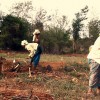
World’s Poorest Nations Battle Rising Rural Poverty
The world’s 48 least developed countries (LDCs), described as the poorest of the poor, are fighting a relentless battle against rising rural poverty.
Climate Refugees and a Collapsing City
With multiplying impacts of climate change - increasing floods, cyclones, and drought - thousands of climate refugees are migrating to Dhaka. And the city, well beyond its carrying capacity, is bursting at the seams.
From Darkness to Light: Dramatic Rescue of Tanzanian Miners Trapped 41 Days in Rubble
The five artisanal miners who narrowly escaped death last week after a 41-day ordeal in a collapsed gold mine in northern Tanzania called their experience a living hell. They went through a myriad of emotions soon after having been freed.
Did Argentina’s Elections Mark Start of Shift to the Right in South America?
Different degrees of economic problems are a common denominator in South American countries where governments that identify as leftist may start to fall, in a shift that began in Argentina and could continue among its neighbours to the north.Africa’s Climate Change Funding May Hit 100 Billion by Mid-Century
When the Climate Summit opens in Paris next week, one of the biggest issues facing world leaders is funding: how best to raise the billions of dollars needed to prevent the devastating consequences of global warming worldwide.
Not Yet Curtains for BRICs
With Goldman Sachs folding up its haemorrhaging BRIC fund, is it curtains for the acronym that defined the investment bankers’ fancy for emerging markets? It certainly appears so after China’s stock market crash and a fast slowing economy triggered fears that the dragon will set off the next global recession.
Hunger Heralds Climate Change’s Arrival in Botswana
A perfect storm of lower rainfall and a growing population beckons for Botswana. But others find climate change is already in the fields and paddocks. “As climate change ushers in more stress on the water sector, it is increasingly a concern that losses in rangeland productivity will result in food insecurity, especially in rural areas,” a country analysis report unveiled recently on Botswana states.
Analysis: Are Young People the Answer to Africa’s Food Security?
Are you young, energetic, creative, ambitious and need a job? Africa's agriculture sector needs you!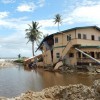
Sinking into Paradise: Climate Change Worsening Coastal Erosion in Trinidad
As unusually heavy rainfall battered Trinidad's east coast a year ago, a lagoon here was overwhelmed, flooding a major access road to the island’s south-eastern communities. As the flood waters poured over Manzanilla beach, they washed sand away, caved in sections of road and collapsed a seawall at a tourist beach facility. Further damages were also incurred with the flooding of homes and agricultural plots.
OPINION: Keep Family Farms in Business with Youth Agripreneurs
Finding a way to allow youth to contribute their natural and ample energies to productive causes is increasingly the touchstone issue that will determine future prosperity.« Previous Page — Next Page »


 UN Commission on International Trade Law Holds Colloquium on Harmonizing Law in Age of Digital Trade and Finance. Credit: UN Photo/Manuel Elías
Trade has historically been a geopolitical tool that can both be used to propel development as well as entrench inequalities. In various nations in East Asia and Latin America, increased trade, as often seen in export booms, has allowed them to achieve influential standings within the global economy. On the other hand, many low-income countries in Sub-Saharan Africa, Asia, and Latin America struggle to maintain a robust trade performance, and oftentimes are subjugated to exploitative trade dynamics through intense extraction of their natural resources. In recent decades, international trade has reached a new era as emerging economies across the world are rising in economic preeminence. Stable international trade is crucial to world peace as global interconnectedness facilitates reliable diplomacy. Nevertheless, significant challenges are on the rise. Notably, a major wave of United States tariff escalations in January 2025 lifted US import taxes to their highest level since the 1930s, changing market dynamics and forcing renegotiations with global trading partners.These articles are aimed at informing readers about the complexities of trade and its varying effects on development, with a special focus on the consequences of the global economic crisis, the potential of fair trade and the gender implications of trade policies.
Updated by Yilan Batista and Shuli Wong August 2026

The Week with IPS

NEXT STOP - SDGs
Tracking global progress towards a sustainable world
Tracking global progress towards a sustainable world
