Languages
Wednesday, November 25, 2026



News and Views from the Global South
Economy & Trade

Will India Still Supply Cheap Drugs to the World?
India may be famous for the Taj Mahal, its religious ceremonies, Bollywood films and one of the highest economic growth rates in recent years. But more importantly, India has had a positive global impact through its supply of vast quantities of low-cost, good-quality generic medicines, which have saved or prolonged millions of lives.South Invited to ‘De-Grow’
“We should find the way, with our small degrowth movement in the global North, to align ourselves with the environmental justice movement originating with indigenous peoples from the South,” Catalan ecological economist Juan Martinez-Alier said at the third international degrowth conference in Venice, Italy.
For Palestinian Workers, the Enemy Is the Hope
Hassan Hader’s application for a permit to work in Israel has been rejected four times. Now waiting to hear back from the Israeli authorities on his latest attempt, the 52-year-old father of five said he has no choice but to keep applying.Côte d’Ivoire – New Cassava Varieties Bring Women Autonomy
Women farmers in Côte d'Ivoire are achieving greater autonomy and economic independence thanks to new varieties of cassava.Nobel Laureate Calls for Armed Intervention in Nigeria
On the International Day of Peace, Nobel Prize winner Wole Soyinka visited the United Nations - and called for armed intervention against the terrorist group Boko Haram in his home country of Nigeria.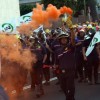
Spain at Risk of Chronic Protests
Over the past year and a half, Spain has been caught up in constant street protests against measures taken to combat the severe economic crisis. But some say the movement has failed to come together around concrete proposals.GEORGIA: Anti-Turkish Sentiments Grow as Election Date Nears
Rooted in longstanding historical, religious and economic differences, Georgian animosity toward neighbouring Turkey, Georgia’s fifth-largest investor, appears to be growing in the Black Sea region of Achara.Rural Mexican Communities Rich in Resources, Poor in Capital
The La Ventanilla community in the southern Mexican state of Oaxaca has not given up in the face of devastating hurricanes, but has organised to protect mangroves and animal species like the Olive Ridley sea turtle.
Exports Worth Their Salt in Crisis-Struck Portugal
A promising alternative in Portugal’s profoundly depressed domestic market are incentives for traditional exports which, due to their high quality or uniqueness, do not face fierce foreign competition. “Flor de sal”, the country’s premium hand-harvested sea salt, is one of these products.
Karachi Gripped by Extortionists
The cost of doing business in Pakistan’s southern port city of Karachi is steep. Surviving the climate of impunity now requires more than bags of protection money – it also calls for a stoutness of heart.
Maldives Talks Condoms
For an orthodox Islamic country, the Maldives has made remarkable progress in halting the spread of HIV in the Indian Ocean archipelago through bold awareness programmes and the distribution of condoms.
A Lake of Hope and Conflict
Parvez Ahmad Dar climbs three hours to reach the hilltop, generator-equipped tourist centre in Ajaf village, 35 kilometres from Srinagar, to recharge his mobile phone.
Water for Phosphate, Not People
Gafsa region in the south of Tunisia was once an oasis; today the phosphate industry has plunged it into a water crisis.
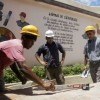
Cuba’s Reforms Shift Focus to Training Skilled Workers
His carpenter’s certificate has made Antonio Tejero into a passionate champion of the trades, because, he says, he works “directly for society.” That attitude is in line with the government’s plan to train more technicians and skilled workers to give a boost to the economy.
Mexico, Also a Haven for Illegal Fishing
The authorities in Mexico seem to have thrown in the towel in the fight against illegal fishing, which is hurting fisheries, the environment, and incomes.
/UPDATE*/ Uganda Oils Sales to China
Almost a decade since Uganda initiated negotiations with China for the favourable export of coffee beans to the Asian giant, it is struggling to create even trade relations with the world's second-biggest economy. But economic experts predict that the East African nation could close the gap through the promotion of agriculture and the eventual export of oil.
Second Chance For an African Green Revolution
As the world searches desperately for ways to boost food production by at least 70 percent by 2050 to feed an increasingly hungry planet, many are looking to Africa as the place where a large part of this potential can be realised, mainly for its huge portion of arable land.
As Aid Shrinks, U.N.’s Development Goals Under Threat
If the developing world fails to meet the targets set in the eight Millennium Development Goals (MDGs) – relating mostly to poverty, hunger, education, health care, gender empowerment and the environment – the primary blame for the failure would be on Western donors who have reneged on their aid commitments, according to a new report released here.
Ice-Free Arctic Is “Uncharted Territory”
The melt of Arctic sea ice has reached its lowest point this year, shrinking 18 percent from last year's near-record low.South African Miners Begin Returning to Work
Miners at the Marikana platinum mine in South Africa have begun returning to work after agreeing a pay deal.*Women Redefine Japan’s Work Culture
Unhappy with her employer of five years, Chikako Harada, 34, quit three months ago and has just started on a new job with a large Internet sales company.« Previous Page — Next Page »


 UN Commission on International Trade Law Holds Colloquium on Harmonizing Law in Age of Digital Trade and Finance. Credit: UN Photo/Manuel Elías
Trade has historically been a geopolitical tool that can both be used to propel development as well as entrench inequalities. In various nations in East Asia and Latin America, increased trade, as often seen in export booms, has allowed them to achieve influential standings within the global economy. On the other hand, many low-income countries in Sub-Saharan Africa, Asia, and Latin America struggle to maintain a robust trade performance, and oftentimes are subjugated to exploitative trade dynamics through intense extraction of their natural resources. In recent decades, international trade has reached a new era as emerging economies across the world are rising in economic preeminence. Stable international trade is crucial to world peace as global interconnectedness facilitates reliable diplomacy. Nevertheless, significant challenges are on the rise. Notably, a major wave of United States tariff escalations in January 2025 lifted US import taxes to their highest level since the 1930s, changing market dynamics and forcing renegotiations with global trading partners.These articles are aimed at informing readers about the complexities of trade and its varying effects on development, with a special focus on the consequences of the global economic crisis, the potential of fair trade and the gender implications of trade policies.
Updated by Yilan Batista and Shuli Wong August 2026

The Week with IPS

NEXT STOP - SDGs
Tracking global progress towards a sustainable world
