Languages
Wednesday, November 25, 2026



News and Views from the Global South
Economy & Trade

Climate Change Takes a Bite Out of Global Food Supply
Humanity's ability to feed itself is in serious doubt as climate change takes hold on land in the form of droughts and extreme weather, as well as on the world's oceans.
Debt Swallows Everything in Spain
One of every three euros that the Spanish government plans to spend in 2013 will go to servicing the public debt.U.S. Accused of “Discouraging” Financial Transaction Tax
On Friday, 62 civil-society organisations charged the U.S. State Department with spreading “misinformation” regarding the feasibility of levying a small tax on stock sales and other financial transactions, revenues from which could be used for national and international public goods.
Q&A: “Women and Girls Must Be Front and Centre”
With the global population on track to reach a staggering nine billion people by 2050, according to U.N. figures, a stronger action plan is needed to address the challenges of ending poverty, ensuring a well-functioning health system and access to education, as well as guaranteeing social inclusion for all.
Delivering Promises to Africa’s Smallholder Farmers
Investment in rural infrastructure and support for Africa's millions of small-scale farmers have increased in the past decade. But as these farmers begin to see increased yields, the question of better access to markets comes to the fore.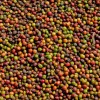
Coffee Time in Uganda
Uganda, Africa's biggest coffee exporter, is racing against time to boost its production of the crop by 60,000 tonnes, or one million 60-kilogramme bags, within the next three years. But some industry players believe that the feat is unattainable.
EU Seeks Protection from Emerging Economies
For many years, the European Union (EU) and its individual member states counted among the strongest advocates for free trade, arguing that it would boost economic growth and welfare both at home and abroad.
Caught Between Quarries and Sea Erosion
After more than a century of fighting sea erosion by massively dumping granite boulders along the beaches of southern Kerala state, environmentalists and administrators are beginning to see that this has been a costly and ineffective solution.
International Community “Overselling” Sudan-South Sudan Pact
The international community is reacting triumphantly following an agreement on Thursday between Sudan and South Sudan to resume oil production and trade, despite the accord’s failure to address two of the situation’s most intractable issues, on border demarcation and control over lucrative oil-producing regions.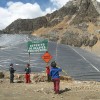
Major Extractives Firms No Longer Ignoring Community Consent
New research from Oxfam, an international aid agency, finds that some of the largest multinational oil and mining companies are increasingly incorporating principles of community consent into their day-to-day operations.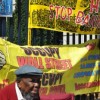
U.S.: Consumer Protection Agency Takes on “Financial Tricks and Traps”
In the wake of the epidemic of home foreclosures, banking scandals and resulting massive financial regulation overhaul two years ago known as the Dodd-Frank legislation, the U.S. government created a new federal agency to protect consumers from being taken advantage of by banks and other institutions.
Multilateralism is at a Crossroads
Multilateralism is at a crossroads. This is a crucial matter for environmental and sustainability issues, as we have seen in the Rio+20 Summit, and for trade and other economic matters. The G20 Summit in Los Cabos, Mexico, focused precisely on improving our collective response to the current economic turbulence, which is at the heart of developments in the European Union (EU) as well.
Arab Spring Teaches Food Security
African leaders should take note of the lessons learned from the Arab Spring and realise that ensuring good governance and food security will avoid crises on the continent, says Kofi Annan, chairman of the Africa Green Revolution Alliance.Serbians Unite Against Nickel Extraction
A popular Serbian proverb quips that when it comes to politics there are as many opinions as there are people in this central European country of seven million.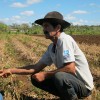
Starving for an Equitable Food System
The root cause of hunger and malnutrition for millions of people worldwide lies in the severely skewed and unfairly structured hierarchy of policymakers, not in natural disasters or food shortages, according to the Right to Food and Nutrition Watch 2012 (RTFN Watch) released Tuesday.
Q&A: Migration Now a Key Part of the Global Economy
As international migration continues to grow in scope, complexity and impact, effectively managing it has steadily moved up on the agenda of the international community.
U.N. Chief Fires Up Private Investment for Global Energy Solutions
Following a lukewarm outcome of the Rio+20 sustainable development negotiations in June, U.N. Secretary-General Ban Ki-moon is moving full-steam ahead on a new initiative aimed at leveraging public-private partnerships to bring modern energy to over one billion people by 2030.
Smuggling Freely Across the Colombia-Venezuela Border
It's a straightforward calculation: a litre of gasoline costs 62 times more in Colombia than in Venezuela, a difference that fuels smuggling and crime along the border.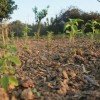
Stevia, a Flourishing Business in Spain
On a parcel of land a few kilometres outside the southern Spanish city of Málaga, unemployed activists are growing 2,000 seedlings of stevia, a plant used by the Guaraní indigenous people for centuries as a natural sweetener that is awakening ever greater interest in Spain.
Easing Air Pollution Would Cool the Planet
The planet can be cooled a whopping 0.5 degrees C with fast action to reduce air pollution from coal-fired power plants, gas fracking, diesel trucks and biomass burning, recent studies show.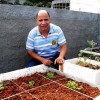
Urban Agriculture Sprouts in Brazil’s Favelas
You do not need to live in the countryside to grow vegetables, as hundreds of thousands of people involved in urban agriculture from Havana to Buenos Aires know very well. Now they are being joined by residents of Rio de Janeiro’s “favelas”.« Previous Page — Next Page »


 UN Commission on International Trade Law Holds Colloquium on Harmonizing Law in Age of Digital Trade and Finance. Credit: UN Photo/Manuel Elías
Trade has historically been a geopolitical tool that can both be used to propel development as well as entrench inequalities. In various nations in East Asia and Latin America, increased trade, as often seen in export booms, has allowed them to achieve influential standings within the global economy. On the other hand, many low-income countries in Sub-Saharan Africa, Asia, and Latin America struggle to maintain a robust trade performance, and oftentimes are subjugated to exploitative trade dynamics through intense extraction of their natural resources. In recent decades, international trade has reached a new era as emerging economies across the world are rising in economic preeminence. Stable international trade is crucial to world peace as global interconnectedness facilitates reliable diplomacy. Nevertheless, significant challenges are on the rise. Notably, a major wave of United States tariff escalations in January 2025 lifted US import taxes to their highest level since the 1930s, changing market dynamics and forcing renegotiations with global trading partners.These articles are aimed at informing readers about the complexities of trade and its varying effects on development, with a special focus on the consequences of the global economic crisis, the potential of fair trade and the gender implications of trade policies.
Updated by Yilan Batista and Shuli Wong August 2026

The Week with IPS

NEXT STOP - SDGs
Tracking global progress towards a sustainable world
