Languages
Friday, October 2, 2026



News and Views from the Global South
Economy & Trade

Electric Transport Expands Slowly in Mexico
Maribel Ochoa takes less time and spends less money commuting from her home to her work in eastern Mexico City thanks to the use of the electric Cablebus, a cable car that has improved her quality of life since the service began operating two years ago.
Ecuadorians Vote to Preserve Yasuní National Park, but Implementation Is the Problem
The decision reached by Ecuadorians to put an end to oil production in Yasuní National Park, in a popular referendum in August, was a triumph for civil society and a global milestone in environmental democracy. But when it comes to implementation, the result is less promising.
Faced with Crushing Debts, World’s Poorest Nations to Slash Public Spending by Over 229 Billion Dollars
The World Bank and the International Monetary Fund (IMF) are returning to Africa, for the first time in decades, with the “same old failed message”. “Cut your spending, sack public service workers, and pay your debts-- despite the huge human costs,” says Oxfam International’s interim Executive Director Amitabh Behar, following the release of new Oxfam report.
Where is India Heading?
Some time ago I watched the Indian blockbuster RRR (Rise, Roar, Revolt). It received universal praise for direction, screenwriting, cast performances, soundtrack (which won an Oscar) and thrilling action sequences. RRR is filled with gore; bodies beaten, pierced and torn apart. An overblown combination of Quentin Tarantino and Bollywood, far away from Satyajit Ray’s emotionally moving films, as well as Bollywood’s romantic comedies and mythological dramas. RRR never pauses for breath. The two male protagonists are supermen, not exposing many recognizable human traits, even if they might occasionally sing and talk about love. Hard to understand, since the few women of the story are cut-out clichés.
A Turning Point for Sustainable Development in Cuba — and Beyond
In 2015, 193 countries adopted the 2030 Agenda for Sustainable Development as “a shared plan for peace and prosperity for people and the planet.”
Wanted: Teachers For Change!
Once a year, on October 5, we celebrate World Teachers’ Day. Why is it so important to have a closer look on the teaching profession? What is so special about being a teacher nowadays?
Debt-Pushing as Financial Inclusion
Ajay Banga was anointed World Bank president for promoting financial inclusion. Thanks to its success and interest rate hikes, more poor people are drowning in debt as consumer prices rise.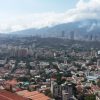
Open Migration Flows and Closed-Up Houses in Venezuela
Gladys swore she would not cry in front of her small children, but she still had to wipe away a couple of tears when she turned her head and looked, perhaps for the last time, at her dream house on Margarita Island in Venezuela, from where she migrated, driven by a lack of income and by fear.
Small Islands with Big Aspirations
Everyone knows that small island states are on the frontline of global warming. Rising sea levels, acidification destroying fisheries and coral reefs, and changing patterns of rainfall are just some of the challenges. Some low-lying islands have already been lost to the ocean.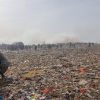
Informal Workers Key to Successful Waste Management in Africa
With the African continent recycling less than 11 percent of its waste, COP28 provided leaders on the African continent to consider integrated waste systems that include informal waste workers.
Innovative Business Models, Critical for African Governments to Unlock Carbon Markets
With current efforts to boost Africa's carbon credit production by 2030, experts believe the commitments will require Governments to switch from a voluntary to a compliance market by generating renewable energy for a portion of national and regional electricity supplies.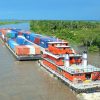
Traffic on the Paraná Waterway Triggers Friction between Argentina and Paraguay
In addition to being a majestic river - the second longest in South America after the Amazon - the Paraná River is the waterway through which a large part of the area's primary goods are exported. Today, its economic importance has sparked an unexpected diplomatic conflict between Argentina and the countries with which it shares the basin.
Navigating Challenges of New City Development for Nusantara, Indonesia’s Future Capital
Many nations are engaged in ambitious urban planning endeavors and the creation of new capital cities. Nusantara, Indonesia, is the latest in a series of modern cities that have sprung up across Asia.
Don’t Count on PPP Solutions
In recent years, public-private partnerships (PPPs) have spread rapidly. While usually profitable for the private partners, PPPs have generally not served the longer-term public interest.
Pemex Exploits Fossil Fuels with Money from International Banks
At the entrance to the municipality of Paraíso, in the southeastern Mexican state of Tabasco, there is a traffic circle that displays three things that are emblematic of the area: crabs, pelicans and mangroves.
Skyrocketing Inflation Puts Food Security in Pakistan at Risk
“We are under extreme stress about skyrocketing prices of essential edible commodities and the cost of gas and electricity. The situation is becoming worse because every day. We must pay more for wheat flour, sugar, tea, milk, oil, etc.,” Azizullah Khan, a civil servant, says.
Alarm Bells are Ringing at Halfway Point of the 2030 Agenda
The world is now half way to 2030 but the ambitious goals agreed in 2015 including the Paris Agreement and the Sustainable Development Goals (SDGs) are under threat, action is urgently needed.
African Coups and Resource Rights
When the heads of state of all United Nations members spoke in front of the UN General Assembly last week, a number of African leaders were not able to attend, having been removed from office in military-led coups.
Poverty & Hunger Eradication Targeted to Miss UN’s 2030 Deadline by Wide Margins
When the UN’s 193 member states reviewed the current status of the 17 Sustainable Development Goals (SDGs), including the eradication of extreme poverty and hunger by 2030, the verdict was mostly failures—and with little or no successes. The hunger/poverty nexus was best characterized by Alvaro Lario, President of the International Fund for Agricultural Development (IFAD), who warned last week that under current trends, 575 million people will still be living in extreme poverty in 2030—and as many people suffering from hunger by 2030 as in 2015 (600 million people).
Reality is Governments Not Truly Held Accountable to Implement SDGs
What does transformative and sweeping really mean in the overarching efforts to achieve the Agenda 2030? With the conclusion of the second edition of the SDG Summit, it is time for stocktaking on what was agreed at the United Nations HQ in New York this week. At the core of the Summit were not the several Leaders’ Dialogues that, as important as it can be to have heads of state and government reflecting on the Agenda, are just talking shops without any practical implications.
Bolivian Women Fight Prejudice to Be Accepted as Mechanics
In Bolivia, more and more women have gone from being homemakers or street vendors to joining the noisy world of engines, their hands now covered in grease after learning that special touch to make a car work. But they frequently have to put up with machismo or sexism, injustice and mistrust of their skills with tools.« Previous Page — Next Page »


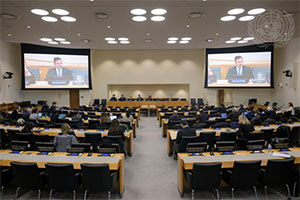 UN Commission on International Trade Law Holds Colloquium on Harmonizing Law in Age of Digital Trade and Finance. Credit: UN Photo/Manuel Elías
Trade has historically been a geopolitical tool that can both be used to propel development as well as entrench inequalities. In various nations in East Asia and Latin America, increased trade, as often seen in export booms, has allowed them to achieve influential standings within the global economy. On the other hand, many low-income countries in Sub-Saharan Africa, Asia, and Latin America struggle to maintain a robust trade performance, and oftentimes are subjugated to exploitative trade dynamics through intense extraction of their natural resources. In recent decades, international trade has reached a new era as emerging economies across the world are rising in economic preeminence. Stable international trade is crucial to world peace as global interconnectedness facilitates reliable diplomacy. Nevertheless, significant challenges are on the rise. Notably, a major wave of United States tariff escalations in January 2025 lifted US import taxes to their highest level since the 1930s, changing market dynamics and forcing renegotiations with global trading partners.These articles are aimed at informing readers about the complexities of trade and its varying effects on development, with a special focus on the consequences of the global economic crisis, the potential of fair trade and the gender implications of trade policies.
Updated by Yilan Batista and Shuli Wong August 2026

The Week with IPS

NEXT STOP - SDGs
Tracking global progress towards a sustainable world
Tracking global progress towards a sustainable world
