Languages
Wednesday, November 11, 2026



News and Views from the Global South
Economy & Trade
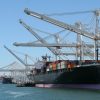
“The Worse, The Better” Doctrine and the Melting Ice
‘There is a prevailing doctrine among the right and far-right political parties who are still in the opposition and are most likely to jump to power in those countries where they are not already ruling. It is the doctrine of “the worse things go, the better for us.”
UN Labour Report Highlights Employment Challenges for Youth
When COVID-19 prompted economic shutdowns across the globe, many analysts predicted that youth would be especially at risk. This is because young people tend to have fewer economic assets and limited experience in the labor market.
How NOT to Win Friends and Influence People
After four years of Trump’s ‘America first’ isolationism, US President Joe Biden announced “America is back”. His White House has since tried to find allies against China and Russia. But it has not found many, especially in the Global South. His summit with Southeast Asian leaders was well attended, but promised little. Worse, his Summit of the Americas revealed fading US influence in its long-time backyard.
Millions Go Hungry– While Billions Worth of Food Go into Landfills
The ominous warnings keep coming non-stop: some of the world’s developing nations, mostly in Africa and Asia, are heading towards mass hunger and starvation. The World Food Programme (WFP) warned last week that as many as 828 million people go to bed hungry every night while the number of those facing acute food insecurity has soared -- from 135 million to 345 million -- since 2019. A total of 50 million people in 45 countries are teetering on the edge of famine.
Starvation Pounds Inflation-Hit Urban Zimbabweans
With inflation at 256.9 percent, 49-year-old Dambudzo Chauruka can no longer afford to buy bread despite working as a civil servant in Zimbabwe.
Biofuels Slow Down Electric Vehicles in Brazil
Brazil celebrated 100,000 electric vehicles in circulation in late July, but this is a drop in the ocean compared to the 46 million combustion vehicles registered in the country and in contrast with the pace of the phasing out of oil in the world's automotive industry.
Chinese Fleet Threatens Latin America’s Fish Stocks
Illegal and excessive fishing, mainly attributed to Chinese fleets, remains a threat to marine resources in the eastern Pacific and southwest Atlantic, as well as to that sector of the economy in Latin American countries bathed by either ocean.
Yes, Africa’s Informal Sector Has Problems, But the Answer Isn’t to Marginalise It
African leaders are increasingly aspiring to “modernise” their cities. That is to make them “globally competitive” and “smart”. The hope is to strategically position cities in Africa to drive the continent’s much-needed socio-economic transformation.
An Unexpected Treasure
When University of Arizona political economy professor, William Mishler needed Kiribati census and household income data for a project he was working on with Millennium Challenge Corporation (MCC) he turned to the Pacific Data Hub (PDH) to access the microdata he needed.
A World in Crisis Needs Both Trade and Aid
We are in the toughest period the world economy has faced since the creation of the multilateral system more than three-quarters of a century ago. A quadruple shock of COVID, climate change, conflict and cost-of-living has undone years of hard-fought development gains.
Stagflation: From Tragedy to Farce
Half a century after the 1970s’ stagflation, economies are slowing, even contracting, as prices rise again. Thus, the World Bank warns, “Surging energy and food prices heighten the risk of a prolonged period of global stagflation reminiscent of the 1970s.” In March, Reuters reported, “With surging oil prices, concerns about the hawkishness of the Federal Reserve and fears of Russian aggression in Eastern Europe, the mood on Wall Street feels like a return to the 1970s”.
April Fool’s Inflation Medicine Threatens Progress
The world economy is on the brink of outright recession, according to the International Monetary Fund (IMF). The Ukraine war and sanctions have scuttled recovery from the COVID-19 pandemic.
Indigenous Women at the Forefront of Transformational Change
The International Day of the World’s Indigenous Peoples, commemorated annually on August 9, is a day to celebrate the many contributions of the 476 million Indigenous peoples worldwide.
The Plastic Crisis Has Deep Corporate Roots: To Protect Our Planet, They Need To Be Exposed
This spring, I taught a new undergraduate course in environmental sociology. Most of my students took the course because they were curious to see what their desire to live more sustainably had to do with sociology.
Researchers Embrace Artificial Intelligence to Tackle Banana Disease in Burundi
A group of scientists involved in finding solutions to minimize the impact of a devastating banana virus in Burundi have developed an Artificial Intelligence (AI) tool for monitoring the disease.
Technology Helps Traffickers Hunt Their Victims, Enslave Them, Sell Their Organs
Human beings have proved to be capable of producing innumerable practical inventions while much too often making the worst use of them. Take the case, per example, of how criminal groups heavily rely on digital platforms to trap and enslave their victims also for extracting and selling their organs.
Slow food, Accelerating Biodiversity in the Field and On Our Plates
Edward Mukiibi was forced to do agriculture at school as punishment for misbehaviour. Instead of hating the punishment, he loved it, especially when he realised farming was the future of good food, health and wealth.
Biogas Production Awaits Greater Incentives in Cuba
Standing in front of a blue flame on her stove, getting ready to brew coffee, Mayra Rojas says the biodigester built in the backyard of her home in western Cuba has become a key part of her daily life and a pillar of her family's well-being.
Frugal Innovation is Key to Advancing the UN’s Global Goal for Education
The world needs tens of millions of new teachers by 2030, according to UNESCO – an order of magnitude that requires “frugal innovation.” I’ve studied frugal innovation for more than a decade, and it holds a vital key to this global challenge. A model created by BRAC in Bangladesh deserves special attention in this worldwide pursuit.
Neo-Colonial Currency Enables French Exploitation
Colonial-style currency board arrangements have enabled continuing imperialist exploitation decades after the end of formal colonial rule. Such neo-colonial monetary systems persist despite modest reforms.
Introducing Hope Over Fate: the Story of Sir Fazle Hasan Abed and BRAC
About seven years ago, I started working on a project with Sir Fazle Hasan Abed, the founder of BRAC. It was originally supposed to be a memoir: the story of Abed, the mild-mannered accountant who would rid the world of poverty, as told by the man himself. I was privileged to be Abed’s speechwriter for the last several years of his life, and I would sit for hours listening to stories from his remarkable life: of his boyhood in British India, his love life in London in the 1960s, his three marriages, and how, in 1972, with a few thousand pounds from the sale of his flat in Camden, he launched a small nonprofit organization to aid refugees, originally called the Bangladesh Rehabilitation Assistance Committee. Many people would go on to call BRAC, which Abed led until his death in 2019, the world’s most effective anti-poverty organization.« Previous Page — Next Page »





 UN Commission on International Trade Law Holds Colloquium on Harmonizing Law in Age of Digital Trade and Finance. Credit: UN Photo/Manuel Elías
Trade has historically been a geopolitical tool that can both be used to propel development as well as entrench inequalities. In various nations in East Asia and Latin America, increased trade, as often seen in export booms, has allowed them to achieve influential standings within the global economy. On the other hand, many low-income countries in Sub-Saharan Africa, Asia, and Latin America struggle to maintain a robust trade performance, and oftentimes are subjugated to exploitative trade dynamics through intense extraction of their natural resources. In recent decades, international trade has reached a new era as emerging economies across the world are rising in economic preeminence. Stable international trade is crucial to world peace as global interconnectedness facilitates reliable diplomacy. Nevertheless, significant challenges are on the rise. Notably, a major wave of United States tariff escalations in January 2025 lifted US import taxes to their highest level since the 1930s, changing market dynamics and forcing renegotiations with global trading partners.These articles are aimed at informing readers about the complexities of trade and its varying effects on development, with a special focus on the consequences of the global economic crisis, the potential of fair trade and the gender implications of trade policies.
Updated by Yilan Batista and Shuli Wong August 2026

The Week with IPS

NEXT STOP - SDGs
Tracking global progress towards a sustainable world
Tracking global progress towards a sustainable world
