Languages
Friday, October 16, 2026



News and Views from the Global South
Trade & Investment

Let There Be Light, Implores U.N. Chief
When night falls, there are over 1.3 billion people, mostly in the developing world, who live in virtual darkness because they have no access to electricity.
Foreign Aid Funding Luxury Hotels in Myanmar
New investments from the International Finance Corporation (IFC), the World Bank’s private-sector investment arm, may perpetuate economic inequality rather than alleviate poverty in Myanmar, critics here are warning.
Cell Phones and Cash Grants Can Promote Growth and Development
Mobile-finance and direct cash grants are revolutionary tools that can substitute for under-developed financial sectors and help reduce poverty and promote entrepreneurship in developing countries, according to researchers here.
Small Farmers’ Loss of Land Increases World Hunger
The world is increasingly hungry because small farmers are losing access to farmland. Small farmers produce most of the world’s food but are now squeezed onto less than 25 percent of the world’s farmland, a new report reveals. Corporate and commercial farms, big biofuel operations and land speculators are pushing millions off their land.
Rural Communities Push El Salvador Towards Ban on Mining
Mining is not viable in this country, say Salvador Sánchez Cerén - who will be sworn in as the new president of El Salvador on Jun. 1 - and his team of environmental advisers.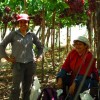
Seasonal Agricultural Workers Left Out of Chilean Boom
Tens of thousands of women employed as seasonal workers in rural areas of Chile suffer high levels of poverty and poor working conditions, even though their labour generates huge profits for agricultural exporters.
Tracking the Democratic “Alternative from the South”
Democratic governance offers a viable option for developing countries to achieve economic growth and inclusion, yet this doesn’t need to follow the Western model, new research released here this week suggests.
Narendra Modi: More Continuity Than Change in Foreign Policy
The Congress Party took a beating in India’s recent parliamentary election and has been now been sidelined by the Hindu nationalist Bharatiya Janata Party (Indian People’s Party, or BJP).
China Tightens Grip On Africa
Janice Gacheri imports handbags and shoes from China which she sells on social media sites and by word of mouth to customers in Nairobi and neighbouring towns.
Conflict with Local Communities Hits Mining and Oil Companies Where It Hurts
Conflicts with local communities over mining, oil and gas development are costing companies billions of dollars a year. One corporation alone reported a six billion dollar cost over a two-year period according to the first-ever peer-reviewed study on the cost of conflicts in the extractive sector.
When China Sneezes, Latin America Gets the Flu
China’s massive urbanisation has been built, literally, by metal, supplied mostly by Latin American countries (LAC). Yet now China’s slowing economic growth and falling commodity prices threaten Latin American commodity booms.
Militancy Pushes Northern Pakistan Close to Industrial Collapse
Already saddled with a veritable catalogue of crises, Pakistan’s largest province, the Khyber Pakhtunkhwa (KP) now finds itself on the verge of industrial collapse, as extortion and kidnappings drive away all prospects for production or employment.
Lagging Urban Transport Works Hinder World Cup Sustainability
Brazil’s efforts to promote the image of an environmentally sustainable World Cup have focused on the stadiums built for the tournament. But the 12 cities where the matches will be played are in a race against time to complete the urban transport projects.Trade Misinvoicing Costs African Countries Billions
Misinvoiced trade in five African countries cost their governments billions of dollars in tax revenue and facilitated at least 60.8 billion dollars in illicit financial flows from 2002 to 2011, says a new report by Global Financial Integrity (GFI), a research advocacy organisation here.
Investor Treaties in Trouble
The tide is turning against investment treaties and free trade agreements that contain the controversial investor-state dispute system, which allows foreign investors to take up cases against host governments and claim compensation of up to billions of dollars.
Community Electricity Lights Up Spain
Until recently it was inconceivable for small groups of organised citizens in fully electrified industrialised countries like Spain to generate their own power from clean sources of energy, challenging the prevailing energy model.
Piping the Waters of Southern Chile to the Thirsty North
Three private sector initiatives are aimed at carrying water from the rivers in southern Chile to the arid north of the country by ship or through underwater or underground pipelines. The objective is to slake the thirst of the mining industry of this country, the world’s largest producer of copper.
DR Congo’s Red Light to Invention
"There are several robots in the world, but that one which regulates traffic is made in Congo," Thérèse Izayi, a female engineer and the Congolese inventor of two very unusual traffic signals, tells IPS.
UAE Diplomatic Offensive in Latin America
The visit by United Arab Emirates Foreign Minister Sheikh Abdullah Bin Zayed Al Nahyan to Uruguay, Paraguay and Peru brings to an end 10 days of unusually intense diplomatic activity by the Gulf nation in Latin America.
The Opportunity of a Plastic Bag
The European Union was founded to create conditions for a lasting peace on the old continent, establishing an internal market, integrating agriculture and industry. As new generations emerge that have never experienced war or terrorism in Europe, the concept of quality of life increasingly dominates the debate. Will Europe offer its citizens the future all aspire to?
Chilean Tax Reform Shifts Toward Income Redistribution
Chilean President Michelle Bachelet’s proposed tax reform is seen as the cornerstone of her ambitious social programme and a sign of a new shift in fiscal policy towards redistribution of income.« Previous Page — Next Page »





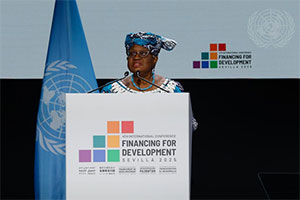 Opening of 4th International Conference on Financing for Development. Credit: UN Photo/Mariscal
International trade and investment are crucial elements of the world economy. While they can be powerful stimulators of development, they can also lead to global imbalances and dynamics of exploitation. In 2025, international trade entered a period of immense disruption, driven in part by a new wave of United States tariffs that reshaped global supply chains and investment flows. The increase in the US tariff rate, the highest since the 1930s, has forced bilateral renegotiations with global trading partners. Furthermore, the debt crisis in developing nations has accelerated while Official Development Assistance (ODA) has substantially dropped 7.3% in 2024.
In the 21st century, advancements in economic diversification in formerly colonized nations have propelled them into more central roles in the global economy. For example, both China and Mexico were able to develop their manufacturing sector and channel this development into booming export flows, thus advancing into the position of emerging economies. Foreign investment also plays an essential role in providing capital for developing countries, although they are oftentimes accompanied by social and environmental exploitation. For example, rising Chinese investments in natural resources in Latin America have often been met with tension as these investment projects fail to properly mitigate environmental risks and protect workers’ rights. In a more multifaceted vein, Sino-African relations have led to infrastructure development in Sub-Saharan Africa while also heightening the region’s economic dependency on China. IPS reports on global news in trade and investment, while shining a light on the nuanced nature of these endeavors.

The Week with IPS

NEXT STOP - SDGs
Tracking global progress towards a sustainable world
Tracking global progress towards a sustainable world
