Languages
Sunday, November 8, 2026



News and Views from the Global South
Editors' Choice
Religious Leaders’ Plea to Member States: Honour Your Commitment to the UN
On the 8th of October, the United Nations Secretary General Antonio Guterres warned that the organisation is running out of money by the end of October - "member States have paid only 70 percent of the total amount needed for [our] regular budget”.
Displaced by the Desert: An expanding Sahara leaves Broken Families and Violence in its Wake
Abdoulaye Maiga proudly displays an album showing photos of him and his family during happier times when they all lived together in their home in northern Mali. Today, these memories seem distant and painful.
Beaten and Tortured for a Ransom, Lured by the Promise of a Livelihood
After his father passed away two years ago, the burden of caring for a six-member family rested on the shoulders of the now 19-year-old Farhad Hossain. He had no clue how he would support his family and pay for the education of his four younger siblings.
UN’s 75th Anniversary Shadowed by Right-Wing Nationalism, Widespread Authoritarianism & Budgetary Cuts
When the six much-ballyhooed high-level UN meetings concluded late September, there were mixed feelings about the final outcomes. And civil society organizations (CSOs), who were mostly disappointed with the results, are now gearing themselves for two upcoming key climate summit meetings: COP25 in Santiago, Chile in December and COP26 in Glasgow, UK in late 2020, along with the 25th anniversary of the Beijing Women’s Conference scheduled to take place in September 2020 in New York.
Ghana’s Grains and Groundnuts Face Increasing Contamination Amid Increasing Temperatures
Adwoa Frimpomaah, a smallholder farmer from Dandwa, a farming community in Nkoranza, in Ghana's Bono East Region, and her two children have been consuming insect-infested and discoloured grains produced from their three-acre farm.
Holding Transnational Corporations Accountable for Human Rights Abuses
In Geneva this week, a treaty process is underway that promises to usher in a new era for human rights around the globe. The process—the intergovernmental working group on the binding treaty on transnational corporations and human rights—could mean that for the first time, human rights would be prioritized above corporate profits.
How the Oceans and the Cryosphere are Under Threat and What it Means for Africa- IPCC Author Explains
 “Special reports come to address issues that need deeper understanding and deeper research,” Dr James Kairo, one of the lead authors of the ‘Special Report on the Ocean and Cryosphere in a Changing Climate,’ a special report by the Intergovernmental Panel on Climate Change (IPCC), told IPS.

Making a Whale of a Difference to Marine Conservation
The thrill of watching a whale up close or schools of dolphins frolicking in an ocean are much sought after experiences today, boosting the demand for tours that provide people the opportunity to see these marine animals in their natural habitats. But becoming a major tourist drawcard has also exposed cetaceans (whales, dolphins and porpoises) and their environs to risks and challenges.
For Some in Kashmir Marriage Equates to Sexual Slavery
Haseena Akhtar was only 13 when an agent told her parents that they could earn a good amount of money by letting her marry a Kashmiri man. The man was, however, three times older than Akhtar, the agent said.
Wanted: Bold Leadership by António Guterres: On Sustainable Funding of United Nations
The United Nations is faced with a financial crisis once again. Leaders of as many as 64 countries who paraded and pontificated at the UN General Assembly and its multiple Summit meetings in September 2019 were deadbeats, who had not paid their dues in full to the UN for this year.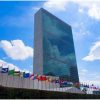
UN’s Cash Crisis Can Have Serious Consequences, Staff Unions Warn
The UN’s smoldering cash crisis, which has threatened staff salaries and payments to vendors, has triggered strong reactions and rattled the over 6,400 staffers who work in the 39-storeyed Secretariat building in New York.
“Window of Opportunity to Avoid Catastrophic Climate Change is Fast Shrinking”
“The window of opportunity to avoid catastrophic climate change is fast shrinking,” executive director of the Green Climate Fund (GCF), Yannick Glemarec, tells IPS. 
The Most Important Meeting You’ve Never Heard Of — & the Grand Challenge on Inequality
Last month 195 world leaders once again met in New York for big speeches and grand events. But on inequality, when all is said and done, more has been said than done.
UN Faces its Worst Cash Crisis in Nearly a Decade
The Secretary-General wrote to Member States about the worst cash crisis facing the United Nations in nearly a decade. The Organization runs the risk of depleting its liquidity reserves by the end of the month and defaulting on payments to staff and vendors.
UN Women Ambassadors Rise to New Heights But Fall Short of Gender Parity
New York’s diplomatic community has continued to be enriched by a record number of women Permanent Representatives (PRUNs)—50 in all, as of October 2 – compared with about 15 to 20 back in the 1980s and early 1990s.
Global Climate Change Investment Heavily Tilted Towards Mitigation and Low on Adaptation
Good news: the graph depicting climate investments has been steadily increasing. Climbing from the 2012 figure of $360 billion in climate investments across the world to close to $600 billion currently.
Reforms Will Grant Nationality to Children of Iranian Women
After more than a decade of women’s rights activism, Iran’s Guardian Council has finally approved an amendment that would grant Iranian citizenship to the children of Iranian women married to foreign men.
Africa’s Mineral Wealth May Just have to Stay in the Ground to Protect a Changing Climate
As a result of climate change, resource extraction industries in Africa will be impacted by asset stranding, researchers say.
South Sudan’s Authorities Allow Serious Human Rights Abuses to Flourish and go Unpunished – Report

Human rights movement Amnesty International has accused South Sudanese authorities for lack of independence as they have allowed allowing human rights abuses, war crimes and crimes against humanity to go unpunished.

Can Cities Save the World?
By 2050 two thirds of the world’s population will live in cities, and that infrastructure could be the key to managing the climate crisis, if we act now.
Q&A: Holistic Land Management – Only a Movement can Prevent Desertification
Desertification is not cheap. It has social, cultural, environmental and of course economic costs to reverse what it destroys.« Previous Page — Next Page »





The Week with IPS

NEXT STOP - SDGs
Tracking global progress towards a sustainable world
Tracking global progress towards a sustainable world
